Overview
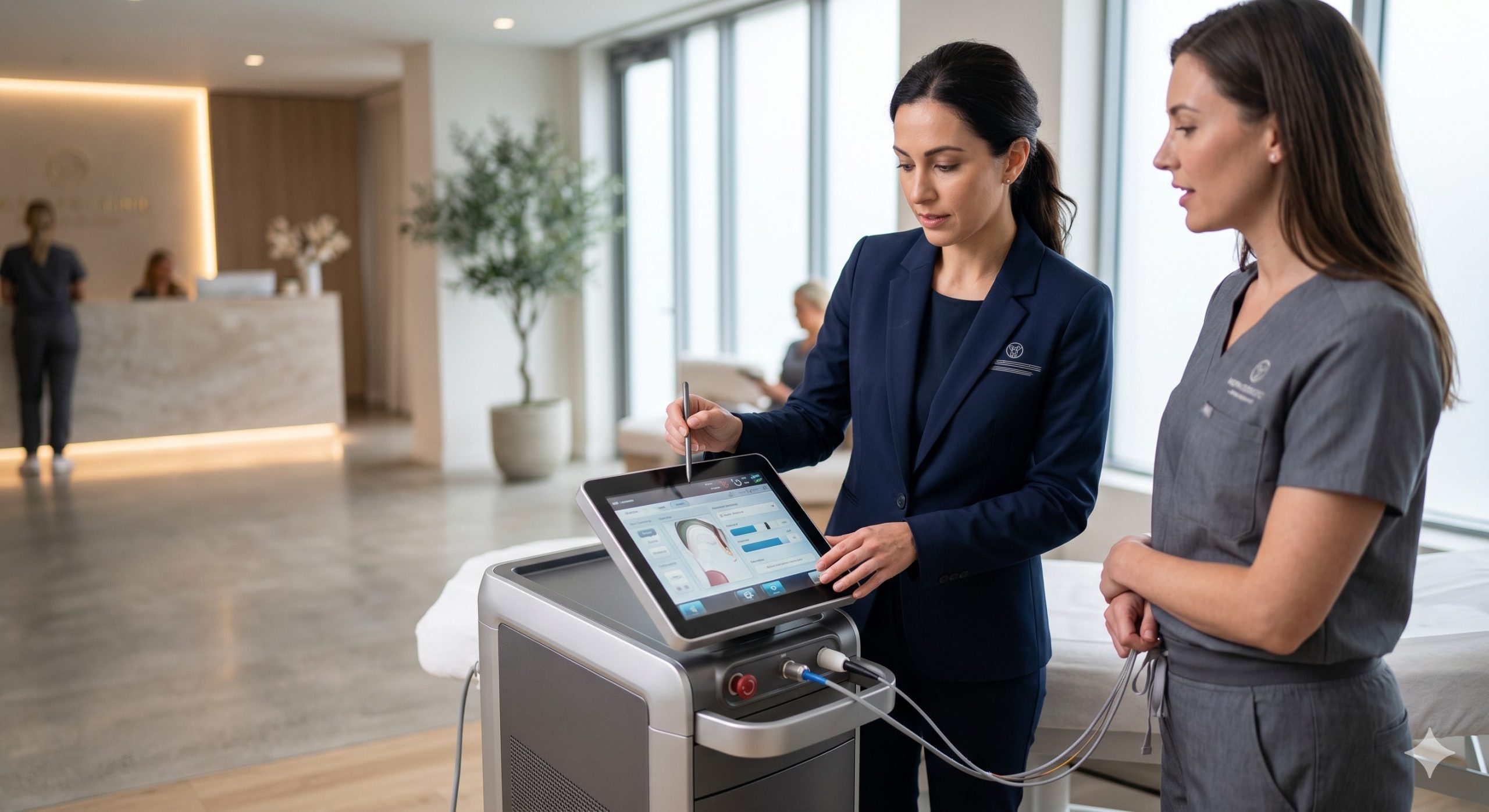
Investing in a professional laser hair removal machine requires careful evaluation of technical specifications, regulatory compliance, and post-sales support. This B2B FAQ provides definitive answers for clinic owners and dermatologists—covering warranty structures, shipping logistics, staff training, and long-term ROI. Optimize your procurement decision with clinically validated insights.
Frequently Asked Questions
Q1: What is the standard warranty period for a medical-grade laser hair removal machine?
The industry standard warranty is 24 months for the entire system, with the laser handpiece covered for 12 months or up to 1-2 million shots, whichever occurs first. Many premium B2B suppliers offer extended warranty options covering the water chiller, power supply, and control board. Always verify that the warranty includes labor, replacement parts, and return shipping. Some manufacturers also provide a consumables package (e.g., spare handpiece window or sapphire tip) as part of the initial coverage.
Q2: How is the laser hair removal machine shipped internationally, and what customs documentation is required?
Professional units are shipped via air freight (3-7 days) or sea freight (20-35 days), in impact-resistant flight cases with foam padding and humidity control. The required customs documents include: commercial invoice (declaring value and HS code 9018.90 for medical lasers), packing list, CE or FDA certification copies, and a non-hazardous goods declaration (since diode lasers are not classified as dangerous goods). B2B suppliers often handle door-to-door DDP (Delivered Duty Paid) shipping to simplify import clearance.
Q3: What clinical training is included for my aesthetic staff?
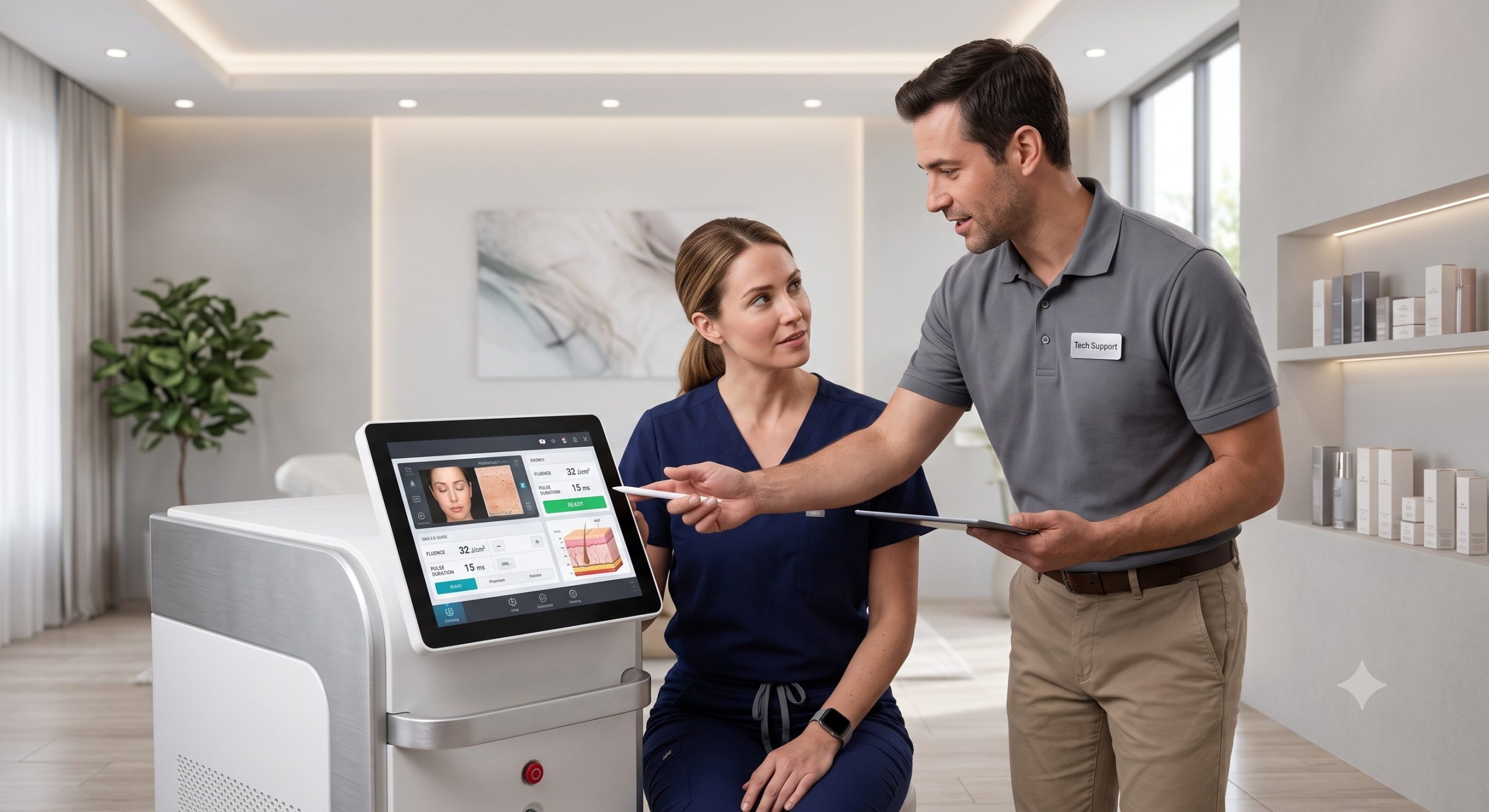
Certified B2B vendors provide 2-3 days of on-site or remote training covering: Fitzpatrick skin typing protocols, parameter adjustment (fluence in J/cm², pulse width, repetition rate), contact cooling technique to prevent epidermal burns, and maintenance log management. Remote training includes live video walkthroughs of the touchscreen interface, while on-site training delivers hands-on patient demonstrations. Most contracts include training for up to 4 operators and provide printable SOPs (Standard Operating Procedures) for clinic use.
Q4: How do I calculate the ROI of a laser hair removal machine for my med spa?
Calculate ROI using: (Average revenue per session × number of weekly sessions × 52 weeks) ÷ total machine cost (including shipping, duty, training). For example, a $15,000 machine performing 20 full-leg sessions per week at $200 each generates $208,000 annual revenue, achieving ROI in under 4 weeks. Key profit drivers include: handpiece lifespan (500,000 to 2,000,000 shots without consumable diodes), minimal disposables (only conductive gel and cleaning supplies), and high retargeting rates (average 6-8 sessions per client).
Q5: What technical support options are available after purchase?
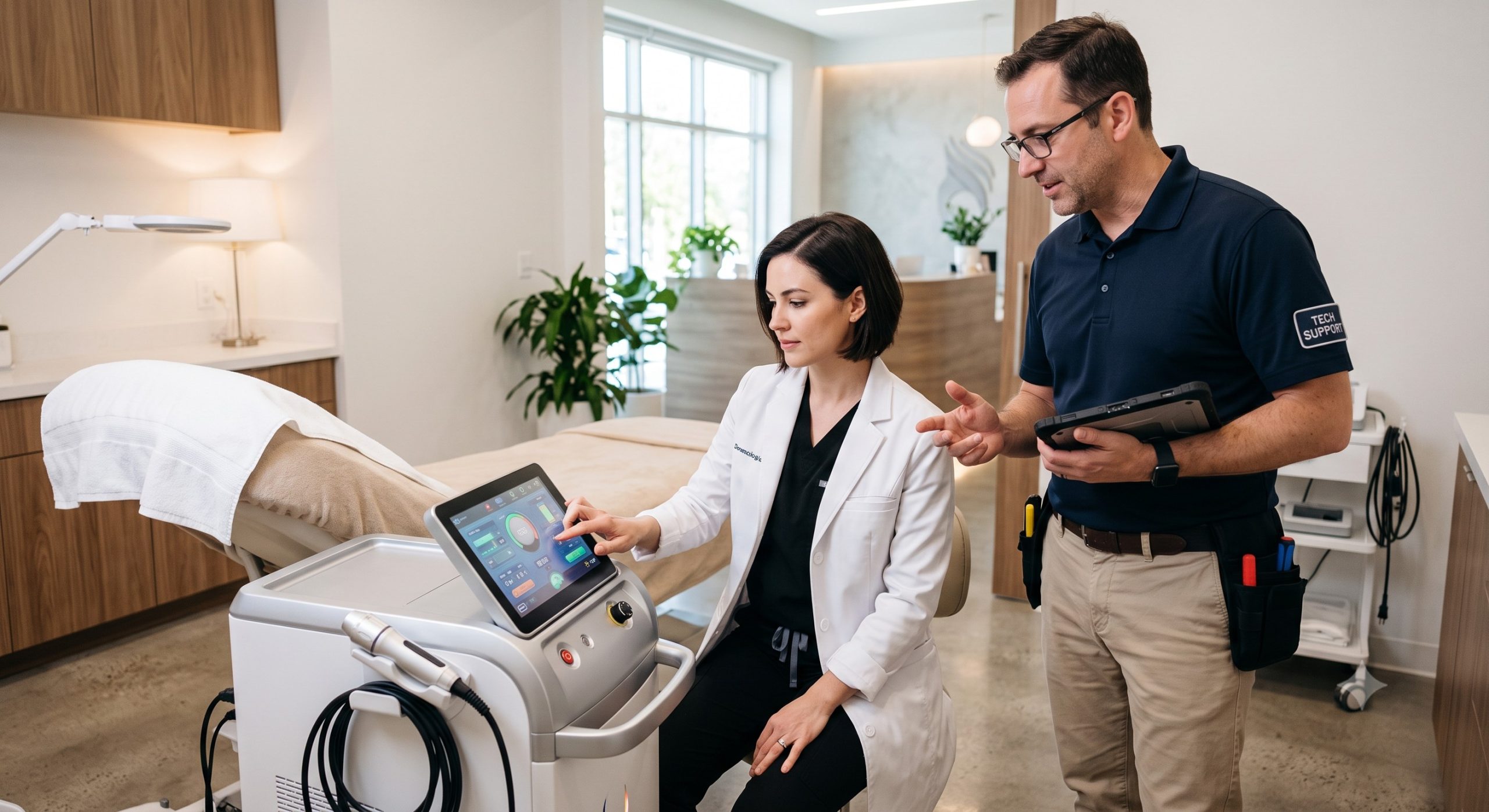
B2B contracts include remote technical support via WhatsApp, Skype, or WeChat (response time ≤4 hours), with optional on-site service packages (arrival within 48-72 hours). Support covers: error code troubleshooting (e.g., E-01 water flow alarm, E-05 energy inconsistency), recalibration of the energy meter, touchscreen software updates, and water circuit cleaning guidance. Some OEM suppliers provide spare parts (handpiece cables, water pumps, quartz windows) shipped within 24 hours of request.
Q6: What regulatory certifications must the machine have for clinic compliance?
For legal operation in medical aesthetic clinics, the laser hair removal machine must have: CE Medical (Class IIb, EN 60601-2-22 for laser safety), FDA 510(k) clearance (if selling or operating in the US), and ISO 13485:2016 for manufacturing quality management. Additional region-specific certifications include TGA (Australia), MDSAP (Canada/US/Brazil), and NMPA (China for imported devices). Request scanned copies before purchase—authentic certificates show the device model number, laser wavelength (e.g., 808nm, 755nm, or triple wavelength), and maximum output energy (e.g., 50 J/cm²).
Q7: Can I integrate the laser machine with my clinic’s booking and payment systems?
Yes, most modern machines feature USB and Ethernet ports for software integration with PMS (Practice Management Software) or EMR (Electronic Medical Records). The machine logs session data (shots used, energy level, patient skin type preset) exportable as CSV files. However, direct API integration varies by brand—B2B suppliers provide an SDK (Software Development Kit) for clinics requiring custom integration with platforms like Mindbody, Zenoti, or Aesthetic Record. Confirm interoperability before purchase if automation is critical.
Q8: What is the typical lifespan of the handpiece before replacement is needed?
The handpiece of a professional laser hair removal machine typically lasts 1,000,000 to 2,000,000 shots (equivalent to 2-4 years of full-time clinical use). Deterioration signs include a >15% drop in output energy (measured with a power meter), inconsistent spot size uniformity, or visible cracking on the sapphire window. High-quality imported laser bars (from Lumentum or Jenoptik) retain >80% output at 2 million pulses, while economy-grade bars may fail at 500,000 pulses. Always request the shot counter reset procedure and purchase a backup handpiece for uninterrupted clinic operation.