Overview
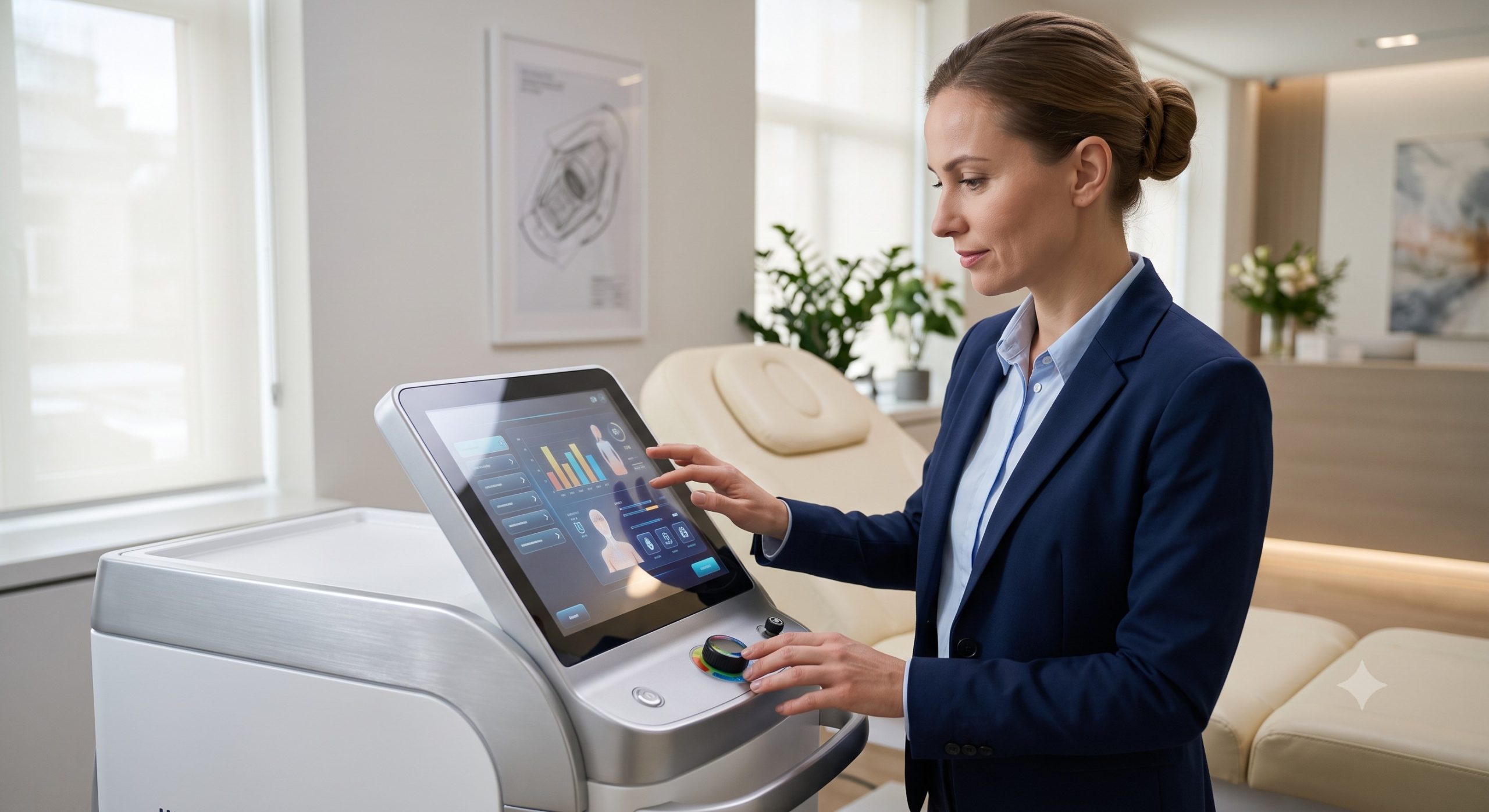
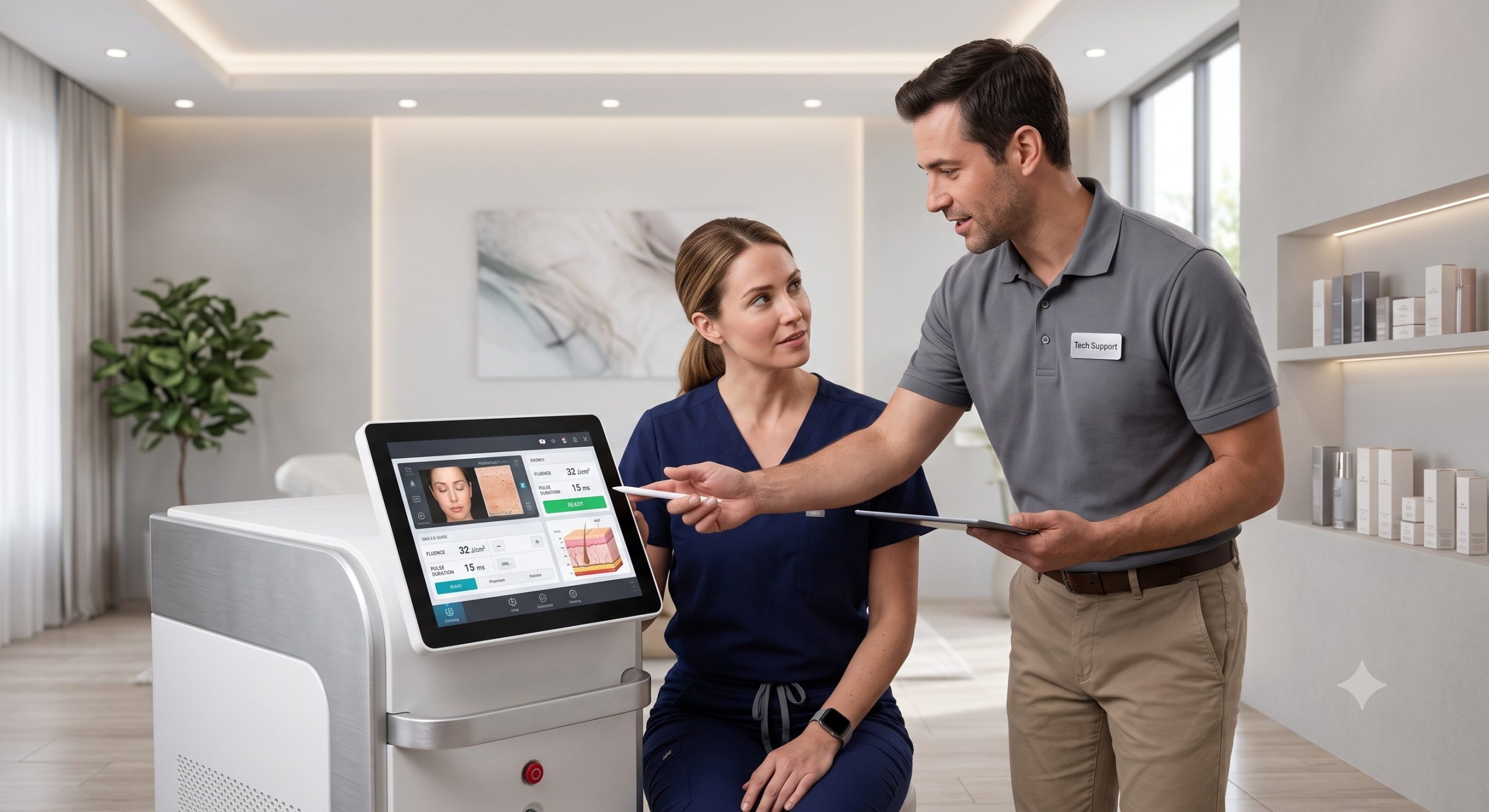
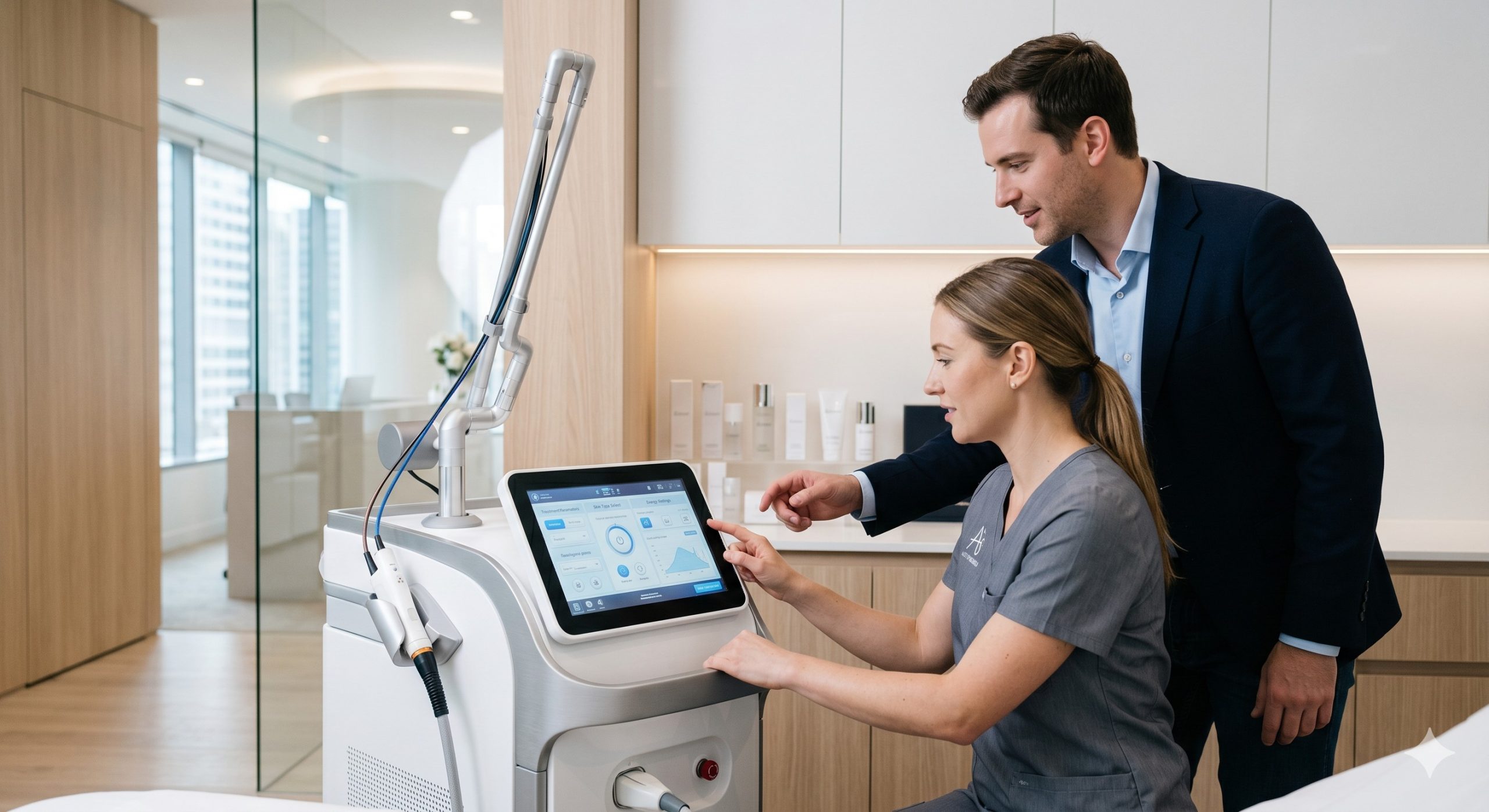
This technical FAQ addresses the most critical pre-sales and post-sales questions from aesthetic clinic owners and dermatologists about modern IPL beauty machines. From spectral output and epidermal cooling to consumable costs and regulatory compliance, these answers are designed to support high-ROI purchasing decisions and safe clinical operation.
Frequently Asked Questions
Q1: Is an IPL beauty machine suitable for all Fitzpatrick skin types I-VI?
Yes, modern medical-grade IPL beauty machines are safe and effective for Fitzpatrick skin types I-VI, provided they feature automated skin type detection and adjustable pulse durations. The key is the integration of contact cooling (usually at 0°C to 4°C) and longer pulse widths (30-60ms) for darker phototypes to avoid epidermal burns. For type V and VI, always use test spots at low fluence (≤10 J/cm²) and prioritize the 640nm+ filters.
Q2: What is the typical handpiece shot lifespan of an IPL beauty machine, and what are consumable costs?
The handpiece shot lifespan of a premium IPL beauty machine is typically 100,000 to 200,000 flashes before a factory-calibrated replacement is required. Most B2B suppliers offer exchange handpieces at 30-40% of the original unit cost. Based on 20-30 patients per week, a 150,000-shot handpiece lasts 18-24 months, translating to a consumable cost of just $0.08-$0.12 per effective flash.
Q3: How does the advanced contact cooling system improve patient comfort and safety?
The sapphire contact cooling system in this IPL beauty machine achieves continuous epidermal protection via a thermoelectric module that maintains a constant tip temperature of -5°C to 5°C. This dual-effect cooling reduces pain by blocking thermal nociceptors and prevents superficial burns, allowing the use of higher fluence (up to 50 J/cm²) for deeper follicles. Patients typically describe the sensation as a ‘cool pinch’ without requiring topical anesthetic.
Q4: What ROI and payback period can a med spa expect from an IPL beauty machine?
A clinic can achieve full ROI on an IPL beauty machine within 3-6 months when performing 60-80 sessions per month at an average charge of $120-$180 per treatment. The machine’s low consumable cost (≈$0.10/flash) and ability to bill for hair removal, pigmentation, and vascular lesions drive multi-service revenue. Excluding labor, gross margin per session exceeds 85% after the first 60 days of operation.
Q5: What medical certifications (CE, FDA) and quality audits should an IPL beauty machine hold?
For regulatory compliance and insurance reimbursement, the IPL beauty machine must carry valid Medical CE (MDR 2017/745) for Class IIb devices, FDA 510(k) clearance, and ISO 13485:2016 for manufacturing quality. These certifications verify validated energy stability (±5% over 50,000 shots), optical safety filters, and biocompatible handpiece materials. Always request the Notified Body certificate number and match it with the device serial number upon delivery.
Q6: How do I maintain the water circulation and internal thermal regulation system?
Maintain the IPL beauty machine’s closed-loop water circulation system by checking coolant levels every 300 hours and replacing the deionized water and anticorrosive solution every 12 months. Use only medical-grade, non-conductive fluid to prevent pump cavitation. The thermal sensors should trigger an automatic shutdown if the handpiece exceeds 22°C; never bypass this safety logic as it directly protects the flashlamp and xenon module.
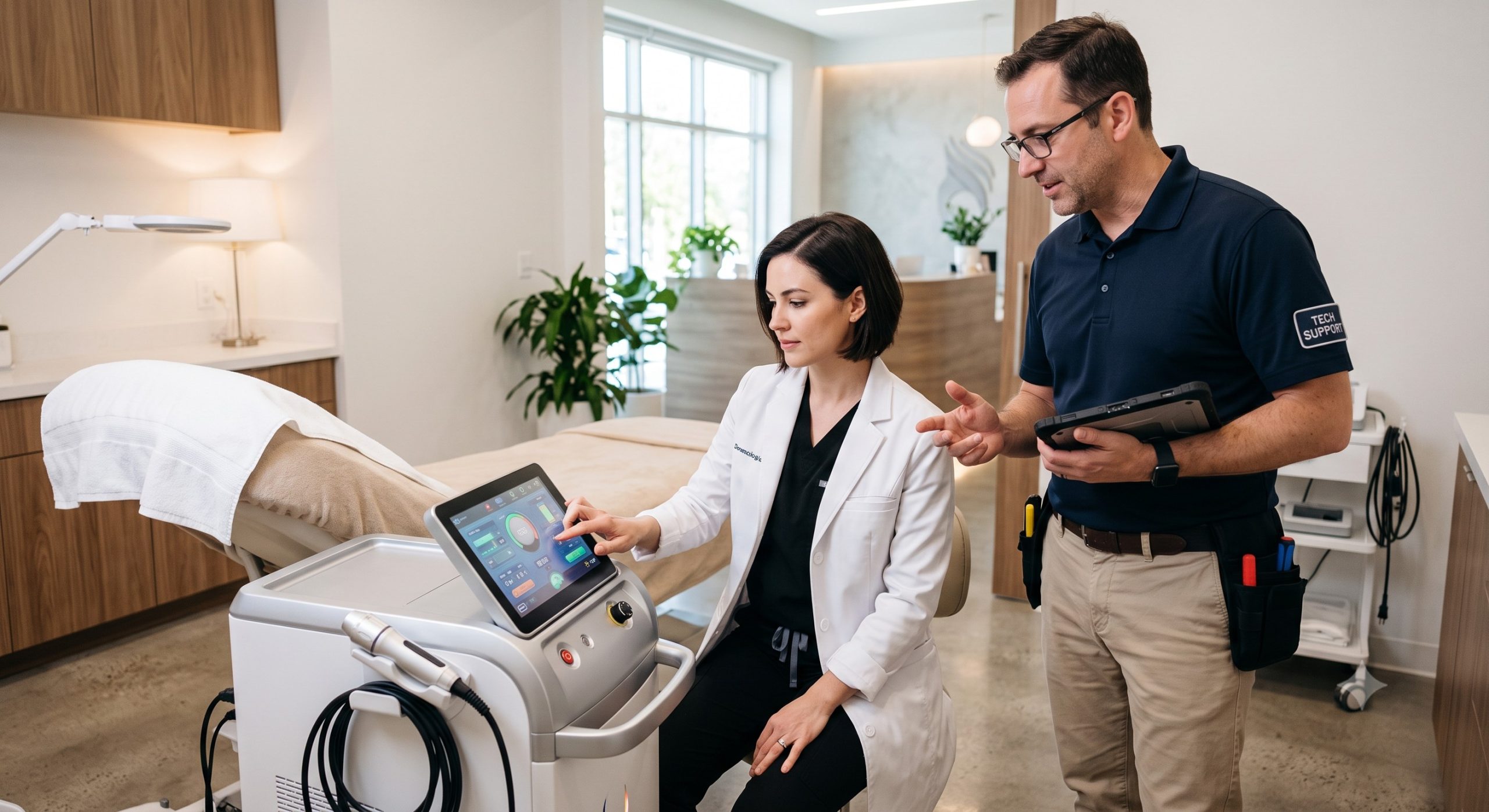
Q7: What are the most common error codes and how can a technician resolve them?
The most common IPL beauty machine errors are: E-01 (Low coolant flow → purge air from the pump), E-04 (Skin contact impedance high → clean sapphire window or replace contact sensor), and E-12 (Energy deviation >15% → recalibrate capacitor bank). For persistent E-08 over-temperature errors, inspect the radiator fan and thermistor harness. Always keep a spare handpiece interface board and a bottle of calibration test film (15-35 J/cm² range) for weekly validation.