Overview
Investing in a professional laser hair removal system is a significant decision for any aesthetic clinic or dermatology practice. This FAQ guide addresses the most critical pre-sales and post-sales questions, providing clear, expert answers to help you navigate the procurement, operation, and maintenance of your new device. From clinical efficacy and safety to technical support and ROI, we cover it all.
Frequently Asked Questions
Q1: What is the typical warranty period and what does it cover for a professional laser hair removal system?
Most professional laser hair removal systems come with a standard 12 to 24-month warranty that covers the main console, including the laser source, power supply, and control board. This warranty typically does not cover consumable parts like the handpiece, laser flashlamps, or the sapphire tip, which have shorter lifespans. We highly recommend inquiring about extended warranty options and service level agreements that include priority technical support and on-site repair to minimize clinic downtime.
Q2: Does the manufacturer provide hands-on training for my clinical staff?
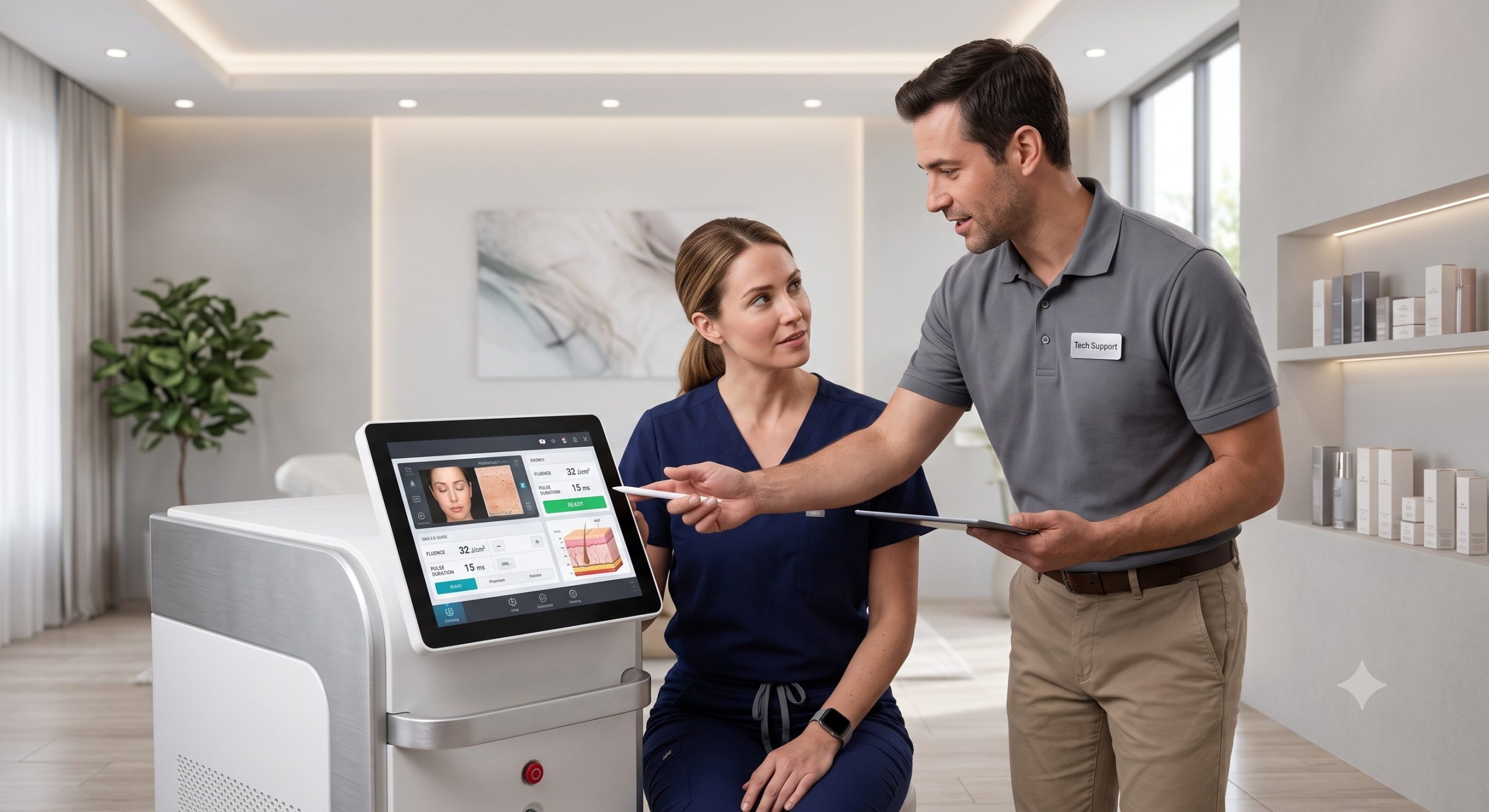
Yes, comprehensive onsite or virtual training is a standard part of the B2B purchase package for professional laser systems. This training covers safe operation, understanding skin typing, selecting appropriate clinical parameters (fluence, pulse duration), and performing test spots. It also includes proper handpiece handling, maintenance of the water cooling system, and troubleshooting common operational errors. Ensure this is explicitly detailed in your sales contract.
Q3: Is professional laser hair removal safe and effective for all Fitzpatrick skin types, including skin types V and VI?
Yes, modern professional laser systems equipped with advanced cooling and specific long-pulse wavelengths (like 1064nm Nd:YAG) are safe and effective for all Fitzpatrick skin types, including V and VI. These devices have a longer wavelength that bypasses the epidermis, reducing the risk of hyperpigmentation or burns. The efficacy for darker skin types relies on a dual approach: utilizing the 1064nm wavelength and longer pulse durations to target the deeper melanin in the hair follicle while the contact cooling protects the skin surface.
Q4: What are the main differences between an IPL device and a professional diode or Nd:YAG laser for hair removal?
A professional laser hair removal system is a ‘gold standard’ device that uses a single, highly concentrated, and specific wavelength of light (e.g., 808nm Diode, 1064nm Nd:YAG) to precisely target the melanin in the hair follicle. In contrast, an IPL (Intense Pulsed Light) device emits a broad spectrum of light, which is less focused and generally more suitable for lighter skin tones. Lasers offer superior clinical efficacy, faster treatment times, and a safer profile for a wider range of skin types (I-VI), making them a better long-term investment for a professional clinic.
Q5: What are the consumable costs associated with running a professional laser hair removal machine, and how often do they need replacing?
The primary consumable costs are the handpiece and the high-energy laser flashlamps. Depending on usage, the handpiece typically lasts for 1 to 2 million shots before replacement. Maintaining a steady stream of consumables is critical for clinical uptime; consider establishing a relationship with a supplier for automated re-orders or keeping a spare handpiece on hand.
Q6: What type of technical support can I expect after purchase, and what is the process for troubleshooting errors?
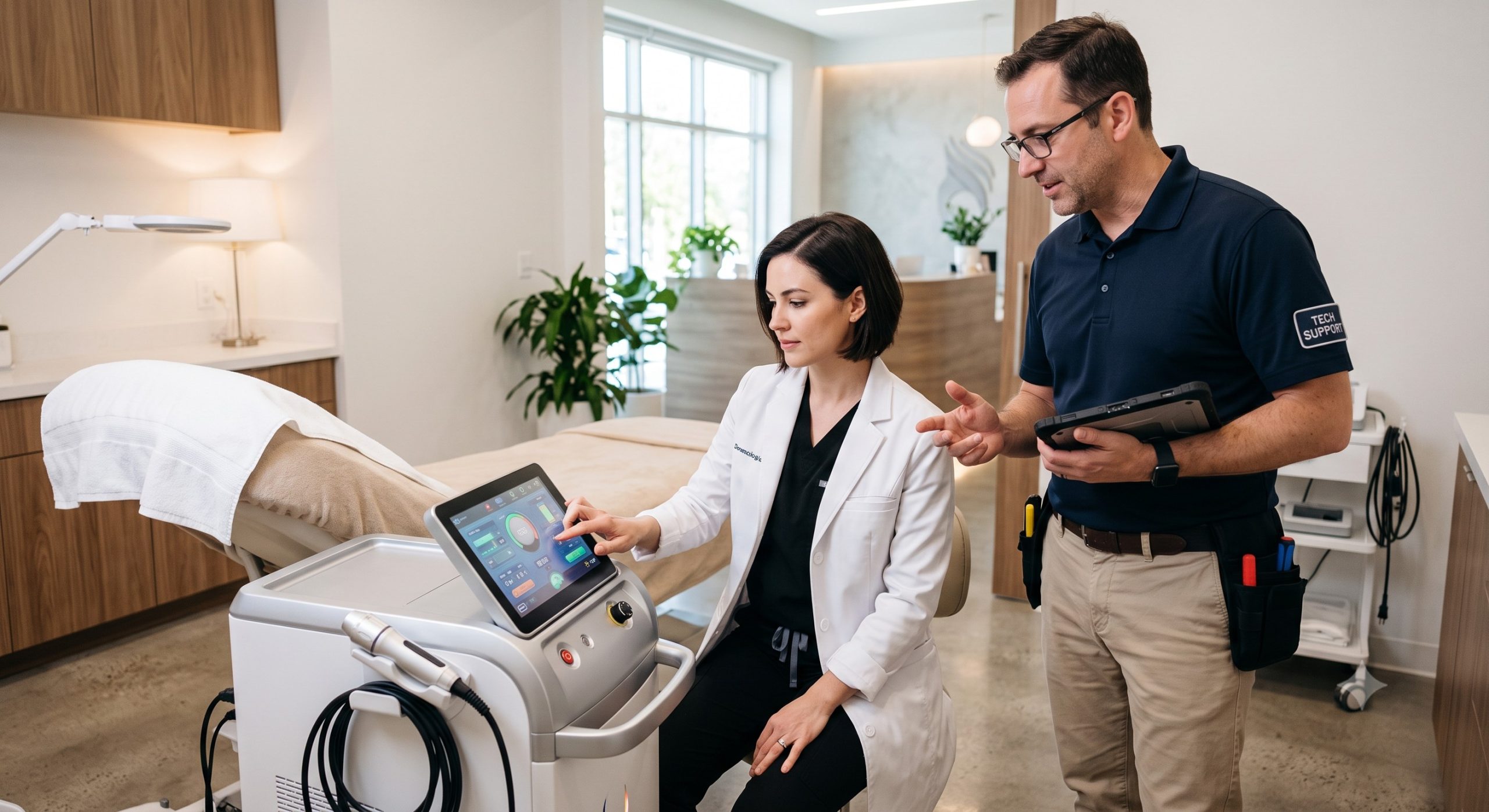
Post-sales technical support is a critical component of the B2B relationship and should include access to a dedicated support team via phone, email, and remote diagnostic sessions. For real-time support, a log file from the device’s software can often be sent to the manufacturer for diagnosis. This allows engineers to identify issues like thermal regulation problems, electrical faults, or energy calibration errors, often resolving the issue remotely or by sending a replacement part.
Q7: What are the logistics and shipping considerations for importing a professional laser hair removal system?
The shipping and logistics for medical aesthetic devices are complex. The system is typically shipped via air freight on a pallet, encased in a secure, shock-absorbent flight case to protect sensitive optics and electronics. The manufacturer will handle all the necessary customs and export documentation, but you may be responsible for import duties, taxes, and local customs clearance. Provide your business address and local contact details to the logistics team for a smooth delivery and arrival of the device to your clinic.
Q8: What are the key technical specifications I should compare when evaluating different professional laser systems?
When comparing systems, focus on the peak power, adjustable spot sizes, and the range of clinical parameters (pulse duration and energy density). These technical specifications directly influence treatment speed and efficacy. Look for a system that combines multiple wavelengths (e.g., 755nm, 808nm, 1064nm) in one device to offer maximum versatility for your patient base. The maximum energy output in Joules/cm² is also crucial for treating coarser or more stubborn hair follicles.