Overview
For aesthetic clinic owners and dermatologists, investing in a diode laser hair removal system requires technical, clinical, and financial clarity. This FAQ addresses high-intent B2B questions—from Fitzpatrick VI safety and handpiece shot lifespan to ROI calculations and regulatory compliance. Each answer is structured to support purchase decisions, optimize clinical workflows, and reduce post-sales technical risk.
Frequently Asked Questions
Q1: Is diode laser hair removal suitable for all Fitzpatrick skin types (I-VI)?
Yes, modern diode lasers (800-810nm) are clinically safe and effective for Fitzpatrick skin types I through VI. Unlike older IPL or Alexandrite lasers, the longer wavelength bypasses epidermal melanin competition while targeting the deeper follicular bulb. Key considerations for Type V-VI include:
– Use longer pulse widths (30-50ms) and lower fluences (10-20J/cm²)
– Integrated contact cooling (sapphire tip at 0-4°C) preserves the basal layer
– Perform test spots at 48 hours prior to full treatment
Q2: What is the typical handpiece shot lifespan, and how often must I replace it?
The typical diode laser handpiece delivers 500,000 to 1,500,000 effective shots before laser diode degradation reaches 20% output loss. This corresponds to approximately 3-5 years of full-time clinical use (30-50 patients weekly). After this threshold, you will observe:
– Increased required fluence settings to achieve same clinical endpoint
– Longer treatment times per patient
– Higher patient discomfort due to reduced epidermal cooling efficiency. Most B2B suppliers offer factory-reconditioned handpiece exchanges at 40-60% of new unit cost.
Q3: How does the integrated contact cooling system eliminate pain without cryogen spray?
The diode laser uses a thermoelectric Peltier-cooled sapphire tip (0°C to 4°C) that compresses and anesthetizes the epidermis milliseconds before the laser pulse. Unlike older cryogen spray systems which add consumable costs and uneven cooling, contact cooling provides:
– Epidermal protection up to 50J/cm² without burning
– Simultaneous numbing and vasoconstriction for darker skin types
– Zero consumable refrigerant costs (saving $3,000-$5,000 annually per device)
Patients report a ‘warm rubber band snap’ rather than sharp pain, improving retention and referral rates.
Q4: What ROI can a med spa expect from a diode laser purchase?
A diode laser typically achieves full ROI within 6-9 months in a medium-volume clinic (25-35 treatments/week). Based on 2025 US market data:
– Average per-session price: $250 (full legs) to $75 (upper lip)
– Consumable cost per patient: $0.50 (electrical + tip cleaning solution)
– Breakeven point: 400-600 billable sessions for a $25,000-$35,000 device
– Three-year profit potential: $180,000-$250,000 after maintenance and handpiece replacement
Key drivers: low consumables, high patient return rates (6-8 sessions avg per client), and ability to stack with other services (e.g., laser facials, skin tightening).
Q5: What are the critical FDA and Medical CE compliance requirements for clinic purchase?
For legal operation in North America and Europe, the diode laser must hold valid FDA 510(k) clearance (Class II medical device) or Medical CE Mark (MDR 2017/745). Mandatory documentation before purchase:
– FDA Establishment Registration number and Device Listing number
– IEC 60825-1 laser safety certification (Class 4)
– ISO 13485:2016 certified manufacturing audit trail
– User manual with specified maximum radiant exposure (J/cm²) and pulse repetition rate
Buyer beware: imported ‘cosmetic use only’ lasers without these marks are illegal for hair removal in regulated markets and void your malpractice insurance.
Q6: How often does the internal water circulation system need maintenance?
The closed-loop water cooling system (required for 800W+ diode bars) requires distilled water replacement every 3-6 months or 500 operating hours. Standard maintenance protocol:
– Flush with medical-grade bacteriostatic solution quarterly
– Inspect for micro-bubbles (reduce thermal transfer efficiency)
– Replace inline particulate filter (if equipped) every 12 months
Neglect leads to gradual diode overheating, output power loss, and permanent bar failure ($4,000-$7,000 repair). Many technical support contracts include biannual water circuit validation.
Q7: What is the clinical workflow to integrate diode laser with other aesthetic devices?
Optimal clinic workflow sequences diode laser hair removal BEFORE deep dermal procedures, but AFTER superficial treatments. Clinical guidelines:
– Same session: Perform diode first, followed by radiofrequency skin tightening (RF energy deeper, no interaction)
– Separate by 2 weeks: Microdermabrasion or chemical peels (remove melanin interference)
– Separate by 4 weeks: Fractional CO2 or microneedling (allow full epidermal repair)
– Do NOT combine on same day: IPL or intense pulsed light (overlapping chromophores)
Most clinics schedule diode laser as the core ‘traffic builder’ and layer higher-margin body contouring or RF microneedling as upgrades.
Q8: Which technical support and training are included after B2B purchase?
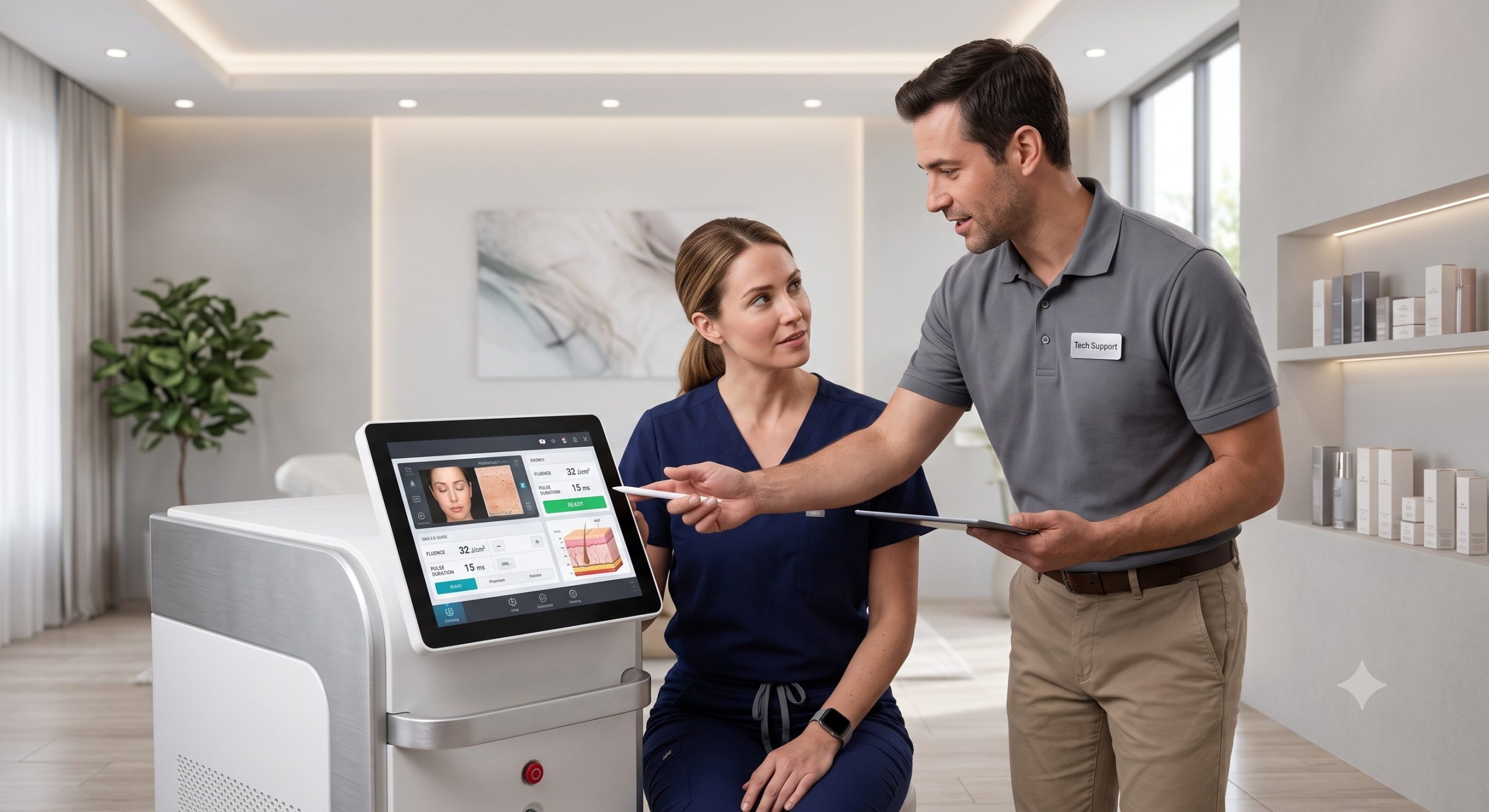
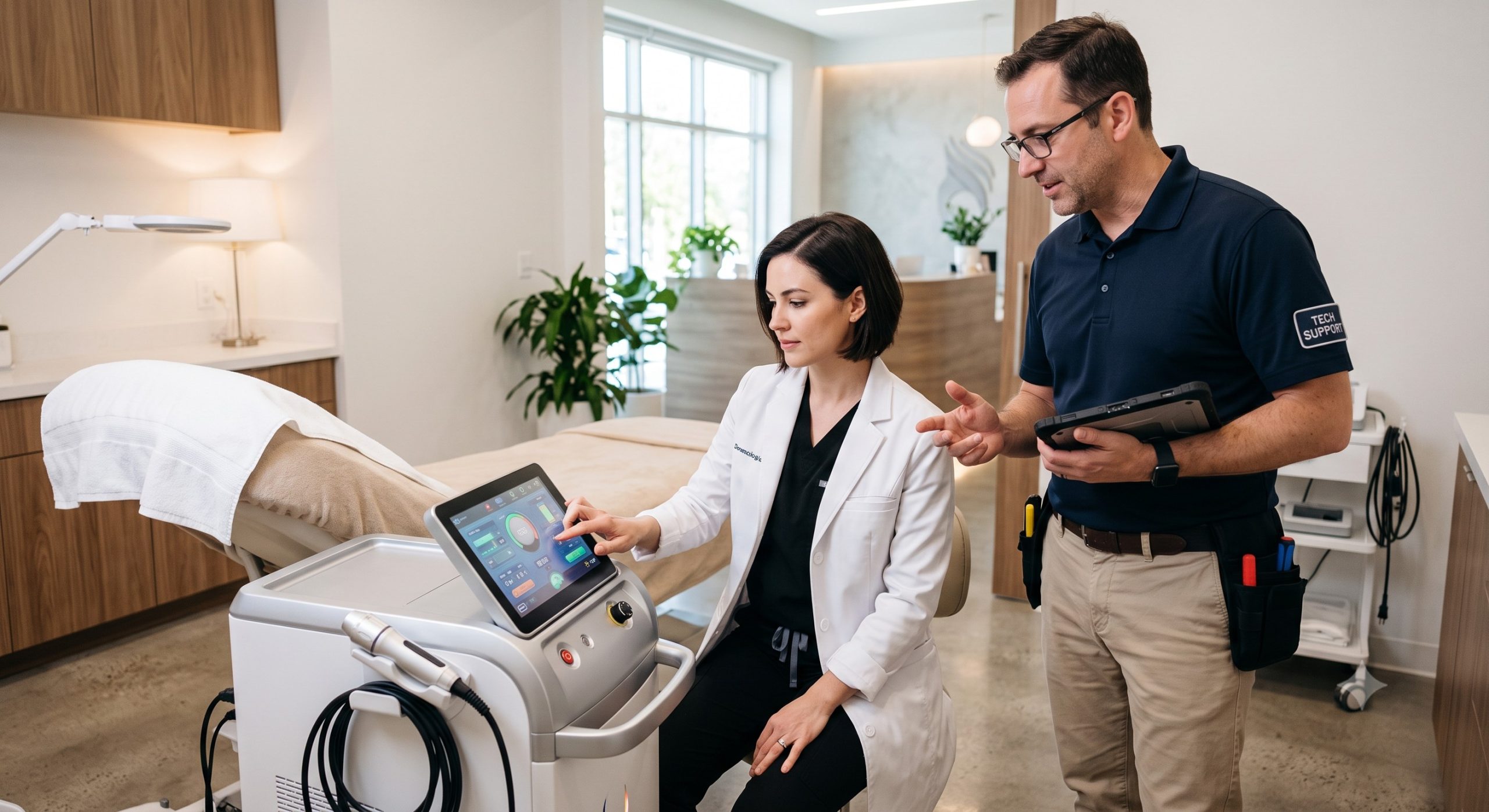
Professional B2B supplier agreements must include: on-site clinical training (2-4 hours, covers Fitzpatrick parameter mapping and test spot protocols), remote technical support (8-12 hour response time, excluding weekends), and a detailed troubleshooting guide for error codes E01-E15. Leading distributors also provide:
– 24-month warranty on laser bars and electronics
– Lifetime phone/WhatsApp technical support for technicians
– Loaner handpiece during factory repairs (after 12 months)
– Annual calibration certificate (required for medical audits)
Verify these terms in writing before purchase order, as discount-only offers often exclude post-sales support.