Overview
For B2B clinic owners and dermatologists, understanding the longevity and maintenance requirements of your aesthetic equipment is critical for financial planning and treatment consistency. The diode laser handpiece is the core consumable of the system, and its ‘shot count’ directly influences your operational costs and clinical outcomes. Below, we answer the most common pre-sales and post-sales technical questions regarding the lifespan of the diode laser handpiece.
Frequently Asked Questions
Q1: What is the average shot count lifespan of a standard diode laser handpiece?
A standard high-quality diode laser handpiece typically lasts between 1,000,000 to 2,000,000 effective shots. This directly correlates to the life of the laser bars (diodes) housed within the handpiece. As the handpiece is used, the output energy can degrade slightly. Manufacturers often design the cooling and power systems to support this volume, ensuring consistent fluence (J/cm²) throughout the handpiece’s lifespan. It is important to note that this figure is based on controlled testing conditions; actual lifespan can vary depending on energy settings and pulse duration used.
Q2: How do I accurately track the remaining lifespan of my diode laser handle?
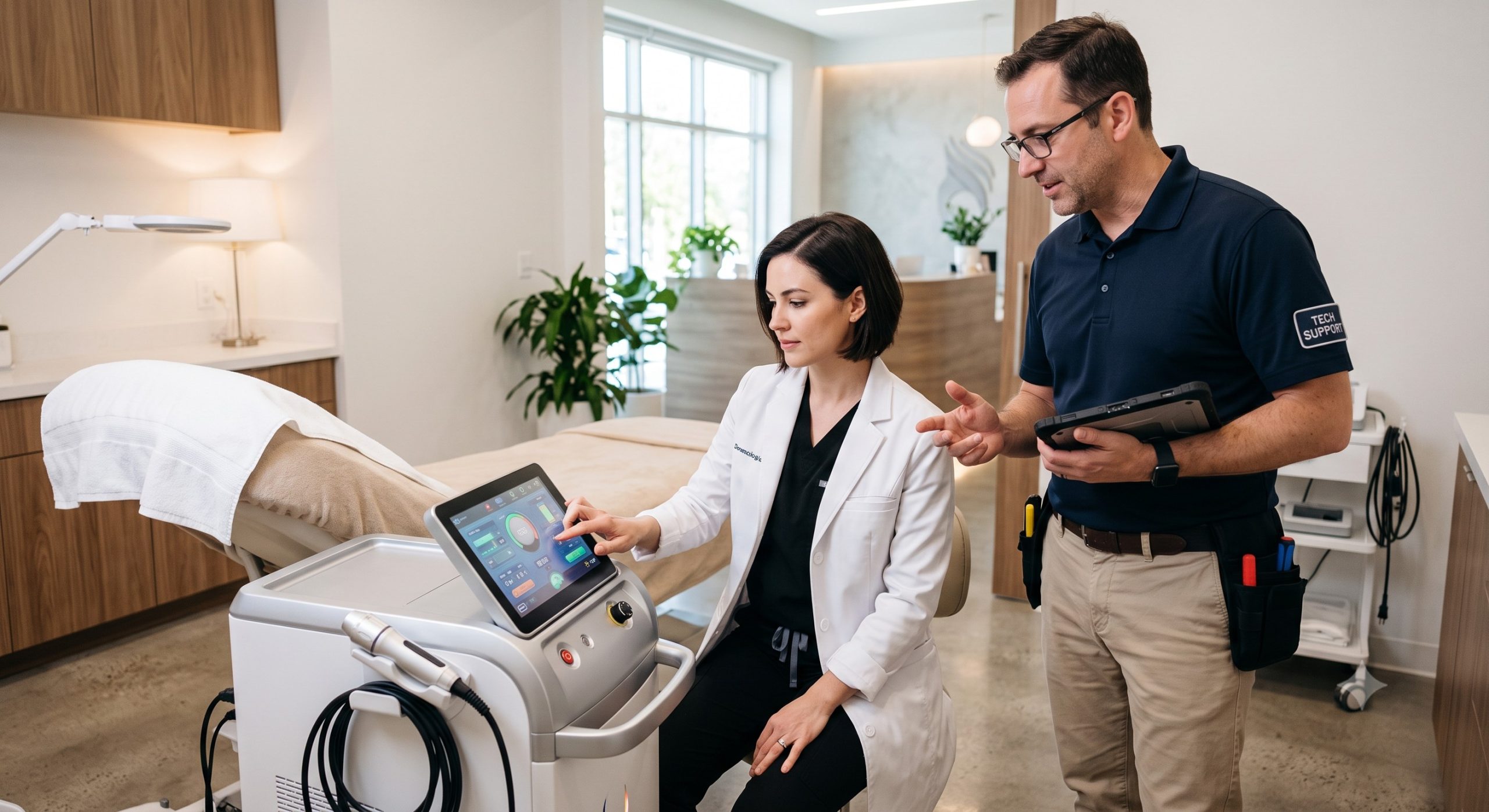
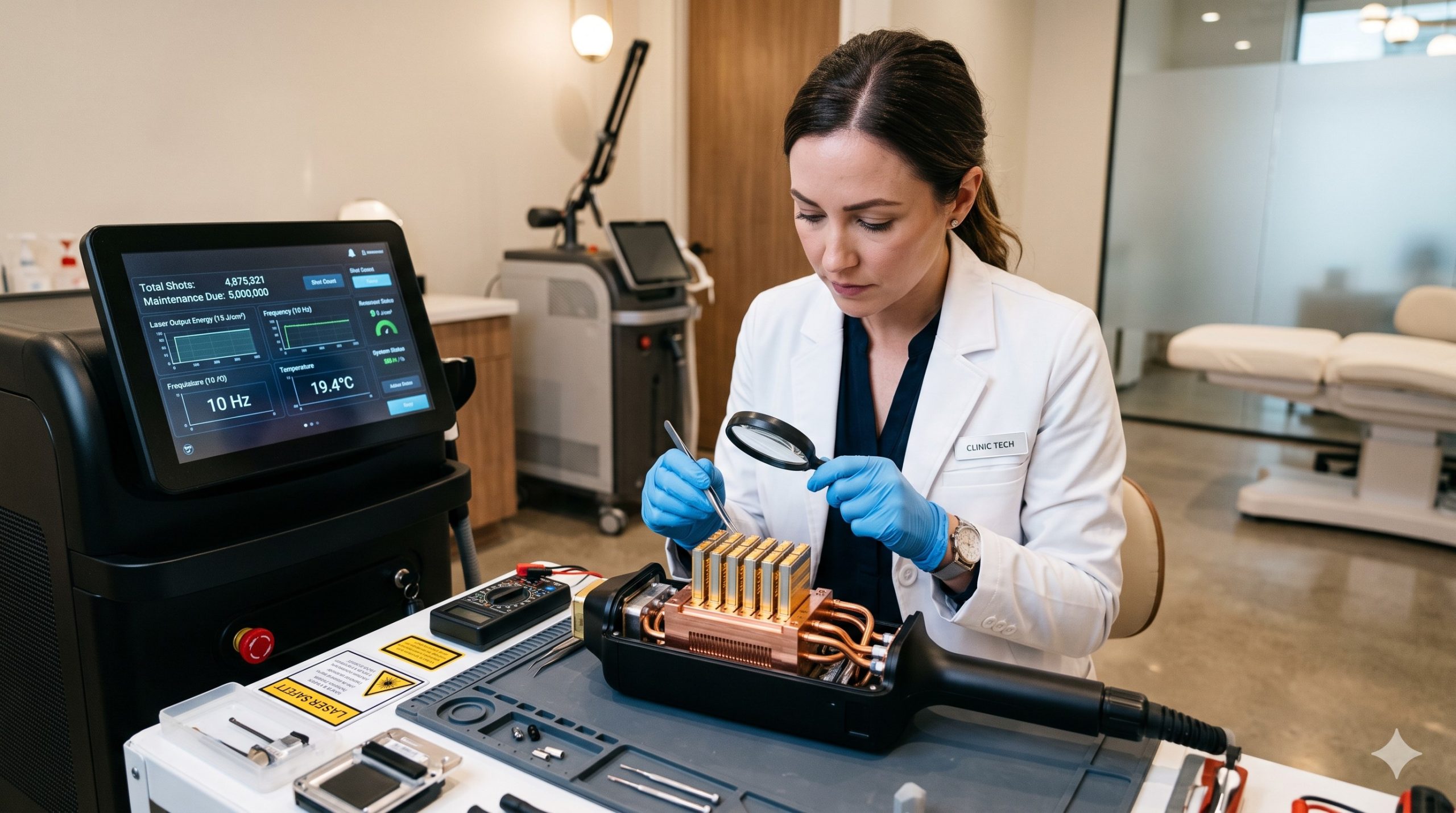
The system’s main control unit automatically tracks and displays the cumulative shot count on the operator interface. Most modern diode laser systems feature a built-in counter that records every single pulse emitted. When the handpiece approaches its designated end-of-life (EOL) threshold, the software will typically display a warning prompt on the touchscreen, reminding the clinic to order a replacement unit. This proactive monitoring ensures there is no interruption to your clinical services.
Q3: Does using a higher energy level (fluency) reduce the handpiece’s shot lifespan?
Yes, operating the device at maximum energy output can accelerate diode degradation and potentially reduce the total shot lifespan by 15-20%. Running the laser at higher fluences (e.g., above 40 J/cm²) generates more heat and stress on the semiconductor bars. However, the advanced contact cooling and internal thermal regulation systems are engineered to mitigate this effect. For daily clinical use, utilizing preset treatment protocols that balance efficacy and longevity is recommended to maximize the ROI of your handpiece.
Q4: What are the financial costs associated with replacing a diode laser handpiece?
The replacement cost of a diode laser handpiece usually ranges between $2,500 and $4,500 USD, depending on the model and laser bar configuration (e.g., 3-bar vs. 12-bar stacks). Although this is a significant capital expense for consumables, when amortized over 1.5-2 million shots, the cost-per-treatment is highly economical—often under $0.10 per patient shot. We recommend inquiring about the specific ‘Cost Per Shot’ and handpiece warranty during procurement to accurately calculate your clinic’s payback period.
Q5: What key technical factors determine the durability of a diode laser handpiece?
Three primary factors determine handpiece durability: 1) The quality and origin of the diode bars—premium imported bars (e.g., from Germany or the US) offer superior longevity. 2) The efficiency of the water cooling circuit integrated into the handpiece, which prevents overheating. 3) The optical coating on the sapphire window and reflective mirrors, which must resist thermal degradation. Clinics should prioritize devices that feature advanced contact cooling and high-efficiency thermal management to preserve the internal components.
Q6: What should I look for in a warranty for the diode laser handpiece?
Clinics should seek a comprehensive warranty that specifically covers the handpiece and laser bars for at least 1 year or 1 million shots, whichever comes first. A robust warranty demonstrates the manufacturer’s confidence in the durability of their components. Additionally, ensure the terms include coverage for technical support, expedited shipping for replacement parts, and a clear process for claiming a warranty if the device fails to meet specified energy output thresholds before the shot limit is reached.
Q7: What are the signs that my diode laser handpiece needs replacing?
Key signs include a noticeable drop in clinical efficacy (patients requiring more sessions), inconsistent energy output leading to patchy results, and error messages related to diode temperature or energy calibration on the main screen. If you observe that the device struggles to reach the set fluence or the contact cooling system is less effective, it is time to consult your technical support engineer. Routine preventative maintenance and monitoring are essential to avoid such issues.
Q8: Can the handpiece be repaired, or does it always need to be fully replaced?
The diode laser handpiece is a sealed optical unit that is generally non-repairable in the field. Due to the precision alignment required for the laser optics and the hermetic sealing of the bars, any internal failure warrants a full replacement of the handpiece assembly. Attempting to repair the handpiece locally often voids the warranty and can compromise patient safety. Replacement is the only standard protocol to restore the device to full OEM performance specifications.