Overview
For medical aesthetic clinic owners and dermatologists, the clinical efficacy and safety profile of High-Intensity Focused Ultrasound (HIFU) for facial rejuvenation is a primary concern. A frequently asked question is whether this non-invasive lifting technology inadvertently causes facial volume loss by melting subcutaneous fat. This comprehensive FAQ addresses clinical mechanisms, patient selection criteria, and technical specifications for B2B buyers, ensuring you maximize ROI while maintaining the highest safety standards.
Frequently Asked Questions
Q1: Does HIFU melt facial fat, and is this a clinical risk?
No, properly calibrated HIFU does not melt facial fat in a way that causes volume depletion or contour irregularities. The technology delivers focused ultrasound energy to the superficial musculoaponeurotic system (SMAS) layer at a depth of 4.5mm, inducing thermal coagulation points for tissue contraction and neocollagenesis. While it can selectively target small pockets of fat with specialized 13mm or 16mm transducers for body contouring, facial protocols (1.5mm, 3.0mm, 4.5mm) are designed to spare adipose tissue and target the fibrous SMAS layer. Expert practitioners avoid high energy densities and excessive line counts over the malar fat pads, ensuring the treatment is a lifting procedure, not a lipolytic one.
Q2: What are the clinical mechanisms that prevent HIFU from destroying facial fat cells?
HIFU energy is focused at specific depths: 1.5mm (dermis), 3.0mm (deep dermis/subcutaneous junction), and 4.5mm (SMAS). The SMAS is a fibromuscular layer located above the deep facial fat compartments. By focusing energy precisely at this structural plane, the tissue is heated to 60-70°C to create a tight mesh of collagen without inducing widespread apoptosis in the fat lobules. The device’s thermal coagulation points are isolated (1mm x 3mm), meaning there is minimal lateral thermal spread to surrounding adipose tissue. For clinics, this means you can achieve a lifting effect without the ‘skeletonized’ look associated with lipolysis.
Q3: How does the cooling system protect the epidermis and prevent thermal injury?
Advanced HIFU devices utilize integrated contact cooling mechanisms to safeguard the epidermis from thermal damage during energy delivery. The transducer tip is actively cooled to a temperature range of 0°C to 5°C, ensuring that the superficial skin layers remain intact while the deep focused energy reaches the SMAS. This pain management feature also enhances patient comfort, allowing for higher energy settings without compromising safety, which is crucial for maintaining patient retention and satisfaction in a clinical setting.
Q4: Is HIFU safe for all Fitzpatrick skin types, including darker skin (IV-VI)?
Yes, HIFU is considered safe and effective for all Fitzpatrick skin types (I-VI). Unlike laser or IPL, HIFU does not rely on selective photothermolysis based on melanin absorption. It bypasses the epidermis entirely, eliminating the risk of post-inflammatory hyperpigmentation (PIH) common in darker skin tones. This makes it a versatile investment for clinics serving diverse demographics, expanding your treatment portfolio without additional consumable costs for different skin types.
Q5: What is the typical lifespan of a HIFU handpiece, and what are the replacement costs?
The typical lifespan of a HIFU cartridge/handpiece is between 2,400 and 3,600 shots, or approximately 20-30 full facial treatments, depending on the energy level used. Consumable expenditure is a key factor in calculating ROI; budgeting for replacement cartridges is essential for high-throughput clinics. Most modern devices feature smart chip technology that tracks shot count and provides alerts when the transducer needs replacing, ensuring consistent energy output and clinical efficacy.
Q6: What are the key operational parameters and clinical training requirements for HIFU?
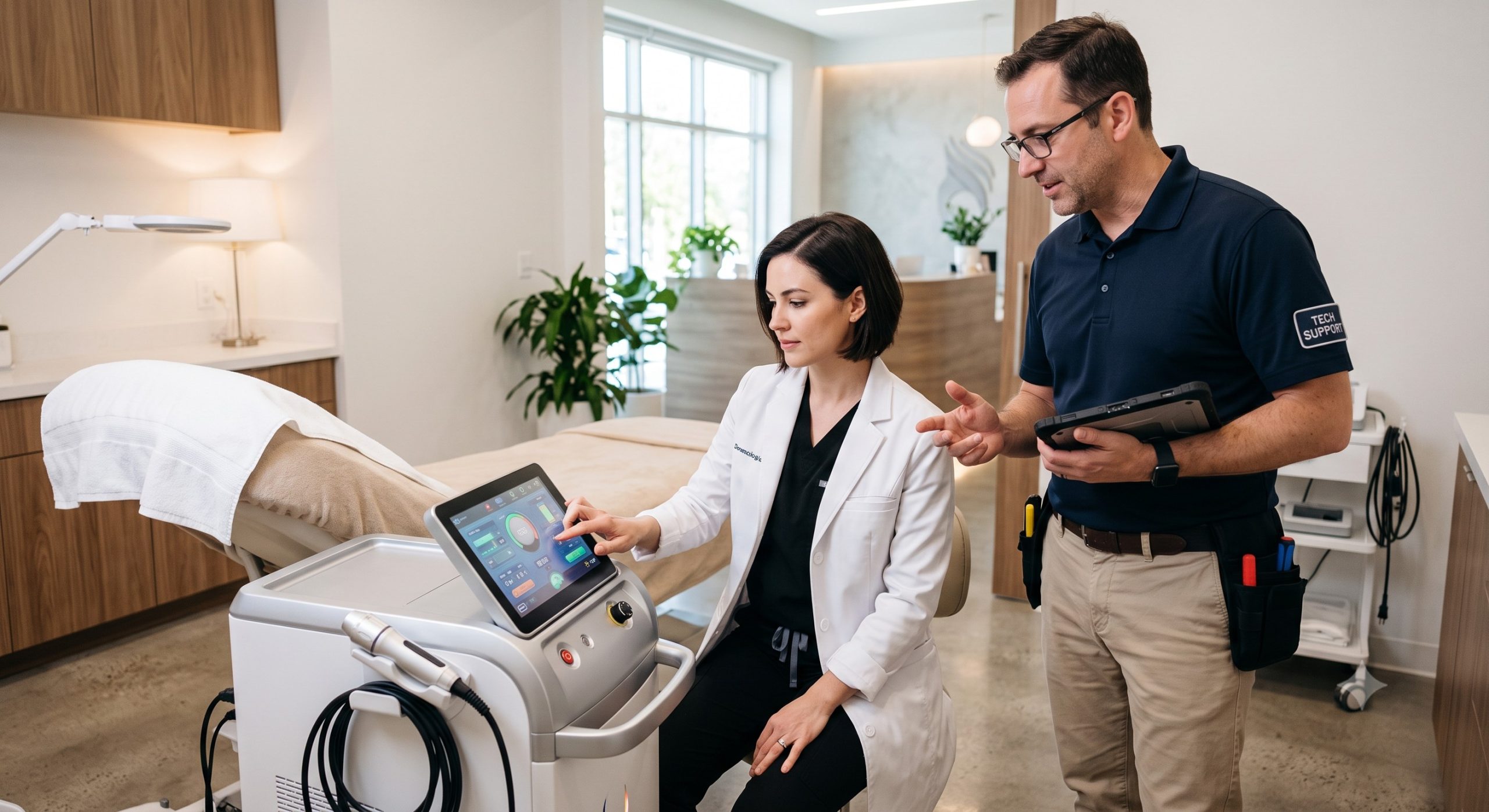
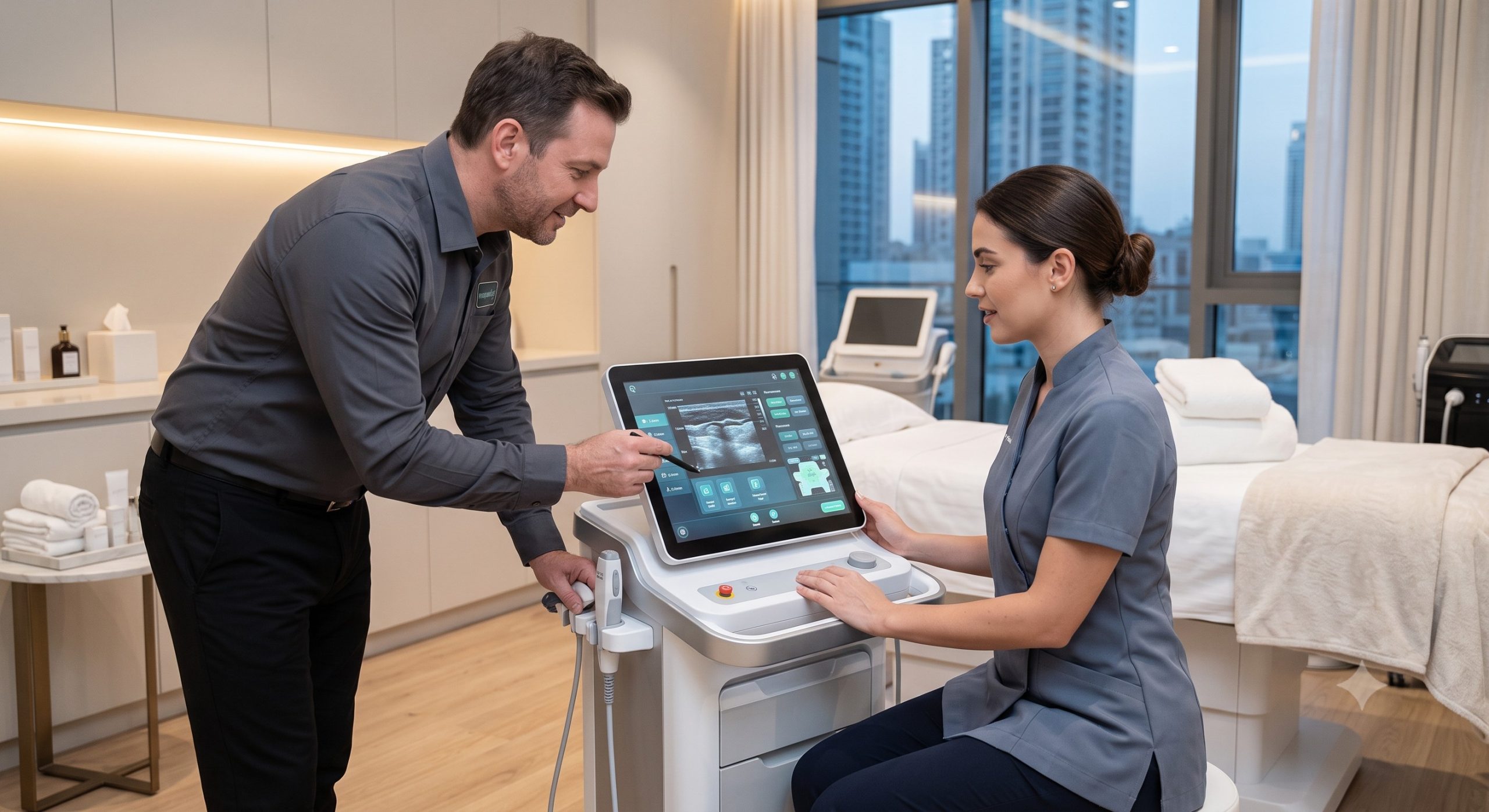
Optimizing HIFU output requires mastering key parameters: energy intensity (Joules), line count per treatment zone, and transducer depth selection (1.5mm, 3.0mm, 4.5mm). Clinics should expect a comprehensive training protocol during procurement, including interface navigation and hands-on simulation. Smart touchscreen UI presets often provide protocols for different face zones (forehead, midface, jawline, neck), reducing operator error and standardizing clinical outcomes across multiple practitioners.
Q7: What is the expected ROI and payback period for a HIFU machine in a med spa?
The payback period for a high-quality HIFU system is typically 6 to 12 months for a busy aesthetic clinic, based on an average of 5-8 facial treatments per week and a standard market rate of $500-$1,000 per session. Low consumable expenditure (cartridge replacement) ensures high profit margins per procedure. Additionally, offering HIFU as a non-invasive lifting alternative expands your clinical menu, attracting new clientele and increasing upsell opportunities, directly boosting your clinic’s revenue streams.
Q8: What post-sales technical support and global logistics should a B2B buyer expect?
Comprehensive post-sales support includes a standard one-year warranty on the main engine, access to a 24/7 technical support hotline, and global spare parts logistics. B2B buyers should ensure the supplier provides ISO 13485 and CE-certified documentation for regulatory compliance. Direct manufacturer support is critical to minimize downtime; ensure your contract includes a service level agreement (SLA) covering response times and replacement part shipping logistics to maintain operational continuity.