Overview
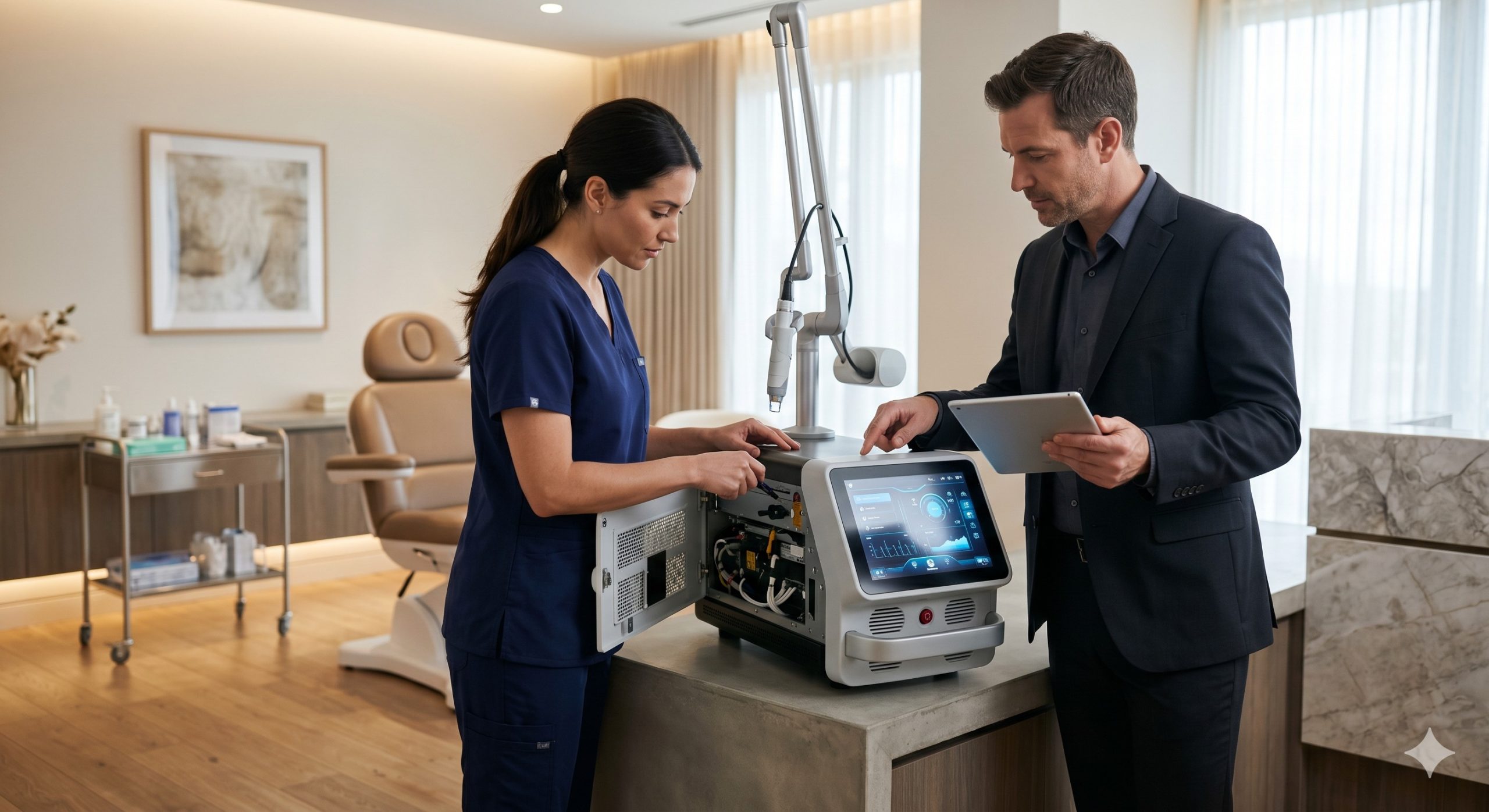
For aesthetic clinics and dermatology practices, non-invasive face lift machines represent a high-demand, low-downtime revenue stream. Below, our technical support engineers answer the most frequent B2B questions — from pre-sales compatibility to post-sales maintenance costs — to help you make a confident investment decision.
Frequently Asked Questions
Q1: Is a non-invasive face lift machine suitable for all Fitzpatrick skin types (I-VI)?
Yes, modern non-invasive face lift machines using technologies like radiofrequency (RF) and high-intensity focused ultrasound (HIFU) are safe and effective for Fitzpatrick skin types I through VI. Unlike melanin-targeting lasers, these devices bypass the epidermis, minimizing hyperpigmentation or burn risks . Key safety features include: real-time impedance monitoring, contact cooling, and adjustable energy delivery depths. Always perform a test patch on Fitzpatrick V-VI at lowest energy settings before full treatment .
Q2: What is the typical lifespan of a non-invasive face lift machine handpiece and console?
The console lifespan is 7-10 years under standard clinical use (8-12 treatments daily). The handpiece lifespan depends on the technology: RF handpieces last 300,000-500,000 pulses; HIFU cartridges last 2,500-5,000 lines; and electromagnetic handpieces last 5-7 years with proper storage . After reaching pulse limits, energy calibration drifts by >15%, compromising efficacy and safety. Always track shot counts via device software and replace original manufacturer handpieces — not third-party clones — to maintain CE/FDA performance .
Q3: How does a non-invasive face lift machine compare to older technologies like IPL or CO2 lasers?
Unlike IPL or ablative CO2 lasers, a non-invasive face lift machine targets deep dermal layers or the SMAS without damaging the epidermis. IPL treats pigmentation and vascular lesions using broad-spectrum light; ablative CO2 lasers vaporize skin layers, requiring 7-14 days of downtime . In contrast, non-invasive face lift machines (RF, HIFU, or electromagnetic) leave the stratum corneum intact, produce immediate tissue contraction, and stimulate neocollagenesis over 3-6 months — with zero to 48 hours of mild redness only .
Q4: What are the daily and monthly maintenance requirements for a non-invasive face lift machine?
Daily maintenance takes less than 5 minutes: wipe handpieces and contact surfaces with isopropyl alcohol (70%) after each patient, check coupling gel levels, and inspect cables for kinks . Monthly maintenance includes: calibrating energy output using a manufacturer-provided power meter, cleaning air filters (if fan-cooled), updating firmware, and inspecting electrode integrity for RF devices . Always log maintenance actions in the device journal for warranty compliance.
Q5: What are the consumable costs and hidden fees for a non-invasive face lift machine?
Annual consumable costs typically range $1,200-$4,500 per device . Primary consumables include: HIFU transducer cartridges ($45-$120 each, lasts 2.5k-5k lines), RF coupling films ($2-$6 per treatment), or electromagnetic coupling pads ($8-$15 per session) . Non-negotiable hidden fees: mandatory annual recalibration ($500-$1,200), software license renewals if cloud-based ($300-$800/year), and shipping for handpiece repairs ($150-$400) . Avoid unbranded ‘compatible’ consumables — they void certification and reduce treatment efficacy by up to 40% .
Q6: What is the average ROI timeline for a clinic purchasing a non-invasive face lift machine?
At $250-$450 per treatment session and 8-12 weekly sessions per patient, most clinics achieve ROI within 5-8 months . Based on 15 treatments/week, monthly revenue averages $15,000-$27,000. Subtract consumables ($300-$1,000/month), financing ($600-$1,500/month), and maintenance reserves ($200-$400/month) . Break-even requires 80-120 billed sessions. Higher ROI occurs with membership packages (6 sessions prepaid) and combination upselling (non-invasive face lift plus LED or topical growth factors) .
Q7: Is training included, and how long until my staff can operate the machine independently?
Reputable suppliers include 1-2 days of on-site or virtual certified training. Within 3-5 treatment days, staff with a medical or esthetician background achieve independent operation . Training covers: Fitzpatrick-based energy mapping, anatomical safe zones (avoiding thyroid and major nerves), handpiece angulation, and emergency shutdown protocols . Advanced certification (2 additional days) is required for HIFU or combination devices. Always demand written certification for each operator — insurers and malpractice policies require proof of manufacturer-approved training .
Q8: What are the key regulatory and compliance requirements for these devices?
When purchasing a medical non-invasive face lift machine for a clinic, ensure it has the necessary regulatory clearance, such as FDA 510(k) or Medical CE certification (Class IIb), which confirms its safety and effectiveness . For warranty compliance and maintenance of certification, it is critical to use original manufacturer handpieces and parts, not third-party clones, and to log all maintenance actions as per the manufacturer’s guidelines .