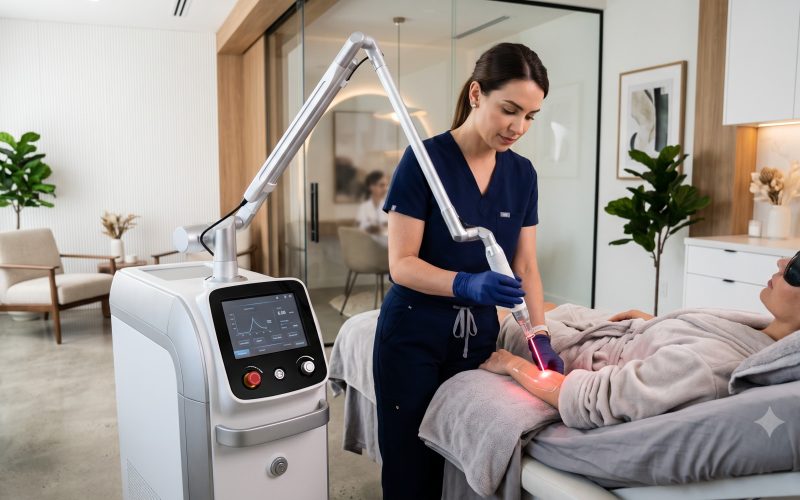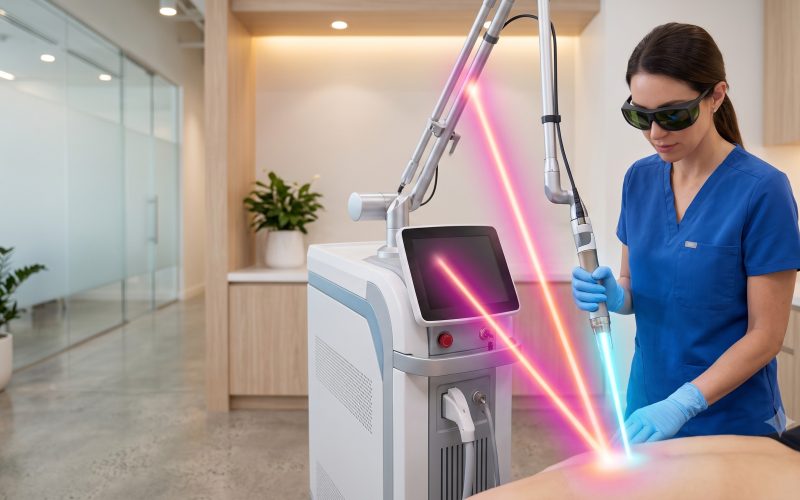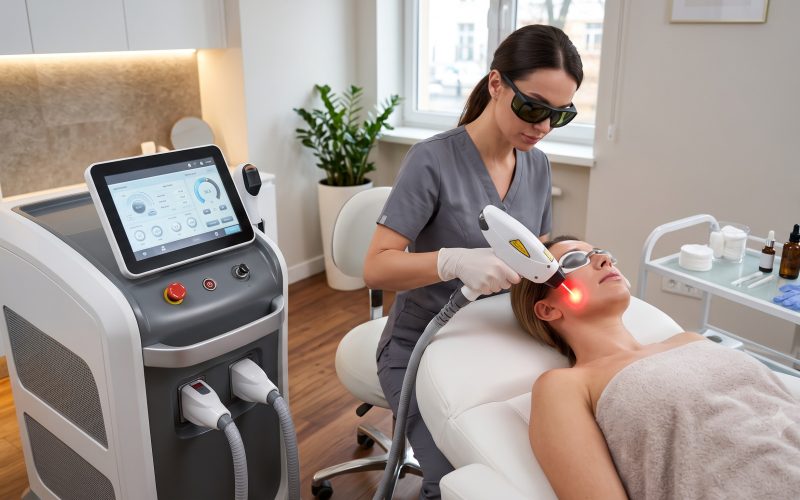
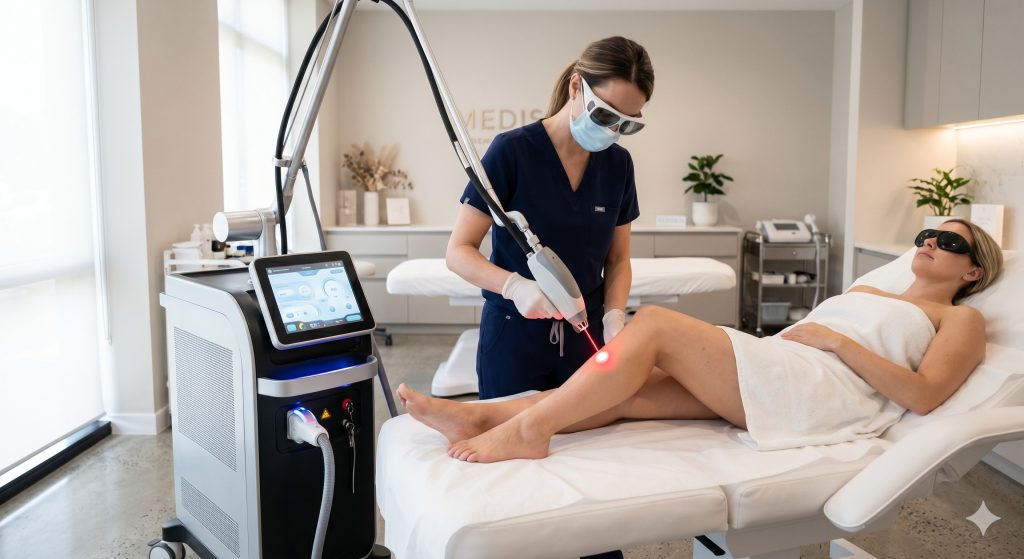
Introduction: The Clinical & Business Case for Diode Laser Hair Removal Machines
For the modern medical aesthetics clinic or med spa, acquiring a laser hair removal machine is a cornerstone investment. However, with a saturated market of technologies—from outdated IPL to high-powered diode systems—clinical directors face a critical challenge: selecting a device that delivers superior long-term hair reduction, ensures absolute patient safety across all Fitzpatrick skin types (I-VI), and provides a compelling return on investment (ROI). This guide provides a data-driven, technical analysis of modern diode laser systems, focusing on the engineering metrics that drive clinical success and business profitability.
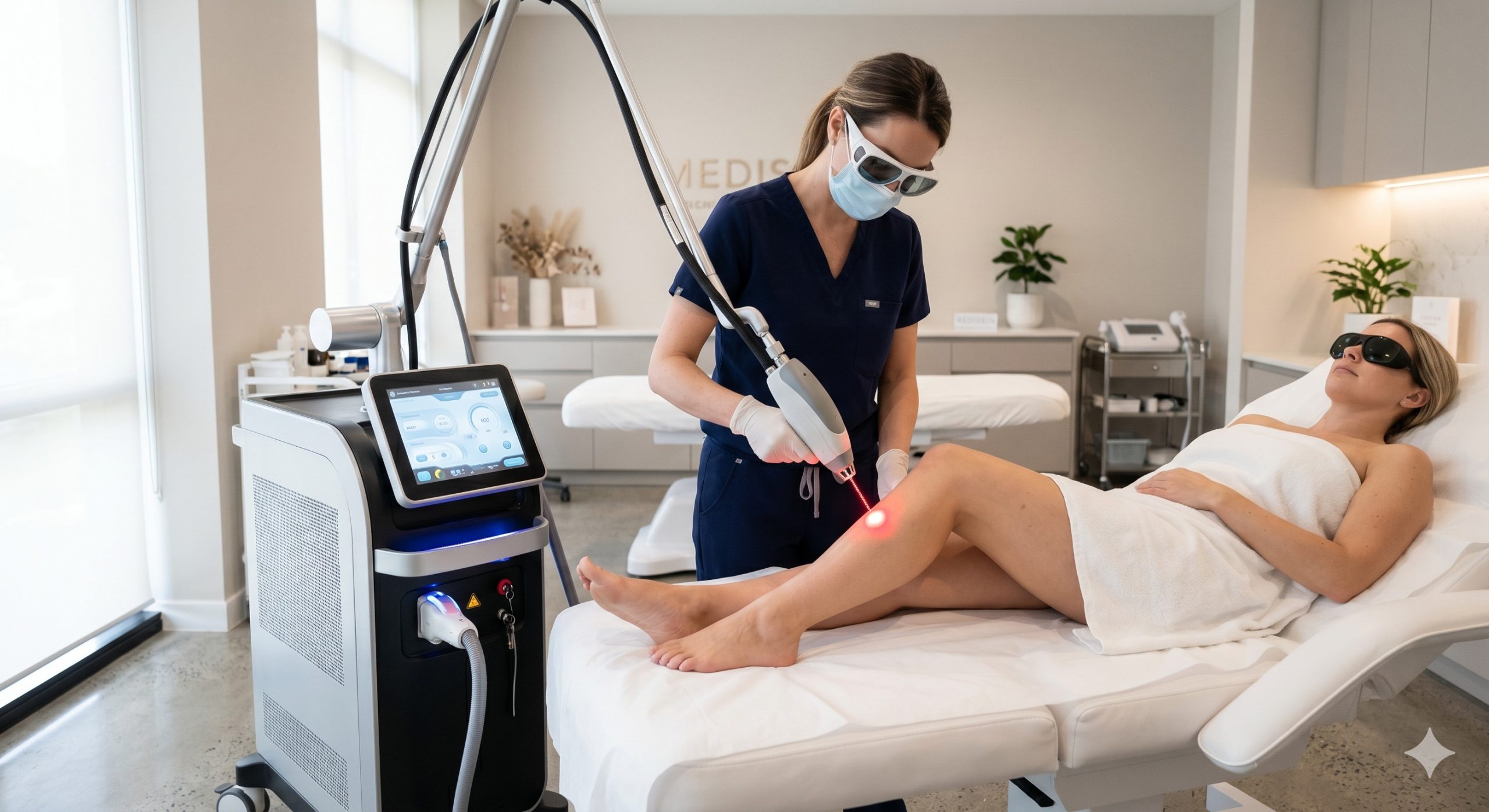
1. The Physics of Efficacy: Selective Photothermolysis & Wavelength Synergy
A clinically effective laser hair removal machine is defined by its ability to achieve selective photothermolysis—targeting melanin in the hair follicle while sparing the surrounding epidermis. The optimal device leverages a multi-wavelength diode architecture, typically integrating 755nm, 808nm, and 1064nm.
Why Multi-Wavelength Matters
- 755nm (Alexandrite): High melanin absorption; ideal for fine and light-colored hair on Fitzpatrick I-III.
- 808nm (Diode): The clinical gold standard. Deep penetration with optimal melanin absorption, suitable for all hair types and Fitzpatrick I-V.
- 1064nm (Nd:YAG): Deepest penetration with minimal epidermal absorption; the safest choice for darker skin types (Fitzpatrick V-VI).
A high-grade machine synchronizes these wavelengths to achieve a fluence (energy density) of up to 120 J/cm², adjustable pulse widths from 5ms to 400ms, and a spot size of 12mm x 12mm or larger. A larger spot size (≥ 15mm) reduces treatment time by 50% and increases penetration depth due to reduced light scattering.
| Key Parameter | Technical Specification & Clinical Standard |
|---|---|
| Wavelengths / Laser Type | Triple Wavelength Diode (755nm / 808nm / 1064nm) |
| Fluence (Energy Density) | Up to 120 J/cm² (adjustable in 1 J/cm² increments) |
| Spot Size | ≥ 15mm x 15mm (up to 25mm x 30mm for high-throughput) |
| Pulse Width | 5ms – 400ms (adjustable per Fitzpatrick type) |
| Cooling System | Sapphire Contact Cooling with TEC (surface temp: -5°C to 4°C) |
| Repetition Rate | Up to 10Hz (10 pulses per second) |
| Laser Bar Lifespan | ≥ 10 million shots (imported medical-grade bars) |
| Regulatory Status | Medical CE, FDA 510(k) cleared, ISO 13485 manufacturing |
| Targeted Indications | Permanent hair reduction for Fitzpatrick I-VI; vascular & pigmented lesions (secondary) |
2. The Cooling Imperative: Safety, Comfort & Compliance
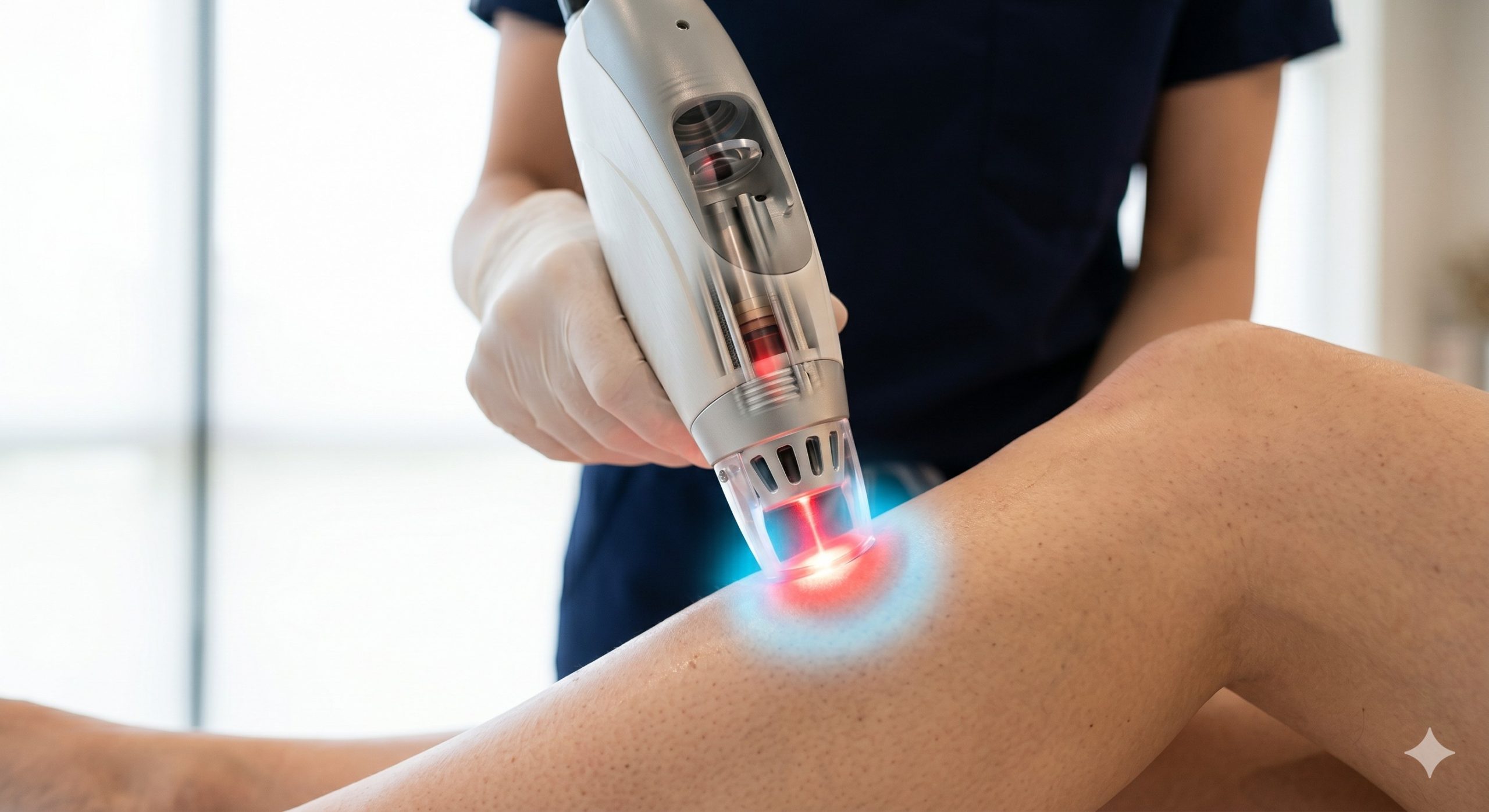
High fluence without protection risks epidermal burns. Premium laser hair removal machines integrate advanced contact cooling systems. The gold standard is a Sapphire ICE window maintained at -5°C to 4°C via a TEC (Thermoelectric Cooler). This protects the epidermis pre-, during, and post-laser pulse, enabling painless treatment without topical anesthetics. From a compliance perspective, a device with Medical CE and FDA 510(k) clearance, manufactured under ISO 13485 (Medical Devices Quality Management), is non-negotiable for clinic liability insurance and patient safety audits.
Performance Metrics for Cooling
- Cooling Power: ≥ 100W TEC module.
- Skin Contact Temperature: Steady at 0°C to 5°C.
- Recovery Time: < 2 seconds between pulses.
3. Technical Specifications & Operational Excellence
For high-throughput clinics, the machine’s internal architecture dictates long-term reliability. Key metrics include the imported laser bar (e.g., from Jenoptik or Coherent) with a certified shot lifespan of 10 million to 25 million pulses. The machine’s power supply must support continuous operation for 8+ hours. Features like a smart UI with pre-set protocols for each Fitzpatrick type reduce operator error. Furthermore, the total cost of ownership (TCO) is heavily influenced by consumables—a water-free, sealed cooling circuit eliminates maintenance, while a durable handpiece ensures consistent energy output over years.
4. Clinic ROI & Strategic Implementation
Integrating a medical-grade laser hair removal machine transforms clinic profitability. Industry average pricing is $150-$500 per session. A single device performing 6-8 full-body treatments daily can generate $300,000+ in annual revenue. Your ROI model should consider:
- CapEx: Initial machine cost (typically $15,000 – $60,000).
- OpEx: Electricity, tip replacement (if any), and clinical consumables.
- Break-Even Point: Often achieved within 6-9 months at 40% utilization.
Marketing the machine’s safety for Fitzpatrick V-VI and its painless Sapphire ICE cooling directly addresses the two biggest patient objections. Offering package memberships (e.g., 6 sessions) increases patient lifetime value and secures cash flow. Always demand a demo unit and verified clinical clearance rates (e.g., 85-95% permanent reduction after 6 sessions) from the manufacturer.
Conclusion: The Verdict for Your Clinic
The optimal laser hair removal machine is not just a laser; it’s an integrated clinical system requiring multi-wavelength engineering, high-fluence capacity, advanced sapphire contact cooling, and verifiable regulatory compliance. Prioritize devices with large spot sizes (>15mm), high shot lifespans (>20 million), and true Fitzpatrick I-VI capabilities. From a business perspective, this equipment remains the highest-ROI investment in aesthetic medicine, offering rapid payback and stable recurring revenue when selected with technical rigor.