Welcome To The Blogs
1927nm Thulium for Superficial Pigment and Tone Uniformity
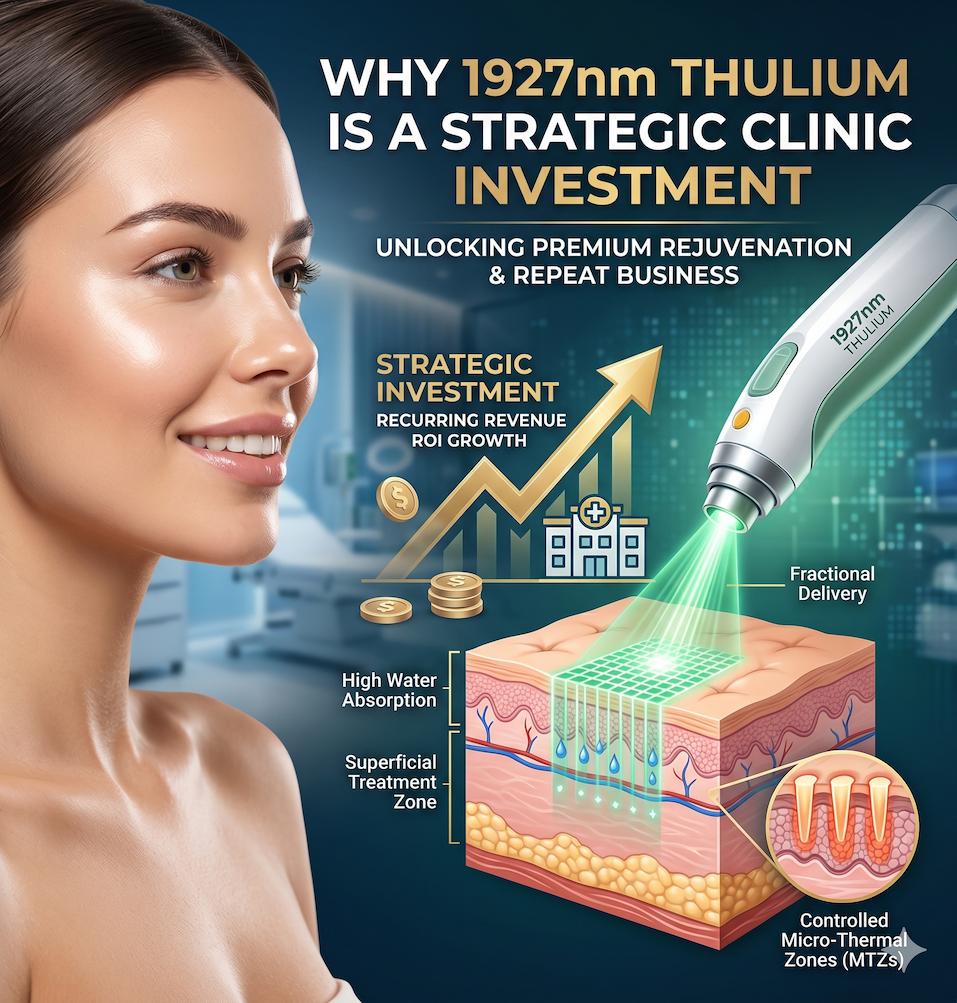
Superficial pigmentation—including solar lentigines, uneven tone and post-inflammatory discoloration—often responds well to 1927nm fractional thulium treatments. The wavelength’s water absorption profile allows precise micro-column delivery in the upper dermis and epidermis without full-surface ablation.
Clinicians value the ability to titrate energy by density, pulse structure and pass count while maintaining patient comfort with integrated cooling.
Mechanism: Selective Photothermolysis in the Epidermis
Because 1927nm energy concentrates in water-rich superficial layers, pigment-laden keratinocytes and melanin in the epidermis can be addressed with controlled thermal injury. Surrounding tissue remains largely intact, supporting faster healing than fully ablative approaches.
This mechanism is especially relevant for patients seeking improvement in melasma-like dyschromia, freckling and dull complexion when parameters are conservative and sun protection is emphasized post-treatment.
Protocol Tiers: Maintenance vs. Corrective
Maintenance tier: low density, 1–2 passes, minimal erythema, ideal for monthly or quarterly brightening memberships.
Corrective tier: staged higher-density sessions for stubborn pigment and texture, with 3–4 week intervals and strict SPF compliance.
Documenting baseline photography and using consistent scan patterns improve outcome predictability and informed consent discussions.
Combining 1927nm With Adjunct Therapies
Many clinics sequence 1927nm thulium with topical tyrosinase inhibitors, hydrating masks or LED therapy during the recovery window. The key is avoiding aggressive stacking in the same session when epidermal barrier compromise is significant.
For medspas, packaging pigment protocols as named programs (e.g., “Luminous Skin Series”) improves marketing clarity and upsell potential.
Safety, Downtime and Patient Communication
Typical reactions include erythema, mild edema and micro-crusting that resolves within several days depending on density. Setting expectations upfront reduces support burden and improves online review sentiment.
Because 1927nm thulium is non-ablative in standard fractional modes, patients appreciate predictable social downtime—an important conversion factor for busy professional demographics.