Welcome To The Blogs
1550nm Thulium: Deeper Fractional Remodeling
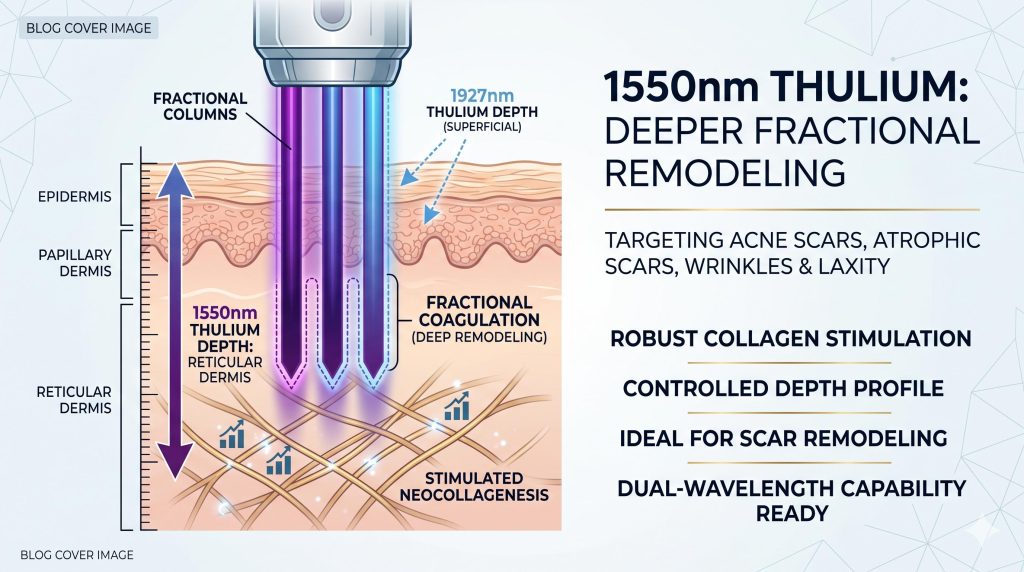
The 1550nm thulium wavelength penetrates beyond the superficial epidermis, creating thermal zones in the deeper dermis that stimulate robust neocollagenesis. It is widely used for acne scars, atrophic scars, moderate wrinkles and skin laxity when clinicians need more depth than 1927nm alone.
Understanding when to select 1550nm versus 1927nm is essential for building credible resurfacing ladders in aesthetic and dermatology practices.
Depth Profile and Collagen Stimulation
1550nm energy is distributed in fractional columns that reach reticular dermis levels relevant to scar remodeling and elastic tissue contraction. Healing occurs through epidermal migration from adjacent columns, preserving islands of intact tissue for faster recovery than fully ablative CO2 resurfacing in many cases.
Clinical endpoints include controlled erythema and edema; density and pulse duration determine depth and coagulation zone width.
Indications: Scars, Laxity and Advanced Rejuvenation
Common applications include rolling and boxcar acne scars, fine surgical scars, perioral rhytids and mild-to-moderate laxity on face and neck. Multiple sessions are typically required, with interval planning based on skin type and lifestyle constraints.
Patients with a history of hypertrophic scarring or active infection require careful exclusion and alternative planning.
Dual-Wavelength Strategy: 1927nm + 1550nm
Platforms combining 1927nm and 1550nm—such as Lav Dual—allow staged or same-session layering: superficial brightening with 1927nm and deeper remodeling with 1550nm. This expands indication coverage without requiring multiple devices in the treatment room.
Operators can market combination protocols for comprehensive “texture + tone + tightening” outcomes while optimizing capital expenditure for the clinic.
B2B Positioning and Competitive Advantage
For distributors, 1550nm capability differentiates a thulium line in tenders where scar outcomes and collagen remodeling are primary purchase drivers. Training on depth selection, endpoint recognition and post-care protocols accelerates clinic adoption.
Emphasize regulatory documentation, applicator range, service network and clinical education when presenting dual-wavelength systems to international partners.