Introduction: Addressing the Clinical & Business Imperative of HIFU Technology
For the modern medical aesthetics clinic, the demand for non-invasive skin lifting and tightening has surged past traditional surgical interventions. The HIFU machine (High-Intensity Focused Ultrasound) has emerged as the gold standard for mimicking surgical facelift results without incisions. However, not all devices deliver equal clinical outcomes or business ROI. This guide provides a data-driven analysis of HIFU technology, focusing on critical parameters such as focal depth, energy density, and transducer specifications, while adhering to Medical CE and ISO 13485 manufacturing standards. We will evaluate clinical efficacy across Fitzpatrick skin types, treatment protocols, and long-term clinic profitability.
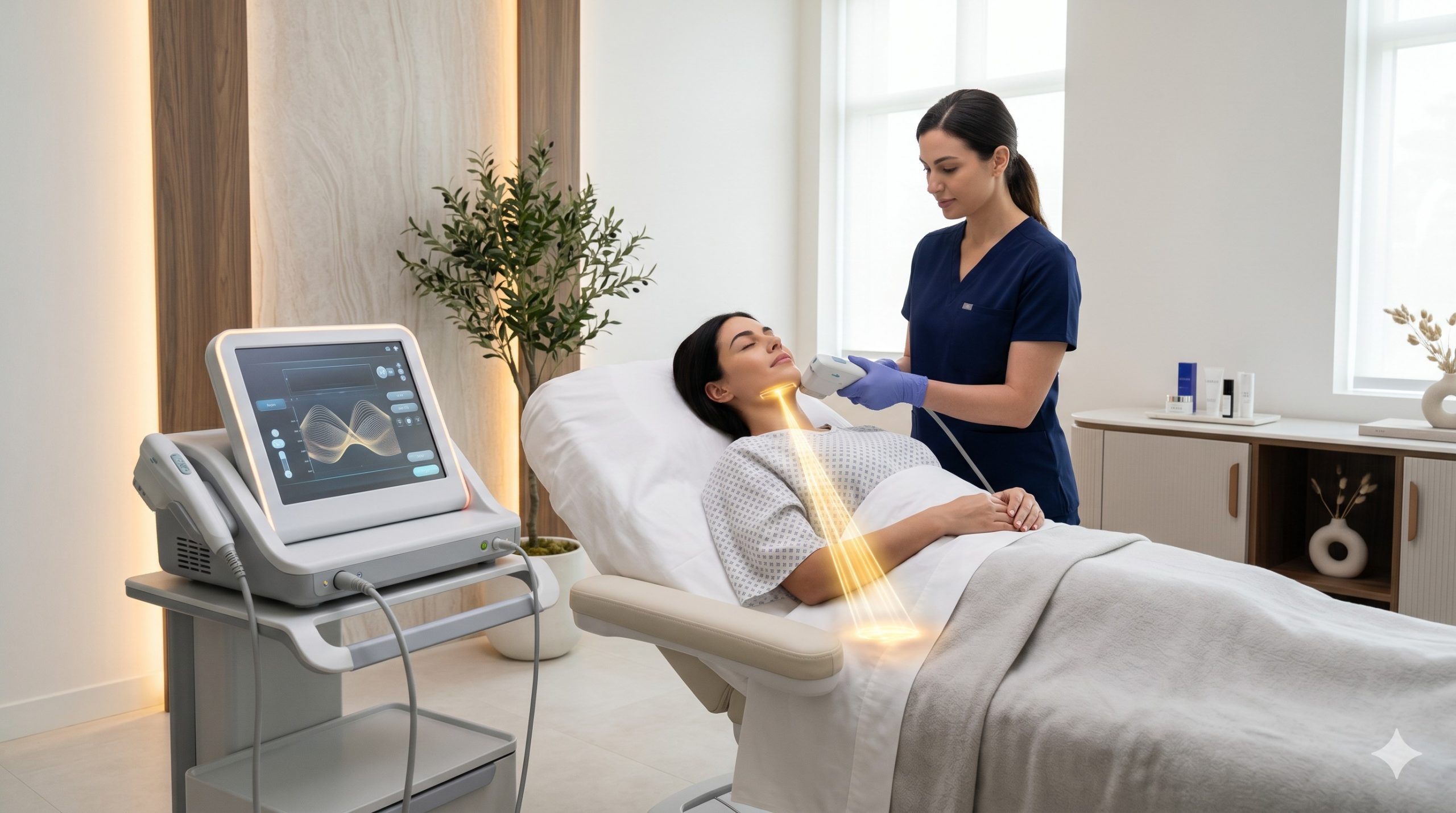
Clinical Physics: The Mechanism of High-Intensity Focused Ultrasound
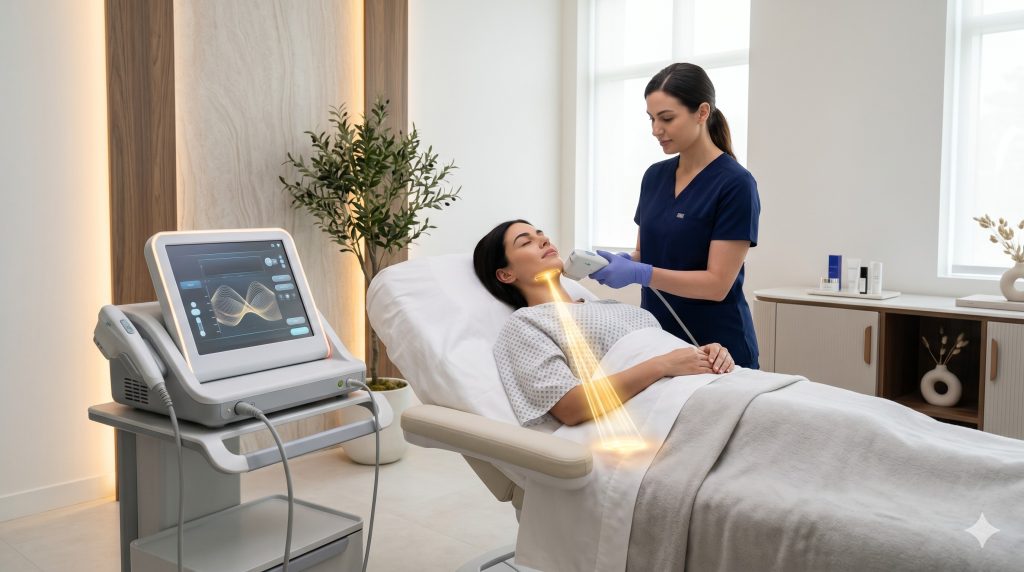
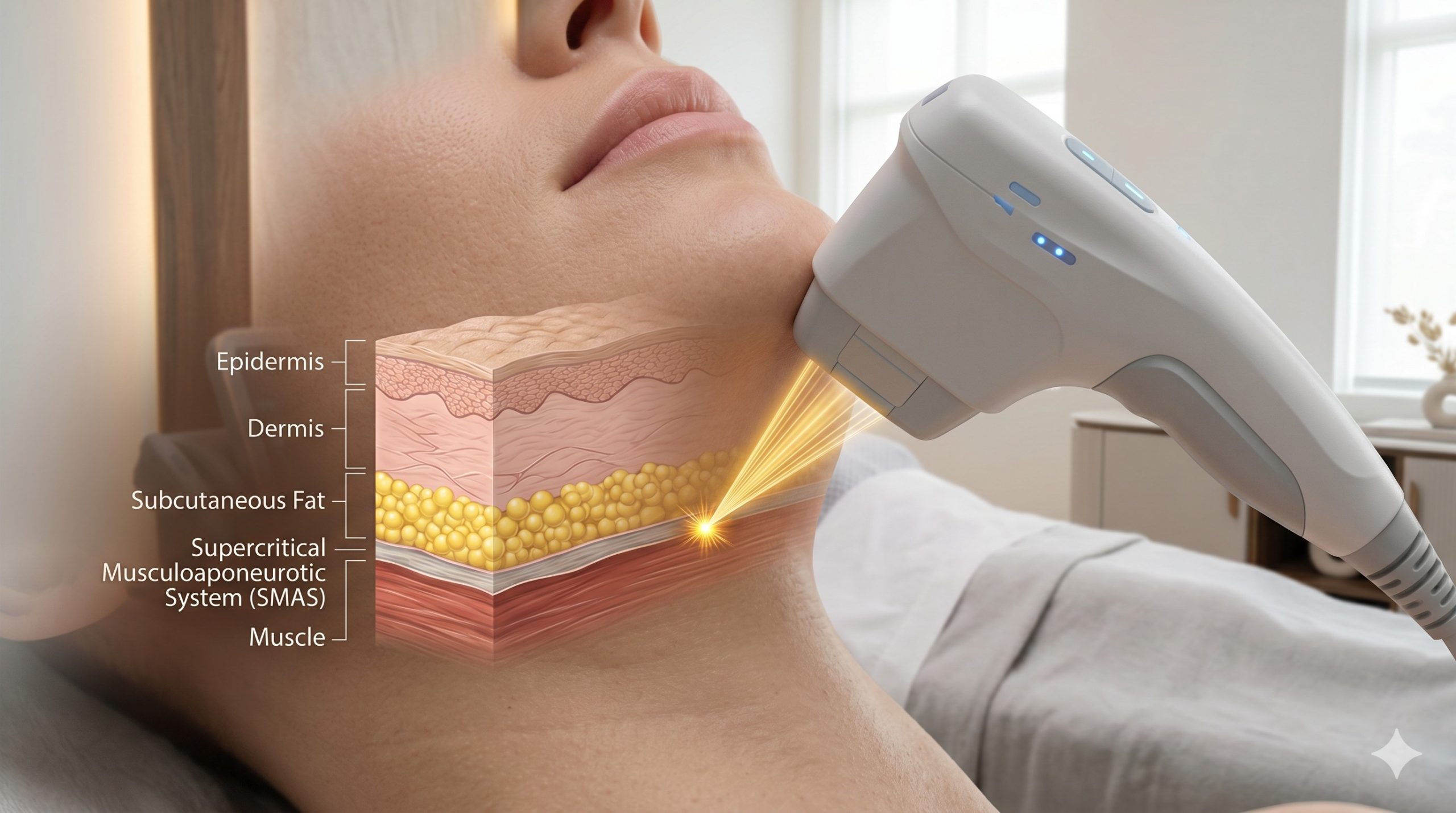
Unlike laser or light-based therapies that target chromophores, a HIFU machine bypasses the epidermis to deliver precise, coagulative thermal zones deep within the dermis and SMAS layer (Superficial Musculoaponeurotic System). The technology induces micro-thermal injury zones that trigger the body’s natural wound-healing cascade, stimulating robust neocollagenesis and elastic fiber regeneration.
Critical Transducer Specifications for Deep Tissue Interaction
Clinical efficacy is directly tied to the transducer’s focal depth and energy delivery. Professional HIFU machines typically integrate three focal depths: 1.5mm (superficial dermis), 3.0mm (deep dermis), and 4.5mm (SMAS layer). The energy density, measured in Joules per line or Joules per shot, must be calibrated to avoid overheating deeper structures. Key metrics include focal length (mm), line spacing (mm), and total lines per cartridge. Premium systems offer adjustable pulse repetition frequency (up to 10Hz) for faster treatment sessions while maintaining a thermal coagulation temperature of 60°C to 70°C—the precise range for protein denaturation without carbonization.
Safety & Compliance: Meeting FDA Clearance and Medical CE Standards
Operating an uncertified HIFU machine exposes clinics to significant liability. For legitimate medical aesthetics practices, the device must hold FDA clearance for dermatological applications (specifically for brow lifts and submental skin tightening) or Medical CE (Class IIa or IIb) within the European Union. Furthermore, the manufacturer must comply with ISO 13485 (Quality Management for Medical Devices). Key safety features include real-time skin contact sensors (to prevent firing in air), emergency stop triggers, and shot counter integrity to ensure consumable (cartridge) accuracy. Without these, the risk of burns, facial nerve damage, or scarring increases exponentially, especially when treating the perioral or preauricular regions.
| Key Parameter | Technical Specification for Medical-Grade HIFU Machine |
|---|---|
| Focal Depths | 1.5mm (Superficial dermis) / 3.0mm (Deep dermis) / 4.5mm (SMAS layer) |
| Energy per Shot (Fluence) | 0.4J – 1.5J (Adjustable, typically 0.9J for deep lifting) |
| Focal Length / Transducer Type | 10mm – 15mm, Single-element or linear array ceramic piezoelectric |
| Line Spacing / Resolution | 1.0mm, 1.5mm, or 2.0mm (Precision depends on handpiece type) |
| Thermal Coagulation Temp | 60°C – 70°C (Controlled micro-thermal injury zone) |
| Cooling System | Forced air or passive ceramic heat sink (no epidermal cooling required) |
| Certifications | Medical CE (Class IIa/b), FDA clearance (specific indications), ISO 13485 |
Optimizing Parameters for Fitzpatrick Skin Types I-VI
One of the greatest advantages of a HIFU machine over ablative lasers is its skin-type independence. Because ultrasound is not absorbed by melanin, it is intrinsically safe for all Fitzpatrick skin types, from Type I (Celtic) to Type VI (Deeply Pigmented). However, protocol optimization remains critical. For patients with higher skin elasticity or thicker dermis (Type IV-VI), focusing on the deeper 4.5mm SMAS layer with moderate energy (0.9-1.2J) yields superior lifting. For periorbital or delicate neck areas, practitioners should utilize the 1.5mm or 3.0mm transducers at lower energy (0.4-0.7J) to avoid heating the periosteum or underlying nerves. Post-treatment, transient erythema or mild edema is expected but resolves within 24-48 hours. Absolute contraindications include open cystic acne, metal implants in the treatment window, or recent botulinum toxin injections (wait 2 weeks).
Treatment Indications, Efficacy, and Clinical Workflow
Clinical studies demonstrate that a single session of high-intensity focused ultrasound produces measurable lifting of the brow (1-2mm) and lower face laxity improvement of up to 30% at 90 days post-treatment. Ideal indications include: ptotic brows, submental fat (double chin) tightening, jowl reduction, fine lines on the décolletage, and pre-axillary skin laxity. A standard full-face protocol requires approximately 600-800 treatment lines, with each line delivering a thermal coagulation point. Practitioners should employ a patient mapping grid to avoid overlapping energy zones. For maximal outcomes, a series of 1-2 sessions spaced 3-6 months apart is recommended, with peak collagen remodeling occurring between 3 and 6 months. Combination therapy with microfocused ultrasound with visualization (MFU-V) or radiofrequency microneedling can potentiate results.
Clinic ROI Analysis: Profitability, Consumables, and Pricing Strategy
From a business perspective, the HIFU machine represents a high-ticket service with strong margins. The capital expenditure (CapEx) for a certified medical-grade device ranges from $15,000 to $45,000, while the primary operational expenditure (OpEx) is the single-use or limited-use transducer cartridges, costing $40-$80 per patient. With a market average price of $750 to $2,500 per full-face treatment, the per-session gross margin exceeds 85%. Even at moderate volume (10 patients/week), the machine pays for itself within 4-6 months. Unlike diode lasers, consumable costs per patient are fixed and predictable. Clinics must also factor in maintenance, including calibration verification every 12-24 months, and potential software upgrades. Marketing the device as a ‘non-surgical facelift’ reduces patient reluctance toward surgery, capturing the $30B global non-invasive aesthetics market. High-volume clinics can utilize package pricing (e.g., 3 sessions for $2,100) to improve patient lifetime value.
Conclusion: Strategic Acquisition for Superior Clinical Outcomes
Investing in a certified, high-quality HIFU machine is a decisive move toward clinical superiority and business scalability. By prioritizing devices with validated focal depths (1.5mm, 3.0mm, 4.5mm), ISO 13485 certification, and robust epidermal protection mechanisms (contact cooling and real-time impedance monitoring), clinics can deliver verifiable lifting results without the risks associated with inferior platforms. Ensure your clinical staff undergoes structured training on Fitzpatrick-specific protocols and anatomical safety zones. When selected with a stringent compliance-first approach, HIFU technology consistently drives patient satisfaction, referrals, and a strong ROI trajectory for the forward-thinking med spa or dermatology practice.