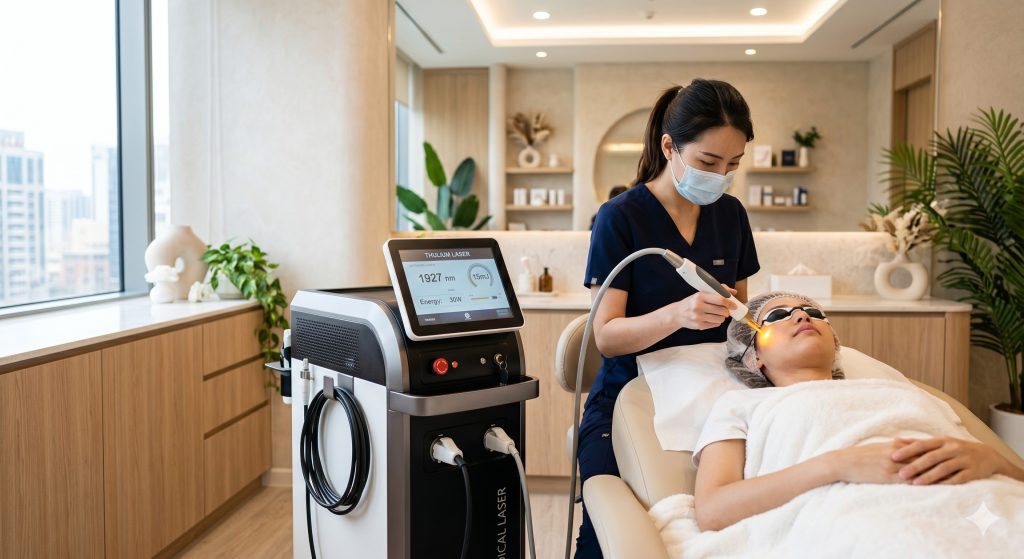
Introduction: The New Standard in Patient Satisfaction and Clinic Efficiency
In the competitive landscape of medical aesthetics, treatment downtime is a primary barrier for patient acquisition and a critical metric for clinic profitability. Traditional ablative lasers, while effective, often require extended social recovery periods that deter the modern, time-conscious clientele. This is where the Non-ablative thulium laser downtime advantage becomes a game-changing clinical and business differentiator. For clinic owners and medical directors, understanding the technical nuances and economic impact of this technology is essential for staying ahead.
This comprehensive guide serves as your clinical and business roadmap. We will dissect the science behind the 1927nm wavelength, analyze its safety profile across diverse skin types, and project the tangible return on investment for your practice. By integrating advanced dermatological principles with strategic business planning, we demonstrate why the thulium fiber laser represents a superior investment for the modern med spa.
Clinical Deep Dive: The Physics Behind Minimal Social Downtime
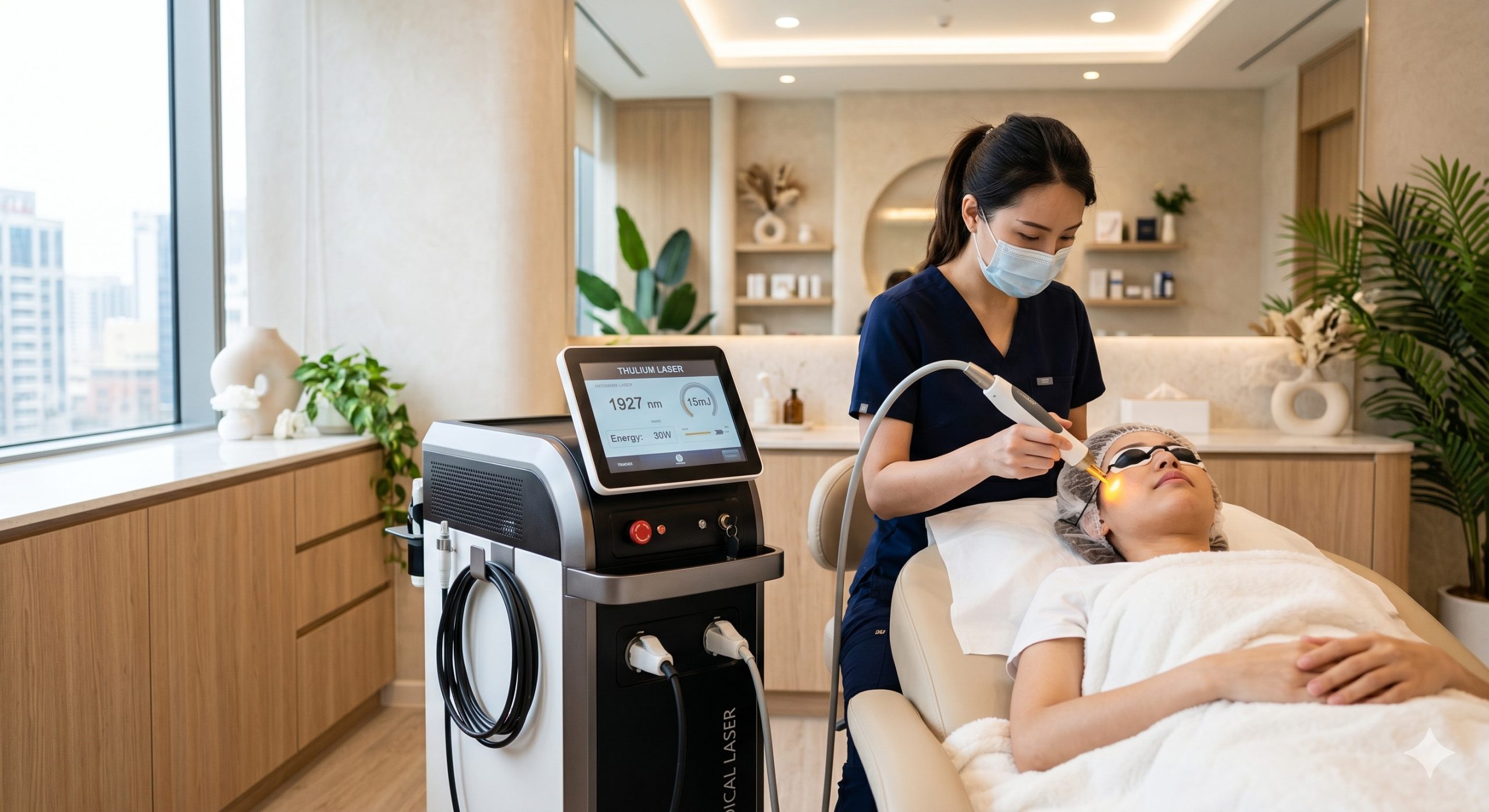
The exceptional safety profile and reduced downtime associated with the Non-ablative thulium laser are rooted in its unique mechanism of action. Unlike ablative lasers that vaporize the epidermis, the 1927nm wavelength targets water in the dermis with high precision. This process, known as selective photothermolysis, creates microscopic zones of coagulation without disrupting the stratum corneum. The preservation of the epidermal barrier allows for rapid healing, significantly minimizing the thulium laser downtime to an average of 1 to 3 days of mild erythema and a subtle bronzed appearance, compared to the 5-10 days required for ablative procedures.
This clinical advantage translates directly to improved patient compliance and satisfaction. Treatments can be performed on a lunch break, making the procedure highly accessible. For the clinic, this means higher treatment throughput and a broader target demographic. The science is sound; the value proposition is undeniable.
Key Technological Specifications
To achieve predictable clinical outcomes and truly leverage the benefits of minimal Non-ablative thulium laser downtime, precise parameter control is mandatory. Below are the critical technical specifications clinicians must evaluate before integrating this technology into their practice.
| Key Parameter | Technical Specification |
|---|---|
| Wavelength | 1927nm (Thulium Fiber Laser) |
| Laser Type | Diode-Pumped Solid-State |
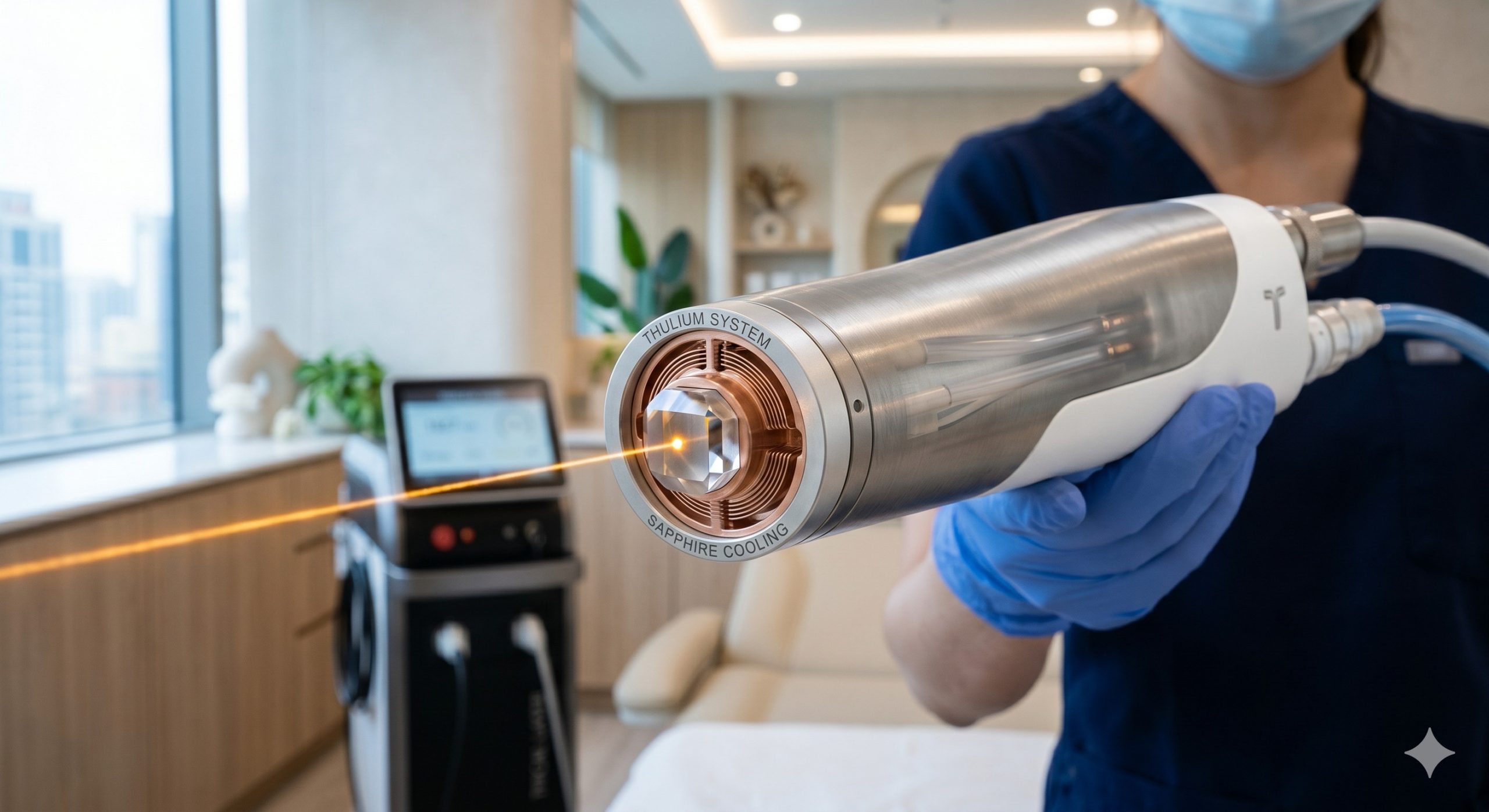
| Cooling System | Sapphire Contact Cooling (0°C to 4°C) |
| Pulse Duration | 0.5 – 5 milliseconds |
| Spot Size | 2mm – 12mm (Zoom Handpiece Capable) |
| Energy Density (Fluence) | Up to 30 J/cm² |
| Frequency | 1 – 10 Hz |
| FDA Clearance | Yes |
| Medical CE | Yes |
Wavelength Precision and Tissue Interaction
The laser’s affinity for water in the dermis facilitates skin remodeling and collagenesis. The pulse duration and energy density must be carefully calibrated to target specific chromophores while minimizing thermal diffusion. This precision is what allows the Non-ablative thulium laser to offer such a favorable benefit-to-risk ratio. Clinics must utilize devices with robust cooling systems to further protect the epidermis and enhance patient comfort, ensuring that the minimal downtime is a consistent and reliable outcome.
Business Impact: Transforming Patient Experience and Profitability
The decision to invest in a platform like this is not merely a clinical one; it is a strategic business imperative. The minimal thulium laser downtime allows clinics to reimagine their service offerings. You can now effectively market “lunchtime” skin rejuvenation, attracting a demographic that values efficiency and subtlety. This opens up high-ticket service paths for patients seeking gradual, natural improvements without the social stigma of a prolonged recovery.
ROI Analysis and Treatment Throughput
By eliminating the need for intensive post-operative care and reducing patient hesitation, the laser enables a higher volume of procedures. The quick procedure time, combined with the broad safety profile for Fitzpatrick Skin Types I-IV (with appropriate settings), creates a scalable treatment model. The lifetime cost of ownership is also optimized, thanks to high shot-count handpieces and durable diode bars, ensuring that your initial investment translates into consistent, long-term profitability.
Strategic Implementation and Aftercare Protocol
To maximize the benefits of the Non-ablative thulium laser downtime and ensure superior outcomes, a strict clinical protocol is advised. Post-treatment, the skin’s natural barrier remains intact, so aftercare is generally simple and straightforward. However, standard practices such as strict sun avoidance (SPF 50+) and the use of gentle, hydrating skincare are recommended to support the skin’s healing cascade.
Integrating this technology seamlessly into your practice workflow involves training staff on the nuances of the device, optimizing marketing materials to highlight the key advantage of minimal downtime, and establishing clear treatment plans that align with patient expectations. Ultimately, this laser is a potent tool for building a reputation for quality, comfort, and respect for the patient’s time, driving both patient loyalty and revenue growth.
Conclusion: The Strategic Verdict for Your Clinic
The Non-ablative thulium laser is more than just a piece of equipment; it represents a strategic evolution for the aesthetic clinic. By leveraging the power of the 1927nm wavelength to ensure minimal downtime, you provide a service that combines safety, efficacy, and supreme convenience. The ability to treat multiple skin concerns with low risk and fast recovery allows you to capture a larger market share and boost your clinic’s bottom line. As you evaluate your next investment, consider the decisive edge that a technology with superior clinical parameters and a compelling business case can provide.