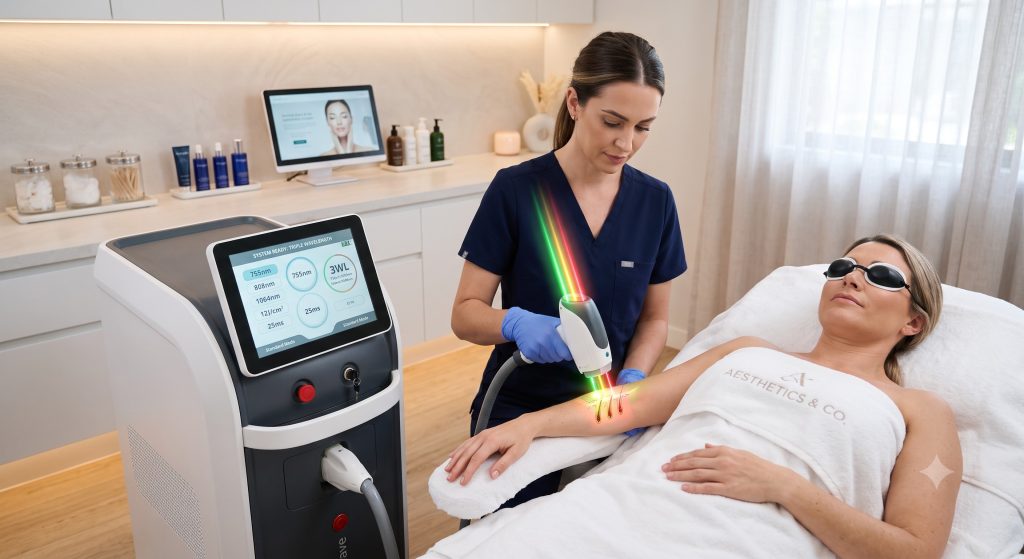
Introduction: The New Standard in Medical Aesthetics
In the rapidly evolving landscape of medical aesthetics, the 3 wavelength diode laser machine has emerged as the definitive solution for high-volume clinics and med spas aiming for superior patient outcomes and operational profitability. As an elite B2B consultant, I’ve witnessed the industry shift from single-wavelength legacy systems to advanced triple-wavelength platforms that offer unprecedented versatility. This guide provides a comprehensive, clinically-driven analysis of the 755nm/808nm/1064nm diode laser, focusing on the technical metrics that matter: selective photothermolysis, spot size, fluence, and the critical importance of Medical CE and FDA clearance. We will dissect why this technology represents the gold standard for treating a diverse patient demographic (Fitzpatrick I-VI) and how it delivers a superior Return on Investment (ROI).
Physical Mechanism & Selective Photothermolysis
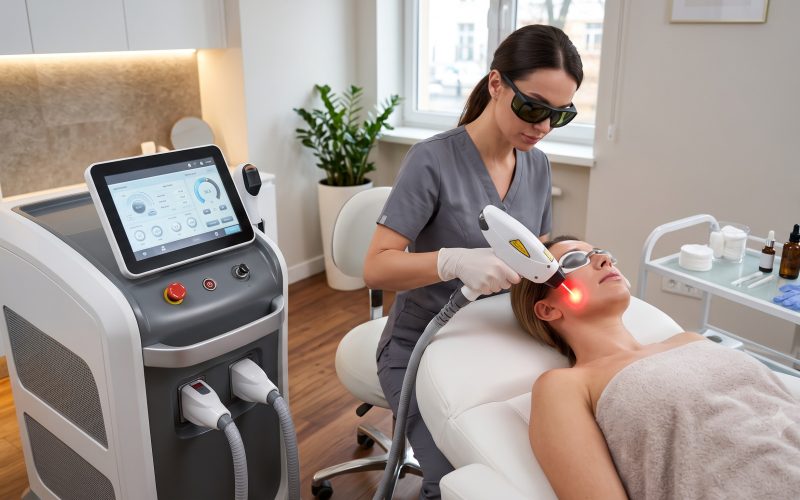
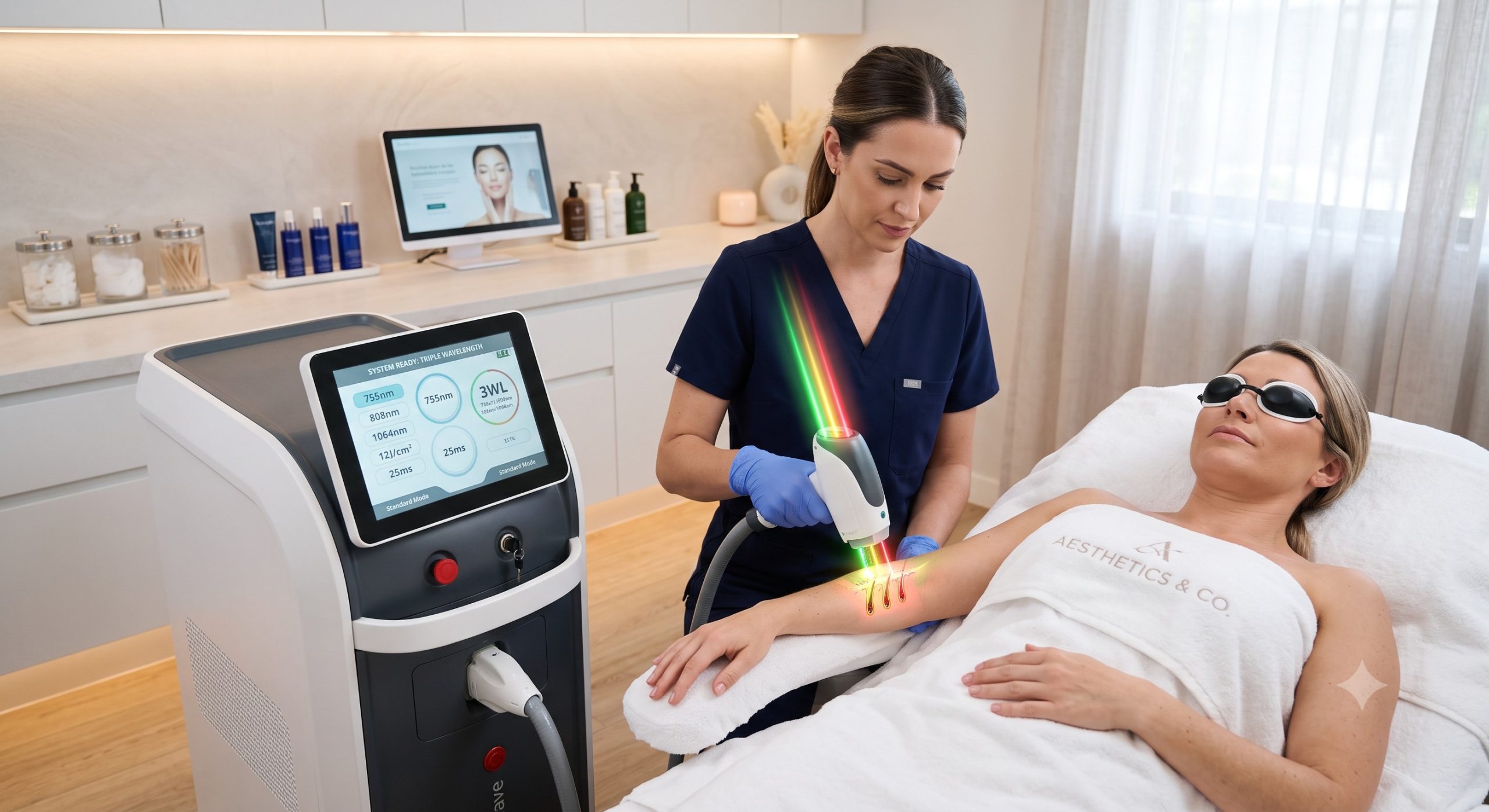
At the heart of a 3 wavelength diode laser machine lies the principle of selective photothermolysis, a process that ensures precise targeting of chromophores (melanin in hair follicles) while sparing the surrounding epidermis . The clinical advantage of this tri-wavelength system is its ability to simultaneously or sequentially emit three distinct, deeply penetrating wavelengths, each engineered to target different anatomical structures within the hair follicle (the bulge, bulb, and papilla) .
Wavelength Synergy: 755nm, 808nm & 1064nm
Unlike single-wavelength lasers, the triple-wavelength configuration provides a synergistic approach to hair reduction:
- 755nm (Alexandrite Equivalent): Highly absorbed by melanin, making it ideal for treating fine, light-colored hairs and superficial follicles (e.g., upper lip) on lighter skin types (Fitzpatrick I-III).
- 808nm (Diode Gold Standard): The workhorse of hair removal, offering a balance between melanin absorption and deep penetration. It is highly versatile and effective for standard hair types on Fitzpatrick skin types I-IV .
- 1064nm (Nd:YAG Equivalent): Penetrates the deepest with minimal epidermal melanin absorption, allowing safe and effective treatment of coarse, dense hair in darker skin types (Fitzpatrick IV-VI), significantly reducing the risk of burns or hyperpigmentation .
A peer-reviewed study published in the Journal of Cosmetic Dermatology demonstrated a mean hair reduction of 41.5% in the axilla and 48.1% in the bikini line after 3 months, confirming high clinical efficacy across all skin types with no serious adverse events .
Critical Technical Specifications & Standards
When evaluating a 3 wavelength diode laser machine, understanding the interplay of technical parameters is essential to ensure optimal clinical outcomes and patient safety. Compliance with international medical standards (e.g., Medical CE, FDA 510(k) Clearance, ISO 13485) is non-negotiable for a professional clinic .
| Key Parameter | Technical Specification | Clinical Rationale |
|---|---|---|
| Wavelength / Laser Type | 755nm (±10nm) / 808nm (±5nm) / 1064nm (±10nm) Diode Stack | Synergistic targeting of superficial to deep hair follicles, enabling safe and effective treatment across all Fitzpatrick skin types (I-VI) . |
| Energy Density / Fluence | Up to 120 J/cm² (Adjustable) | Provides the power necessary to induce thermal coagulation of the hair follicle’s bulb and bulge, achieving permanent hair reduction. |
| Spot Size | 12x12mm to 15x24mm (Interchangeable Handpieces) | Larger spot sizes enhance treatment speed and increase optical penetration depth, improving clinical efficiency for large body areas. |
| Cooling System | Sapphire Contact Cooling with TEC Module (0°C to -6°C) | Protects the epidermis from thermal injury, provides pain relief, and allows for the delivery of higher fluences safely. |
| Regulatory Compliance | FDA 510(k) Cleared (Class II), Medical CE (MDR 2017/745), ISO 13485:2016 | Ensures the device meets stringent safety, performance, and quality standards required for medical liability and insurance. |
Epidermal Protection & Cooling Systems
The delivery of high-energy fluence to destroy hair follicles must be balanced with robust epidermal protection to ensure patient comfort and safety. A state-of-the-art 3 wavelength diode laser machine integrates advanced cooling mechanisms to mitigate thermal damage.
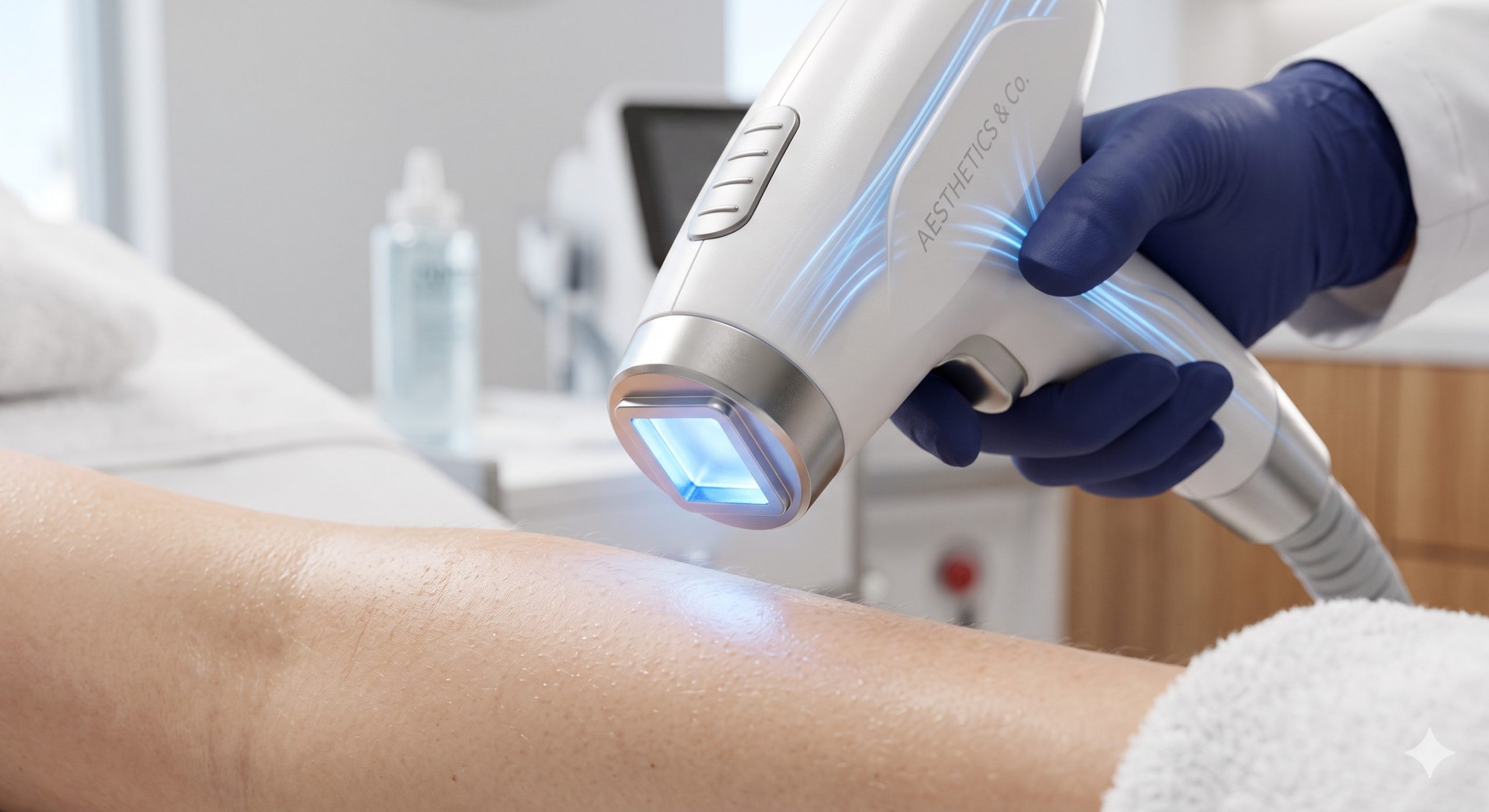
The industry benchmark is the Sapphire Contact Cooling system integrated with a Thermoelectric Cooler (TEC). This technology cools the treatment tip to temperatures between -6°C and 4°C . The sapphire window, which is transparent to the laser wavelengths, creates a chilled barrier between the handpiece and the skin.
- Protection Mechanism: This cooling works in three ways: it protects the epidermis from thermal injury, reduces pain by numbing the surface nerve endings, and allows for the use of higher fluences without increasing the risk of adverse effects (e.g., blistering, hyperpigmentation).
- Contact Sensor: Premium systems also include a real-time skin contact sensor that automatically shuts off the laser if the handpiece is not in full contact with the skin, adding another layer of safety .
Clinic ROI & Competitive Business Strategy
From a business consultancy perspective, the investment in a 3 wavelength diode laser machine is a strategic move to maximize clinic profitability. The superior efficacy and safety profile directly translate to high patient satisfaction, retention, and a diversified revenue stream.
Efficiency & Throughput
High-power systems (ranging from 1000W to 2400W) and large spot sizes (e.g., 12x24mm or 15x15mm) significantly accelerate treatment speed . For instance, a clinic performing full-leg treatments with a large spot size and a repetition rate of 10Hz can drastically reduce session duration compared to older 2-3Hz systems, increasing daily patient capacity .
Calculating Total Cost of Ownership (TCO)
While the initial CapEx for a premium device is substantial, the Total Cost of Ownership is highly favorable. The handpiece is the primary consumable, with a lifespan measured in shot counts. Low-tier handpieces may fail after 5-10 million shots, while premium units utilizing high-quality laser bars can exceed 30-50 million shots, drastically reducing the ‘cost per shot’ .
A medical-grade device in the $35,000-$60,000 range can achieve break-even within 6-9 months in a busy med spa, generating $8,000-$15,000 in monthly revenue, given standard session pricing ($50-$200 per session) .
Conclusion & Executive Verdict
The 3 wavelength diode laser machine is not merely an upgrade; it is the cornerstone technology for a modern, forward-thinking aesthetic practice. Its ability to safely and effectively treat the full spectrum of Fitzpatrick skin types with superior clearance rates, combined with the operational efficiencies of high power and advanced cooling, makes it an indispensable asset. For clinics looking to future-proof their service offering, generate high patient lifetime value, and maximize ROI, the decision is clear: invest in a clinically validated, Medical CE and FDA-cleared triple-wavelength diode laser. This strategic acquisition will elevate your clinic’s standard of care and ensure its competitive edge in the medical aesthetics market.