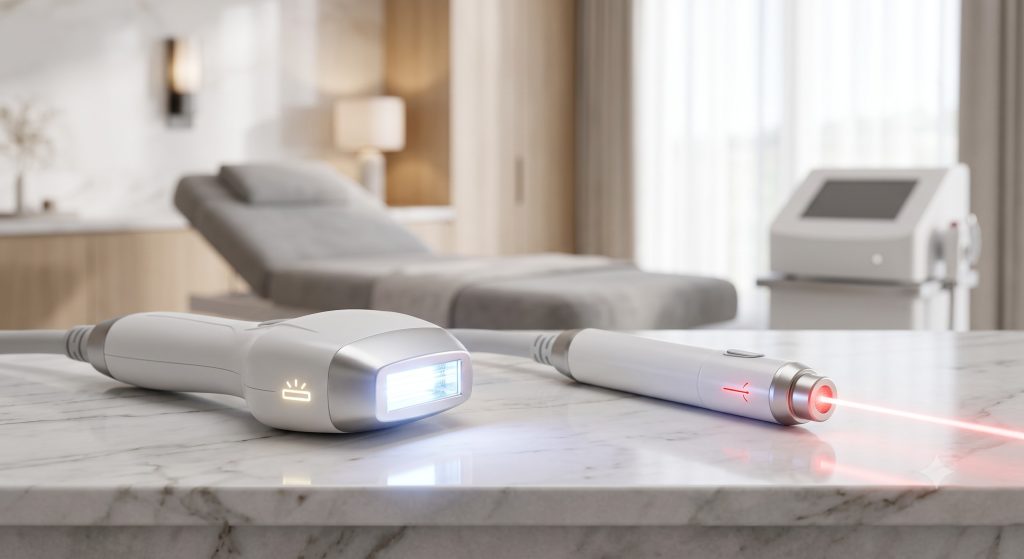
Introduction: The Clinical Crossroads of IPL and Diode Laser Technology
In the rapidly evolving landscape of medical aesthetics, the debate between IPL (Intense Pulsed Light) and Diode Laser hair removal remains a central clinical and business consideration. For clinic owners and medical directors, selecting the right technology transcends simple marketing claims; it is a decision rooted in a deep understanding of selective photothermolysis, tissue interaction, and long-term return on investment (ROI). This comprehensive guide, informed by 15 years of industry expertise, provides a data-driven comparison of IPL vs Diode technologies, dissecting the physics, clinical efficacy, safety profiles, and commercial viability to empower your practice.
While both modalities offer hair reduction, their mechanisms, target chromophores, and outcome consistencies diverge significantly. Understanding these differences is paramount for maximizing patient satisfaction and clinic profitability. 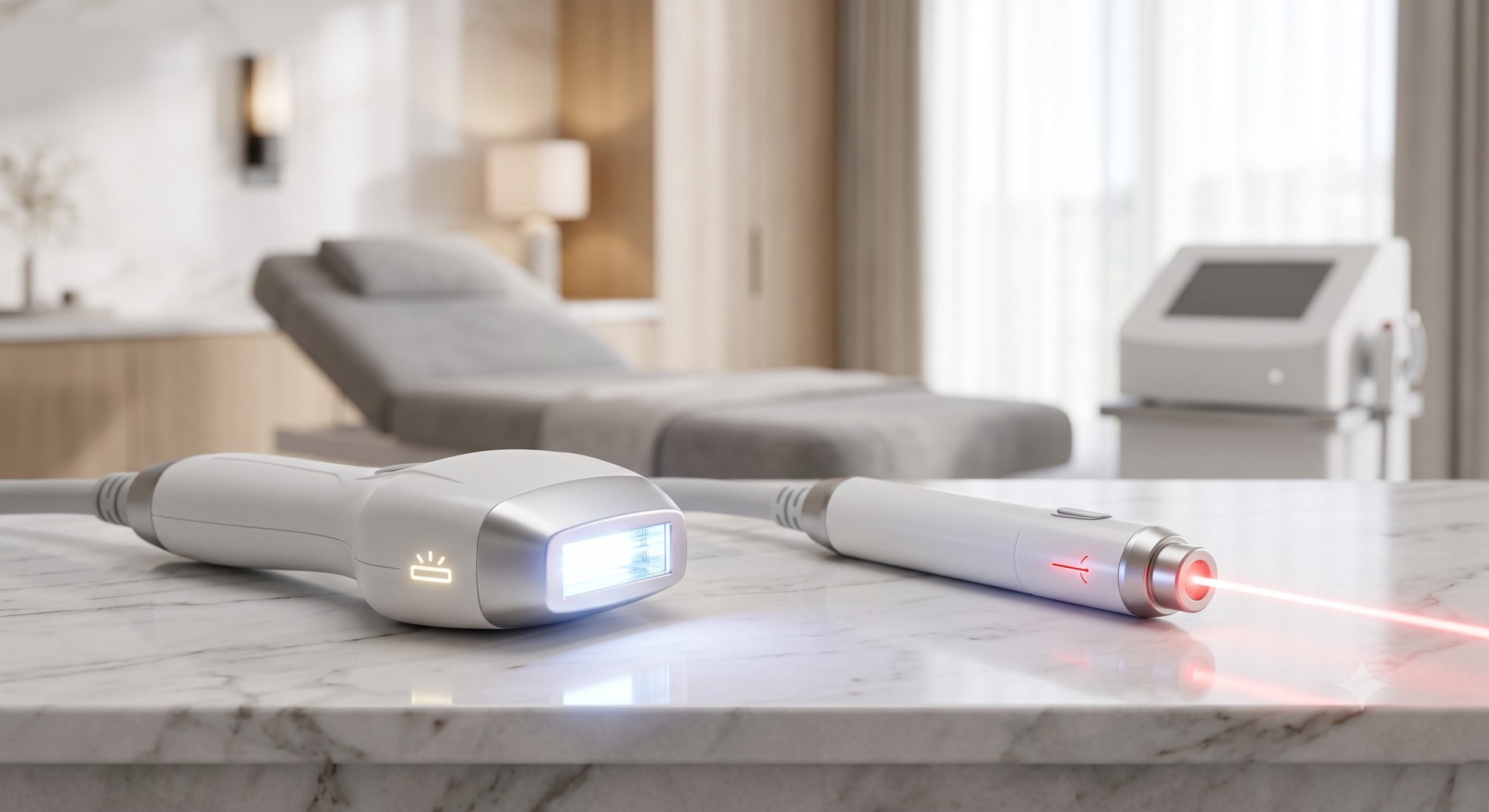
The Physics of Photothermolysis: How IPL and Diode Lasers Work
At its core, photoepilation relies on the principle of selective photothermolysis: delivering light energy to a target chromophore (melanin in the hair follicle) to generate heat, which subsequently destroys the follicle without damaging the surrounding epidermis. However, the way IPL and Diode lasers achieve this differs fundamentally.
IPL Technology: Broad-Spectrum Light
IPL devices emit a broad, non-coherent spectrum of light, typically ranging from 500nm to 1200nm. They utilize optical filters to cut off specific wavelengths, theoretically allowing for customization. However, this unfocused energy dispersal means a larger proportion of the energy is absorbed by water and hemoglobin in the skin rather than solely the melanin in the follicle. This leads to a higher risk of collateral thermal damage and reduced peak power at the target, often requiring multiple sessions and resulting in variable clinical outcomes.
Diode Laser Technology: Monochromatic Precision
In contrast, a Diode laser produces a single, highly concentrated wavelength of light, typically in the near-infrared spectrum. Modern high-end systems, such as those utilizing 808nm (the gold standard for melanin absorption), or multi-wavelength platforms offering 755nm (Alexandrite), 808nm, and 1064nm (Nd:YAG), deliver focused, coherent energy. This monochromatic precision ensures that the maximum amount of energy is delivered directly to the melanin-rich hair shaft and bulb, providing superior clinical clearance rates and a more predictable safety profile.
This fundamental difference in light delivery dictates the superiority of Diode lasers over IPL for permanent hair reduction, as defined by the FDA.
Critical Technical Specifications: The Data Behind the Decision
An informed clinical evaluation of IPL vs Diode laser systems hinges on analyzing key performance metrics. Below is a technical breakdown of the parameters that directly influence treatment efficacy and safety.
| Key Parameter | IPL Technology | Diode Laser Technology |
|---|---|---|
| Wavelength / Laser Type | Broad Spectrum (500-1200nm) | Monochromatic (e.g., 808nm, 1064nm) |
| Cooling System | Passive Gel / Basic Contact | Active Sapphire ICE / TEC Contact Cooling |
| Energy Density (Fluence) | Typically 5-20 J/cm² | Up to 120 J/cm² |
| Spot Size | Small (e.g., 8-12mm) | Large (Up to 15x20mm) |
| Target Chromophore | Melanin (Non-selective) | Melanin (Highly Selective) |
| Clinical Efficacy | 30-50% Hair Reduction | 70-90% Hair Reduction |
| Regulatory Standards | FDA Cleared (OTC Level) | FDA Cleared & Medical CE, ISO 13485 |
Wavelength, Fluence, and Pulse Width Dynamics
The wavelength determines the depth of penetration and the target chromophore. For instance, the 755nm wavelength is highly effective for Fitzpatrick Skin Types I-III, while the 1064nm wavelength is safer for Types IV-VI due to its deeper penetration and lower melanin absorption. A key differentiator is the ability of high-end Diode lasers to deliver high fluence (energy density, measured in J/cm²) at short pulse widths. This combination maximizes the peak power, ensuring that the follicular temperature rises to a therapeutic level (approximately 70°C) quickly to induce coagulation necrosis, while simultaneously minimizing heat diffusion to the surrounding tissue.
IPL devices generally offer lower peak power, requiring longer pulse widths to deliver the necessary cumulative energy. This increases the risk of epidermal burns, especially in darker skin types, as the thermal relaxation time of the epidermis is exceeded.
Spot Size and Treatment Speed
Spot size (the treatment beam diameter) is critical for both efficiency and efficacy. A larger spot size (e.g., 12mm x 12mm or larger) allows for deeper penetration by reducing light scattering. This accelerates treatment times and improves overall clinic workflow. Systems offering spot sizes up to 15mm x 20mm are ideal for high-volume clinics. Conversely, IPL devices with smaller spot sizes lead to slower treatments and shallower energy delivery, potentially compromising long-term results for larger body areas.
Clinical Efficacy and Real-World Clearance Rates
When evaluating IPL vs Diode, the evidence from clinical studies and real-world practice demonstrates that Diode lasers consistently outperform IPL in terms of long-term hair reduction.
Hair Reduction Metrics
With an optimal treatment protocol using a medical-grade Diode laser, patients can expect a 70% to 90% reduction in hair growth after a series of 4-6 sessions. The focused wavelength targets the melanin in the anagen (active growth) phase. In contrast, IPL typically achieves a 30% to 50% reduction, often requiring 8-12 sessions for comparable, albeit less consistent, results. This has a direct impact on patient loyalty, as the higher failure rate of IPL can lead to unsatisfied patients seeking better alternatives. High-fluence 808nm Diode lasers are particularly renowned for their predictable performance across diverse skin and hair types.
Safety Profiles, Cooling Systems, and the Fitzpatrick Scale
Patient safety is non-negotiable. The risk of burns, hyperpigmentation, or hypopigmentation is significantly higher when the epidermal melanin competes for the light energy. This is where the engineering of Diode laser systems provides a distinct advantage.
Diode laser platforms integrate sophisticated epidermal cooling systems, such as a sapphire crystal contact window that chills the skin immediately before, during, and after the laser pulse. This sapphire ICE cooling protects the epidermis, allowing for safe delivery of high fluences necessary for effective treatment, even on Fitzpatrick Skin Types IV-VI. Some systems also utilize integrated TEC (Thermoelectric Cooler) chips to ensure consistent contact cooling, drastically reducing patient discomfort and procedure risk. 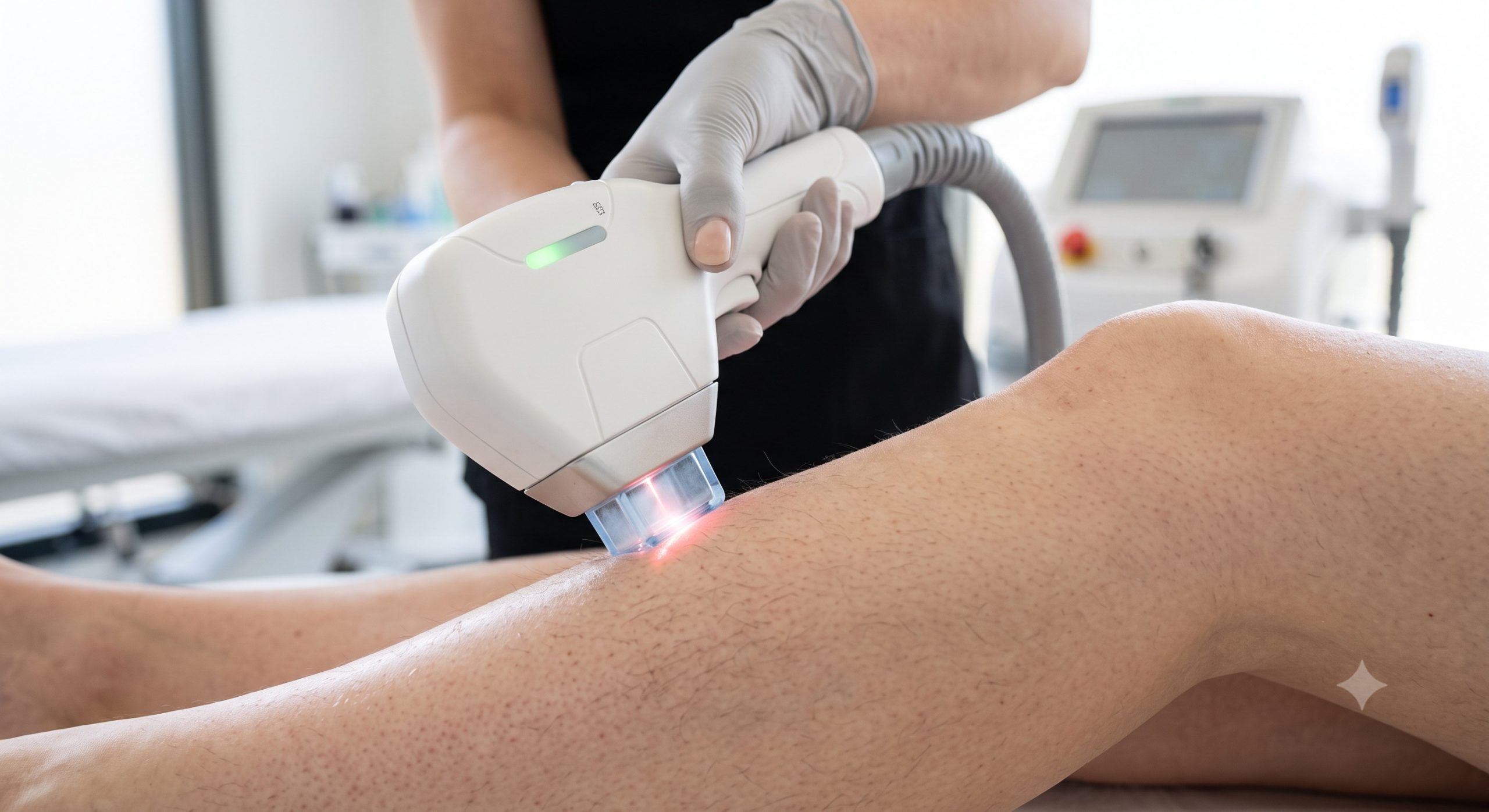
On the other hand, many IPL systems rely solely on passive gel cooling or less effective contact cooling, which can lead to surface temperatures reaching unsafe levels, particularly when higher fluences are attempted. The lack of precision in targeting makes IPL a riskier option, particularly for darker skin tones.
Clinic ROI, Business Integration, and Compliance
For a successful clinic, the choice between IPL and Diode laser is also a business equation.
Investment & Profitability: While the initial capital expenditure (CapEx) for a premium Diode laser is higher, the return on investment (ROI) is superior. Higher clinical efficacy translates to premium pricing, faster treatment throughput, and higher patient retention. The lifetime cost of ownership (TCO), which includes consumables like handpieces and laser bars, is often more predictable with medical-grade Diode devices that are built to ISO 13485 standards. Conversely, lower-cost IPL devices have a higher total cost of ownership due to more frequent handpiece replacements and maintenance needs, coupled with lower session revenue.
Regulatory Compliance: To ensure patient safety, clinics must invest in devices with appropriate regulatory certifications. Look for systems with FDA clearance and Medical CE marks, verifying that they have undergone rigorous clinical testing. Compliance with ISO 13485 for manufacturing quality ensures long-term device reliability and clinical stability, protecting your practice from liability.
Integrating a Diode laser into your service menu also positions your clinic as a premier destination for aesthetic treatments, enabling effective combination therapy with other modalities like skin rejuvenation.
Conclusion: Making the Best Choice for Your Practice
In the clinical evaluation of IPL vs Diode laser hair removal, the evidence is clear: the precision, safety, and efficacy of Diode laser technology far surpass the capabilities of IPL. While IPL may have a place as an entry-level or low-cost consumer device, it falls significantly short of the clinical and operational standards required for a modern, patient-centric medical aesthetic practice.
Investing in a premium, multi-wavelength Diode laser platform with advanced cooling, large spot sizes, and high fluence ensures superior treatment outcomes, maximizes patient safety, and provides a robust pathway for clinic growth. In this industry, delivering consistent, quantifiable results is the cornerstone of a thriving practice. By choosing the right technology, you position your clinic at the forefront of a competitive market, building a reputation for excellence and results.