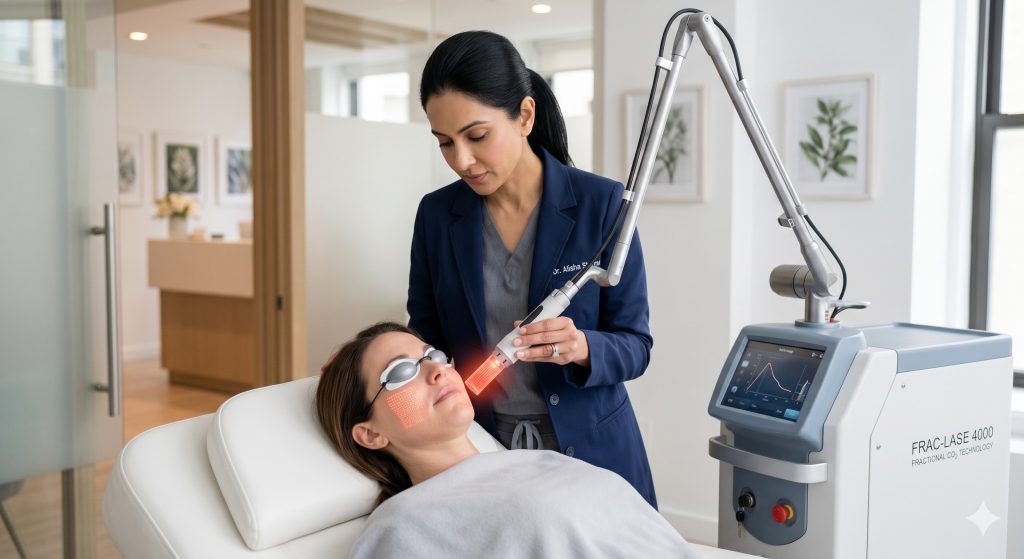
Introduction: Why CO2 Fractional Laser Remains the Gold Standard for Resurfacing
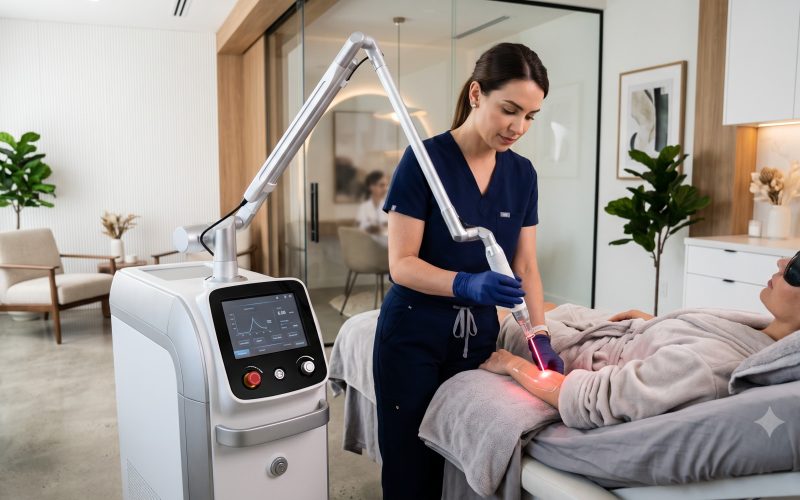
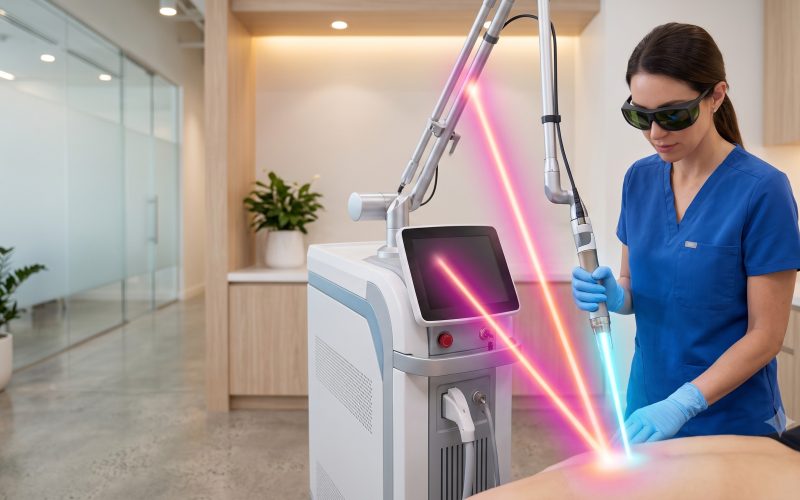
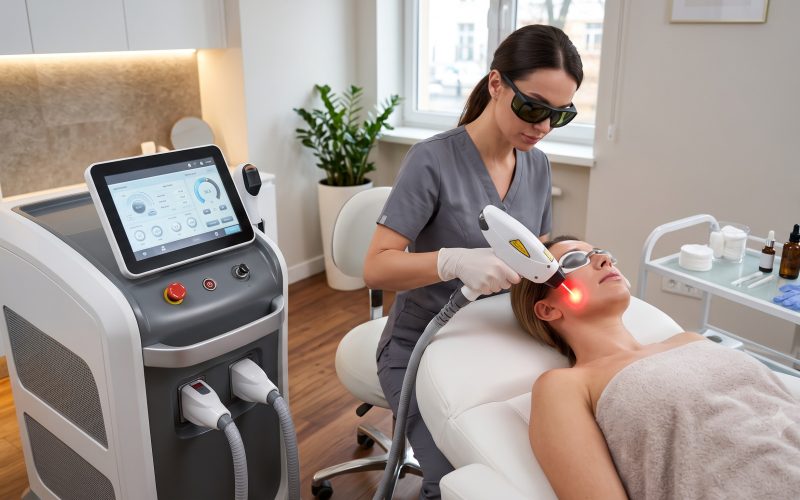
For medical aesthetics clinics aiming to deliver superior outcomes for deep rhytids, atrophic scars, and textural irregularities, the CO2 fractional laser remains the undisputed clinical benchmark. Unlike non-ablative technologies that primarily heat dermal water, fractional CO2 lasers (10,600 nm wavelength) create microscopic ablation zones (MAZs), triggering a robust wound healing response with significant neocollagenesis. This guide provides a data-driven analysis of clinical efficacy, technical parameter optimization, and long-term return on investment (ROI) for clinic owners and dermatologists.
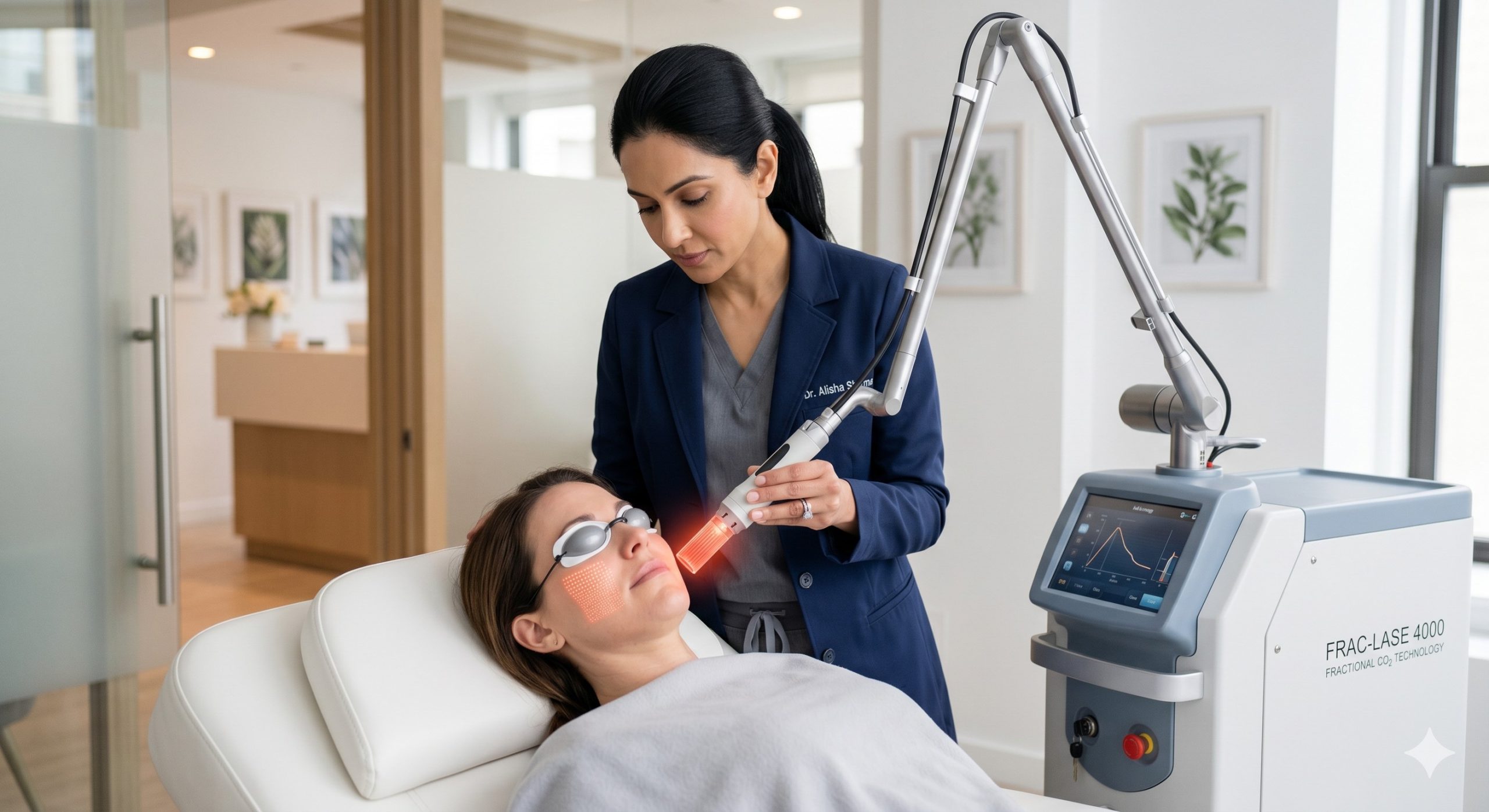
Physical Mechanism: Selective Photothermolysis in the Mid-Infrared
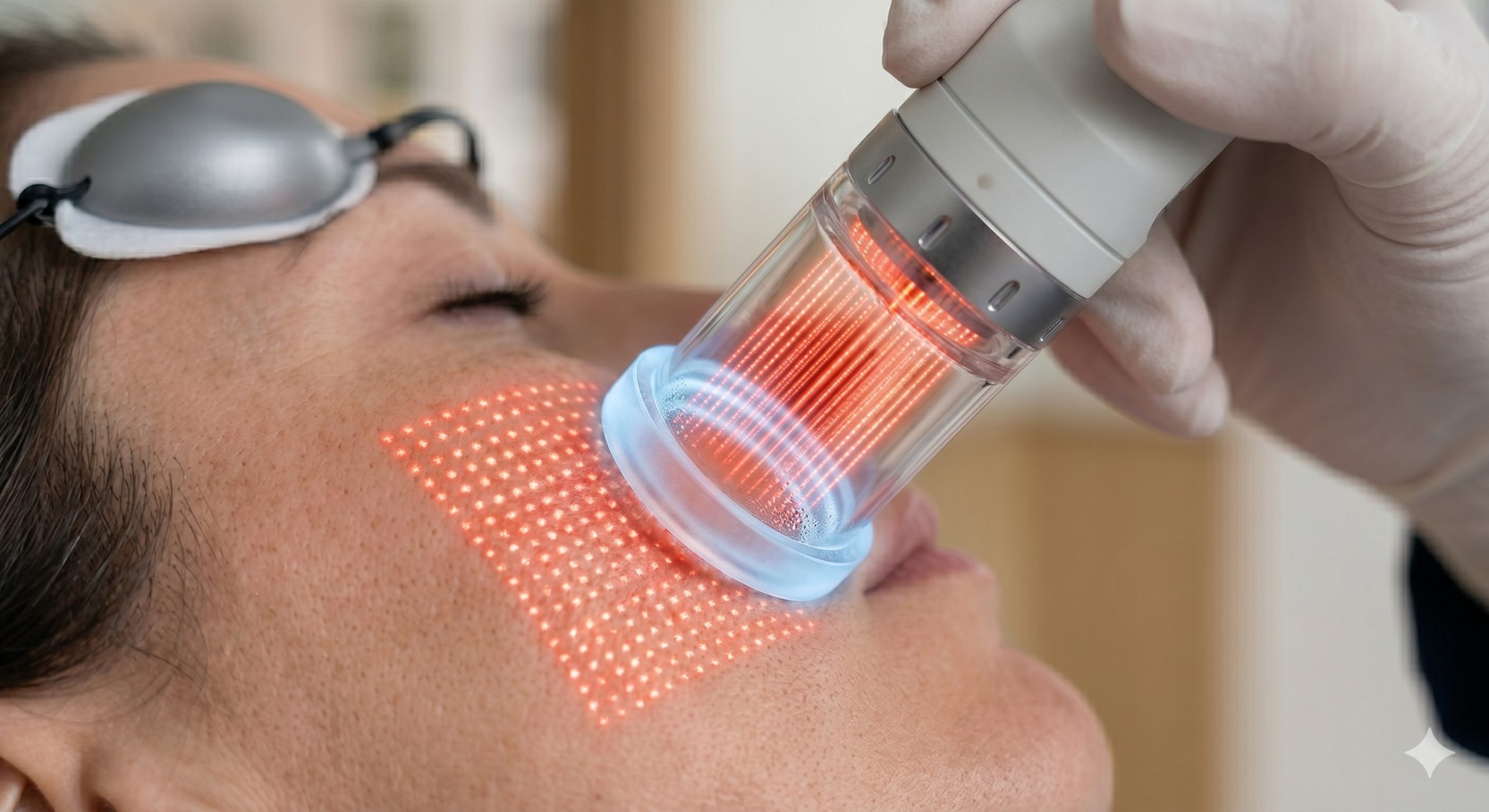
The CO2 laser emits at 10,600 nm, a wavelength strongly absorbed by intracellular water. In fractional mode, the beam is divided into an array of micro-beams (spot sizes typically 120–300 µm), leaving intervening untreated skin islands. This design reduces downtime while preserving the ablative power. Key performance metrics include energy density (fluence), typically ranging from 5 to 150 mJ per microbeam, and coverage density (5-25% per session). Higher fluence (≥50 mJ) reaches the reticular dermis (depth up to 1.5 mm), critical for deep scar remodeling.
Core Technical Specifications
Medical-grade CO2 fractional laser systems must integrate stable RF-excited laser tubes or metal DC glass tubes. Systems with Medical CE (MDD 93/42/EEC or MDR 2017/745) and FDA 510(k) clearance ensure consistent pulse-to-pulse energy stability. Critical components include a scanning galvanometer for pattern uniformity and a proprietary ablation control algorithm to minimize thermal coagulation zones (typically 50-100 µm) for faster re-epithelialization.
| Key Parameter | Technical Specification |
|---|---|
| Wavelength | 10,600 nm (Mid-Infrared) |
| Laser Medium | CO2 (Carbon Dioxide) / RF Excitation |
| Fluence per Microbeam | 5 – 150 mJ (Ablative threshold ~20 mJ) |
| Typical Spot Size (MAZ) | 120 – 300 µm diameter |
| Ablation Depth | 20 – 1,500 µm (dependant on fluence & tissue density) |
| Thermal Coagulation Zone | 50 – 150 µm (proprietary pulse shaping reduces spread) |
| Scan Patterns | Hexagonal, Square, Spiral, Custom Mask |
| Cooling System | Sapphire Contact Cooling or Dynamic Cryogen (DCD) |
| FDA Clearance | Yes (Resurfacing, Scars, Rhytids) |
| Medical CE Mark | Class IIb / MDR 2017/745 compliant |
| Safety Class | Class 4 Laser Product |
Clinical Indications & Fitzpatrick Scale Strategy
The versatility of CO2 fractional laser covers acne scars (rolling and boxcar types), surgical scars, actinic keratosis, rhinophyma, and moderate-to-severe photoaging. However, safety for Fitzpatrick Skin Types III-VI requires aggressive parameter modification: lower fluence (<40 mJ), lower density (≤10%), and pre-treatment with hydroquinone or a pigment-stabilizing regimen to avoid post-inflammatory hyperpigmentation (PIH). Clinics must implement a mandatory test spot protocol and use dynamic cooling devices (DCD) or forced air cooling for epidermal protection, especially on periorbital and perioral regions.
Treatment Protocols & Downtime Optimization
A single session of fractional CO2 laser resurfacing induces clinical clearance rates of 50-75% for atrophic scars after 3 months, based on blinded quantitative assessments. For deep rhytids (Glogau class III-IV), two sessions spaced 3-4 months apart yield optimal results. Immediate post-treatment care includes occlusive emollients (e.g., petrolatum-based) and strict photoprotection (SPF 50+, physical blockers). Typical erythema and micro-crusting last 4-7 days – significantly shorter than traditional fully ablative CO2 (14-21 days).
Clinic ROI Analysis: Revenue per Square Foot
Integrating a CO2 fractional laser transforms a clinic’s service mix. At an average price of $1,500–$3,500 per full-face treatment, and assuming 4-6 procedures weekly, monthly revenue can exceed $25,000. CapEx ranges from $35,000 to $95,000 for a medical-grade system with a certified Class 4 laser. Key OpEx factors include consumables: each high-quality handpiece offers 1–2 million shots before requiring replacement (cost $800–$2,500). Systems with ISO 13485-certified manufacturing ensure lower downtime costs and reduce long-term Total Cost of Ownership (TCO). When amortized over five years, the CO2 fractional laser provides one of the highest ROIs among aesthetic devices, with break-even typically occurring in 6-9 months.
Safety & Compliance Essentials
Clinics must adhere to strict Medical CE and local radiation safety regulations. This includes dedicated laser-safe signage, wavelength-specific eyewear (OD 5+ for 10,600 nm), and annual calibration verification using a pyroelectric energy meter. Operator training should cover proper plume evacuation (smoke evacuator with 0.1 µm ULPA filter) and fire safety protocols (saline-soaked gauze for perioperative areas). Documenting FDA-cleared indications on consent forms protects both patient and provider.
Conclusion: A Strategic Investment in Clinical Leadership
The CO2 fractional laser is not merely a device – it is a platform for demonstrating clinical excellence and generating sustainable revenue. By mastering fluence/density parameters, respecting Fitzpatrick-specific protocols, and investing in certified hardware, clinics achieve unmatched results for scar revision and resurfacing. For clinic owners evaluating capital purchases, prioritize systems with verified output stability, sapphire or cryogen cooling, and robust post-market surveillance data. The future of medical aesthetics belongs to those who can safely deliver profound, visible outcomes – and fractional CO2 remains the most powerful tool in that mission.