Introduction: The Paradigm Shift in Non-Invasive Facial Rejuvenation
The aesthetic medicine landscape is undergoing a seismic shift. Patients are increasingly demanding effective, non-invasive alternatives to surgical procedures that offer tangible results without the associated downtime, risks, and high costs of a traditional facelift. At the forefront of this revolution is High-Intensity Focused Ultrasound (HIFU), a technology that has rapidly become a cornerstone of modern aesthetic clinics. Unlike superficial skin resurfacing technologies, HIFU offers a deep, structural lift by targeting the foundational layers of the face, making it one of the most sought-after non-surgical face lift treatments available today .
For the discerning clinic owner or medical director, investing in HIFU technology is not just about acquiring a new device; it’s about strategically positioning your practice to meet a growing market demand while ensuring high clinical efficacy and robust profitability. This guide provides a comprehensive, data-driven analysis of HIFU technology, covering its clinical mechanisms, technical specifications, safety protocols, and financial return on investment (ROI).
Clinical Deep Dive: The Science of Selective Tissue Heating
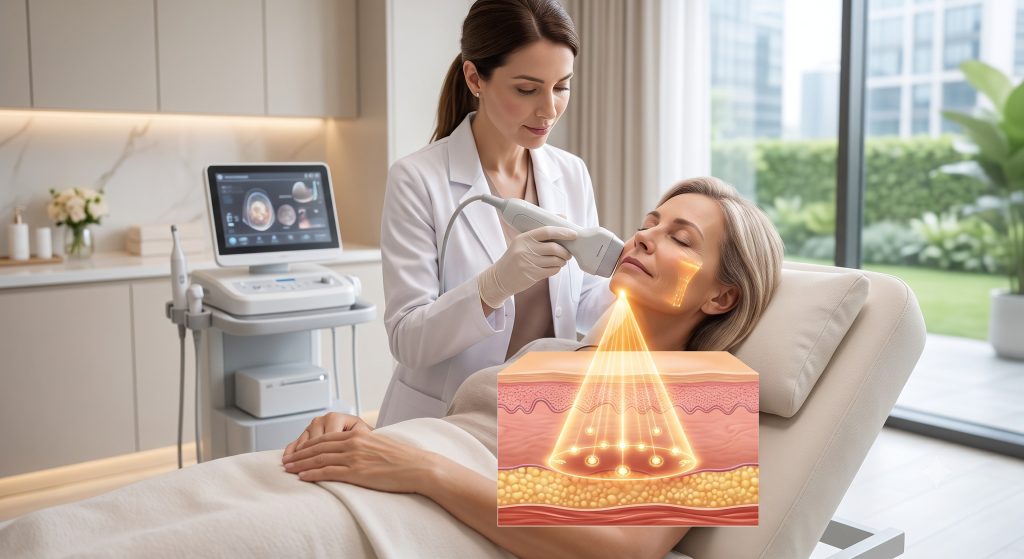
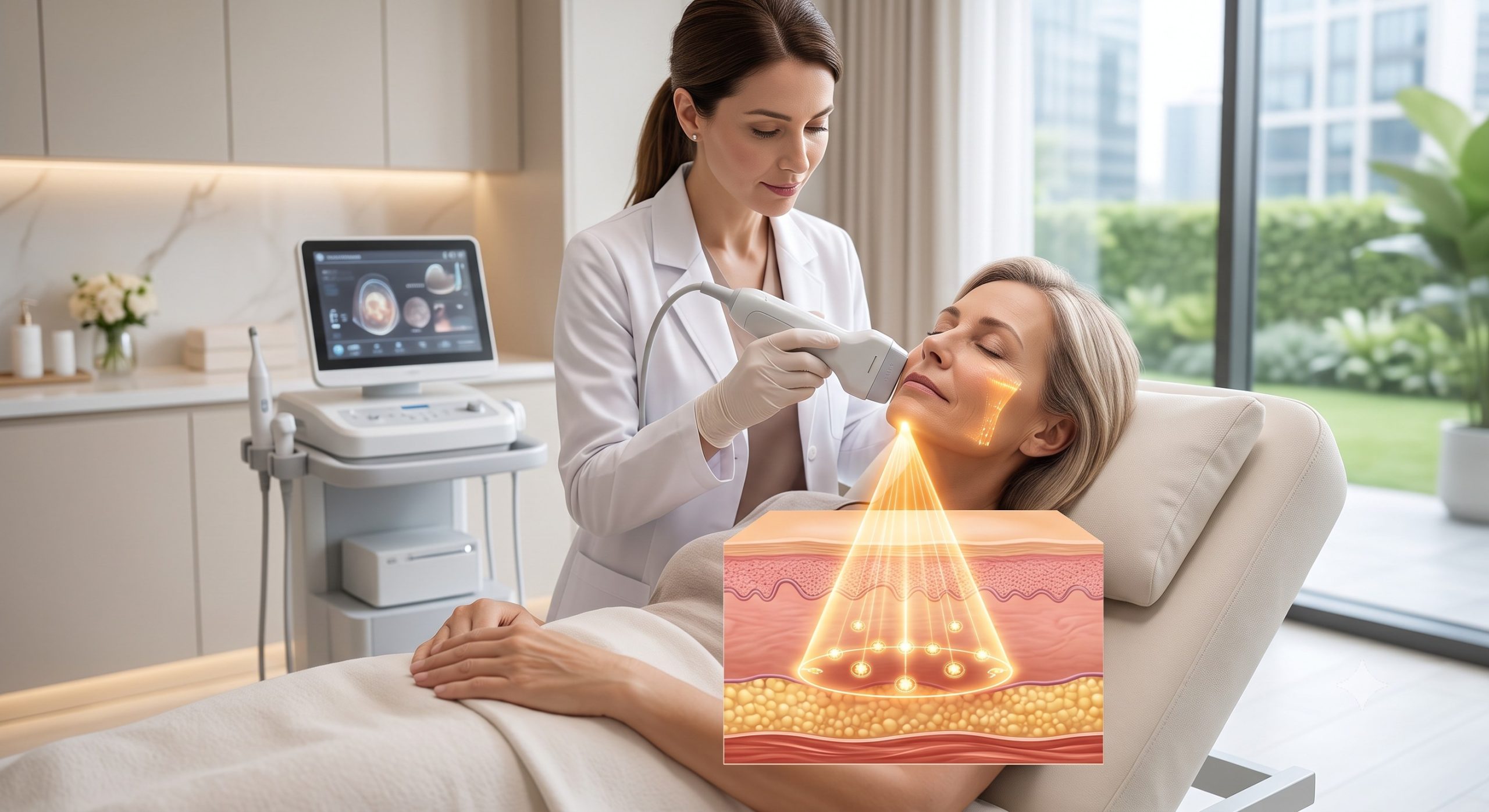
To understand the superior efficacy of HIFU for facial lifting, one must first grasp its unique mechanism of action. Unlike lasers or intense pulsed light (IPL) that primarily target chromophores in the skin, HIFU uses focused ultrasound energy to penetrate deep into the dermis and subcutaneous tissue. The technology operates by delivering focused acoustic energy to a precise target depth, creating a thermal coagulation point (TCP) .
Targeting the SMAS Layer
The key to the HIFU non-surgical face lift’s success is its ability to reach the Superficial Muscular Aponeurotic System (SMAS). This is the same deep structural layer that a surgeon pulls and tightens during a surgical facelift. By delivering focused ultrasound energy to depths of 3.0mm and 4.5mm, HIFU can generate precise thermal zones within the SMAS . The controlled heating, typically to temperatures between 60°C and 70°C, induces immediate tissue contraction and initiates a robust wound-healing response .
This leads to the production of new collagen and elastin, effectively remodeling the foundational architecture of the face for a natural-looking lift and tightening effect over 2 to 3 months .
Technical Parameters & Specifications
For a clinician, understanding the specific output metrics of a device is paramount for safe and effective treatment delivery. Modern HIFU systems, such as the Ultraformer series, offer a range of cartridges to target different depths and anatomical areas. Treatment depth and energy are the two most critical parameters in HIFU therapy.
Clinical research published in the Journal of Cosmetic Dermatology has demonstrated the histological efficacy of HIFU at various depths. A study using the Ultraformer MPT device evaluated effects at 2.0mm, 3.0mm, 4.5mm, and 6.0mm on pig skin, correlating these findings with clinical outcomes in 50 Asian female participants .
The study concluded that HIFU treatment at varying frequencies induced significant histological changes, including increased collagen and elastin fiber synthesis and notable fat reduction, which translated to high patient satisfaction rates for facial contouring .
| Key Parameter | Technical Specification |
|---|---|
| Treatment Depths | 1.5mm, 3.0mm, 4.5mm (6.0mm-13.0mm for Body) |
| Target Temperature | 60°C – 70°C |
| Target Layer (Face) | Superficial Muscular Aponeurotic System (SMAS) |
| Safety Standards | FDA Clearance, Medical CE, IEC 60601-2-5, ISO 13485 |
Clinically, the 4.5mm depth is the gold standard for deep SMAS lifting, while the 3.0mm depth is used for mid-dermis collagen stimulation and treating finer lines . The choice of parameters is heavily dependent on the patient’s skin condition, subcutaneous fat thickness, and the specific treatment area. Practitioners must adhere to strict IEC 60601-2-5 safety standards to ensure optimal energy delivery and patient safety .
Regulatory Compliance and Safety Considerations
In the medical aesthetics industry, patient safety is non-negotiable. When incorporating HIFU technology into your practice, understanding and adhering to regulatory requirements is crucial for both patient safety and legal compliance.
HIFU devices are considered controlled non-ionizing irradiating apparatus in many regions. For instance, in Singapore, the National Environment Agency (NEA) strictly regulates the possession and use of HIFU apparatus, requiring specific licenses and mandating that only registered medical practitioners operate them for clinical use . In the US, certain HIFU systems are FDA-cleared for non-invasive skin lifting, and devices often carry Medical CE certification for use in Europe .
It is imperative that clinics source their HIFU equipment from reputable manufacturers who comply with ISO 13485 quality management standards and ensure their systems meet international safety benchmarks, such as IEC 60601-2-5 . This not only protects the patient but also safeguards the clinic from potential liability and regulatory action.
Treatment Areas, Combination Protocols, and Managing Expectations
To maximize the utility of your HIFU investment, it’s essential to understand the full spectrum of treatment zones. The technology is highly versatile, effectively treating signs of aging across multiple facial areas.
- Forehead & Brow: Reduces fine lines and provides a subtle brow lift, opening up the eye area.
- Midface (Cheeks & Malar Region): Enhances structural support, improving skin tone and volume.
- Jawline & Chin: Contours and tightens the jawline, improving definition and reducing early jowl formation.
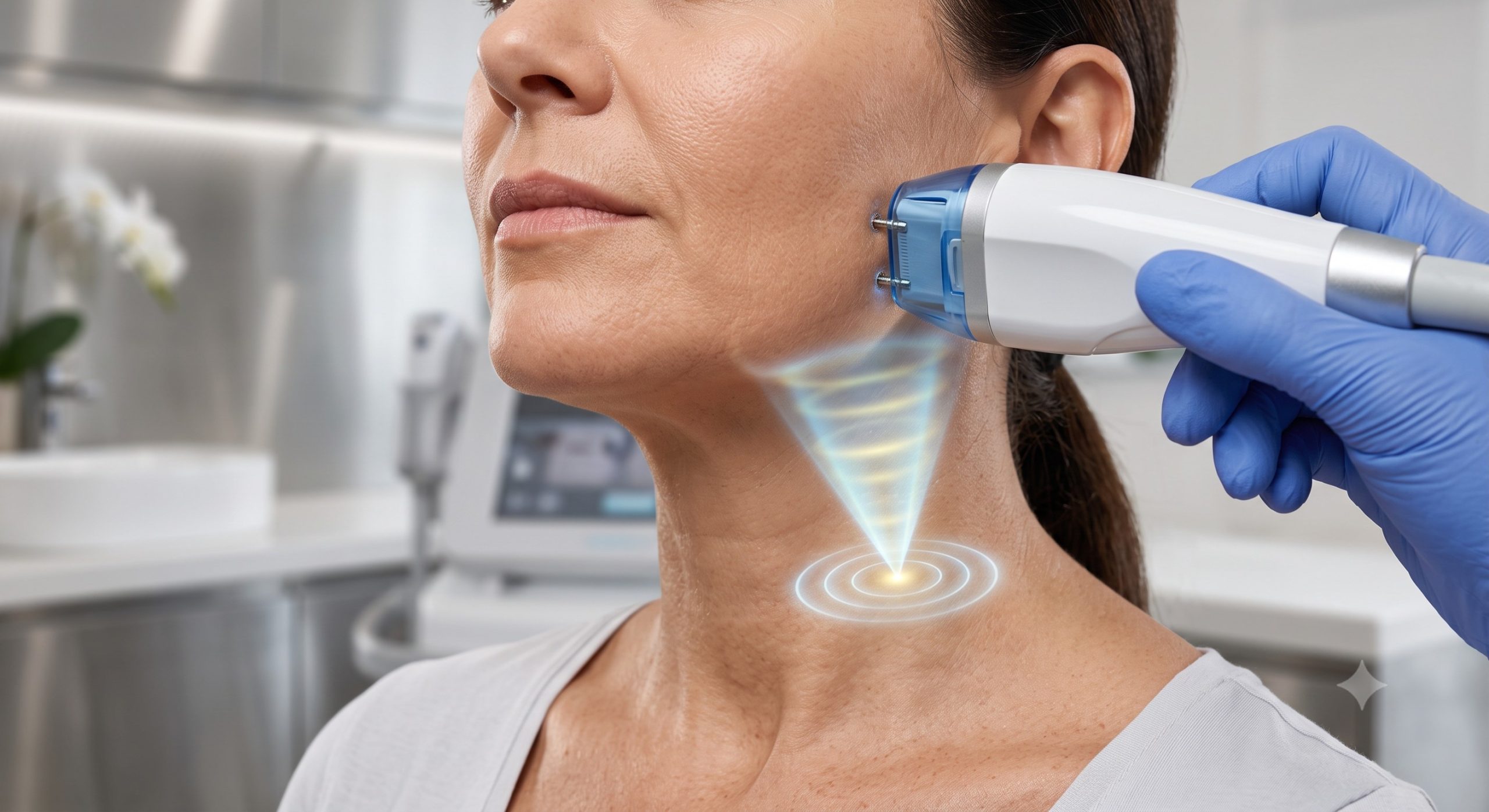
- Neck & Submental Area: Tightens skin laxity and improves the overall profile definition .
HIFU is not a ‘one-size-fits-all’ solution. A significant recent study from Japan involving 143 participants highlighted that while both HIFU and thread lifts are popular for facial laxity in Asia, treatment outcomes are not uniform. The study found that treating overweight patients (BMI ≥25 kg/m²) presented a greater challenge, as tissue movement remained substantial even after treatment . This underscores the importance of proper patient selection and managing expectations based on individual anatomy.
Advanced Clinical Workflows: Combination Therapy
For clinics looking to offer comprehensive treatment packages, HIFU provides an exceptional foundation for combination therapy .
- HIFU + Injectables: HIFU provides the structural lift, while neurotoxins (like Botox) address dynamic wrinkles and dermal fillers restore lost volume in specific areas like the cheeks.
- HIFU + Topical/Biostimulators: Combining HIFU with injectable biostimulators (e.g., Sculptra) can prolong and enhance the collagen-building effect.
- HIFU + Skin Resurfacing: Superficial lasers or RF microneedling can be used after the HIFU treatment to improve skin texture and tone.
These combination protocols not only improve patient outcomes but also significantly increase the average treatment ticket, boosting overall clinic revenue.
Clinic ROI: A Profitable Business Proposition
For any aesthetic business, the clinical efficacy of a device must be matched by a strong financial return. The business case for a HIFU non-surgical face lift system is compelling. HIFU offers a high-margin service that is attractive to a broad patient demographic seeking age management solutions. The profitability of HIFU is driven by its high patient acceptance, premium pricing, and relatively low operational costs .
The investment is accessible, with the cost of a combined face and body HIFU unit typically ranging from $20,000 to $40,000 . When considering the return on investment, the payback period is remarkably short. A mid-range system costing around $15,000 can achieve a payback period of just 1 to 2 months when operated at a moderate capacity of 10-12 sessions per week at an average treatment fee of $300 .
Profit per Treatment
Let’s break down the economics. The direct costs per session are exceptionally low, comprising consumables like ultrasound coupling gel and cartridge depreciation . The total cost per treatment can be as low as $30-$35, including staff time .
- Average Treatment Price: $300 – $500 per session .
- Cost Per Session: $30 – $35.
- Profit Per Session: $270 – $470.
With a schedule of just 10 clients per week, a clinic can generate a monthly net profit exceeding $10,000 from HIFU treatments alone . This high margin, combined with growing patient demand for safe, effective, non-invasive procedures, positions HIFU as a cornerstone technology for any forward-thinking aesthetic practice.
Conclusion: The Future of Aesthetic Medicine is Non-Invasive
The evidence is clear: HIFU non-surgical face lift technology is a clinically effective, safe, and highly profitable modality for aesthetic clinics. Its ability to deliver deep, structural lifting without surgery aligns perfectly with the modern patient’s desire for natural-looking results with zero downtime. By mastering the clinical parameters—from precise depth settings to understanding patient anatomy—and implementing a robust business strategy, clinics can harness the full potential of HIFU. This technology not only elevates patient care but also solidifies a clinic’s position as a leader in the rapidly expanding field of non-invasive aesthetics .