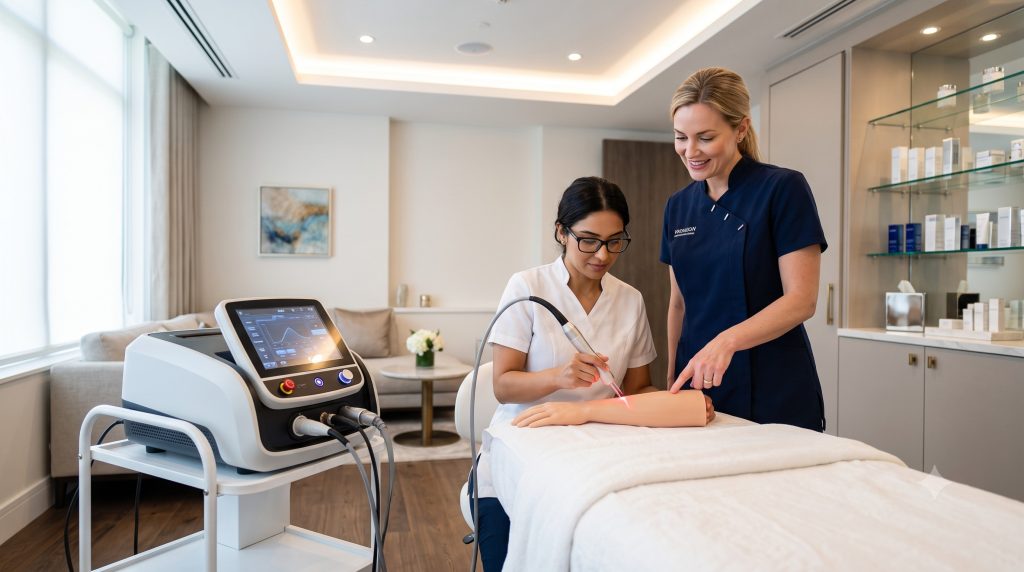
Introduction: The High-Stakes Reality of Aesthetic Device Operation
In the rapidly evolving landscape of medical aesthetics, the acquisition of a high-powered laser or energy-based device is merely the first step. The true differentiator between a thriving med spa and one that struggles with patient retention and profitability lies in the depth of medical aesthetic device technical training provided to the clinical team. As industry experts emphasize, success is built on knowledge, skill, and confidence—not just the hardware itself . Without a rigorous understanding of the physics and tissue interaction, even the most advanced FDA-cleared and ISO 13485:2016-certified technologies will underperform, leading to suboptimal clearance rates and increased risk of adverse events .
This guide serves as a comprehensive blueprint for clinic owners and medical directors. We will dissect the clinical intricacies of device operation, moving beyond surface-level marketing to explore the technical metrics that define efficacy, safety, and return on investment.
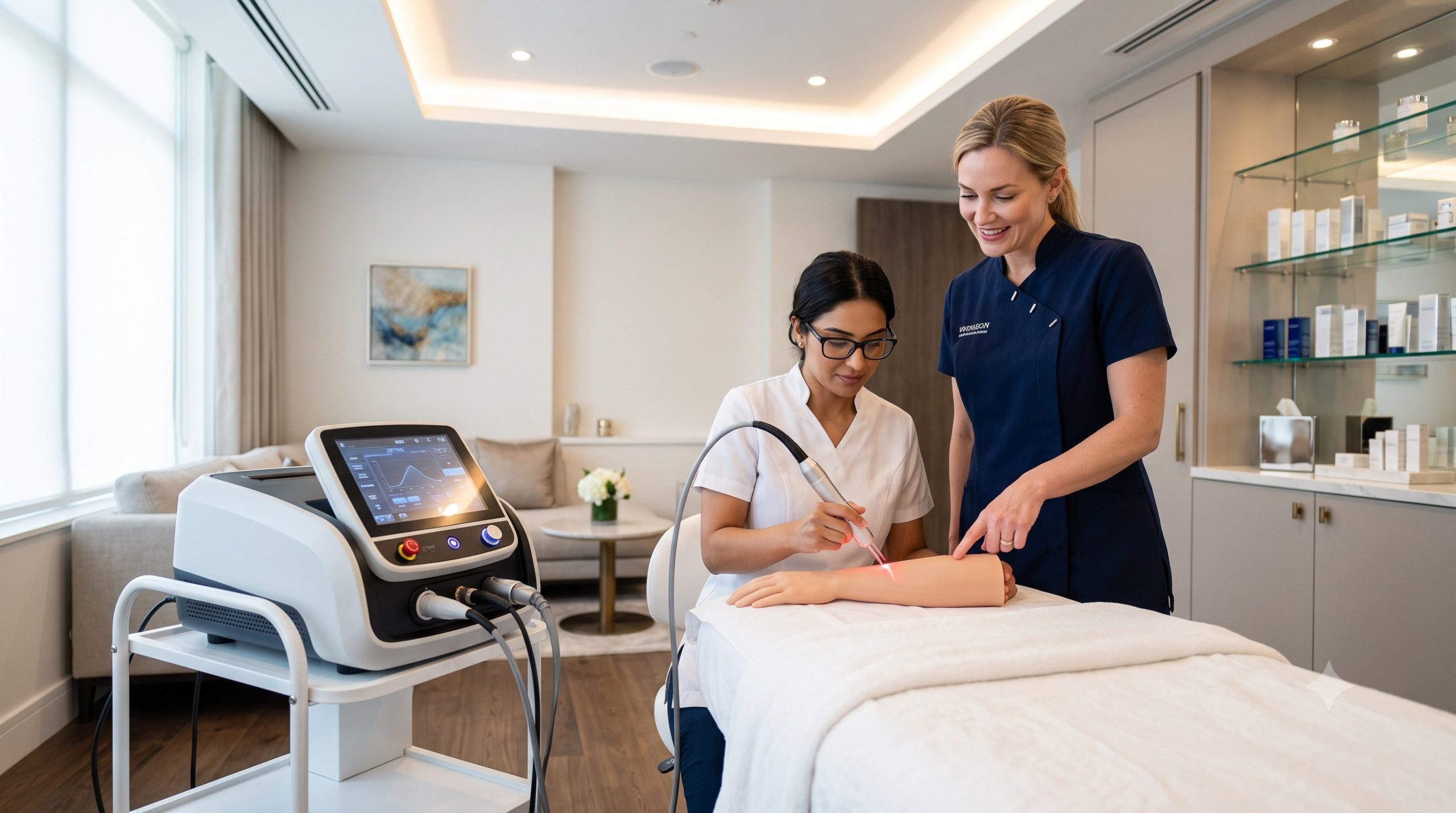
Clinical Physics: Decoding Wavelengths and Tissue Interaction
To master device operation, one must first understand the fundamental principle of Selective Photothermolysis. This law dictates that specific chromophores (targets) in the skin—such as melanin for hair removal or oxyhemoglobin for vascular lesions—can be selectively destroyed by a specific wavelength of light without damaging the surrounding tissue. The clinical training must cover how heat interacts with tissues on different levels to cause a controlled, desired aesthetic outcome .
Specific Wavelength Applications
The choice of wavelength is the single most critical parameter in treatment planning. A robust technical training program covers the specific penetration depths and absorption coefficients of each wavelength .
- 755nm (Alexandrite): Highly absorbed by melanin. Ideal for Fitzpatrick Skin Types I-III. Offers rapid hair reduction but requires meticulous epidermal cooling to prevent burns in darker skin types.
- 808nm (Diode): The ‘gold standard’ for permanent hair reduction. Provides a balance of melanin absorption and deeper penetration, making it safer and effective for a wider range of skin types (Fitzpatrick I-V).
- 1064nm (Nd:YAG): The safest wavelength for darker skin types (Fitzpatrick V-VI) due to reduced melanin competition. It penetrates deepest, making it suitable for deep vascular lesions and leg veins, though it requires higher fluence to achieve efficacy.
The Technical Matrix: Optimizing Parameters for Superior Outcomes
Knowing the wavelength is useless without the ability to manipulate the parameters—the ‘dial’ settings that determine the severity and scope of the thermal effect. Training must transform operators from button-pushers into true clinicians who can adjust variables in real-time based on skin response.
| Key Parameter | Clinical Significance | Technical Specification |
|---|---|---|
| Wavelength (Diode) | Target chromophore selection | 755nm (Melanin), 808nm (Melanin/Hemoglobin), 1064nm (Hemoglobin/Deep Tissue) |
| Fluence | Thermal damage severity | 5 – 30 J/cm² (Dependent on skin type & hair color) |
| Pulse Width | Thermal Relaxation Time | 3 – 400 ms (Variable; shorter for melanin, longer for vascular) |
| Spot Size | Penetration depth & treatment speed | 10mm – 24mm (Larger spots increase speed and depth) |
| Cooling System | Epidermal protection | Sapphire Contact Cooling / TEC / Cryogen Spray |
Critical Parameter Adjustments
- Fluence (Energy Density) [J/cm²]: The amount of energy delivered per unit area. Higher fluence increases thermal destruction but raises the risk of scarring and pigmentation changes. Training must teach the operator to titrate fluence based on skin thickness and hair caliber.
- Pulse Width (Duration) [ms]: The time the laser energy is emitted. The Thermal Relaxation Time (TRT) of the target dictates the ideal pulse width. For melanin (hair follicles), the TRT is short. Using a pulse width longer than the TRT allows heat to dissipate to surrounding tissue (ineffective); too short increases the risk of epidermal popping and purpura.
- Spot Size [mm]: A larger spot size (e.g., 15mm vs. 10mm) allows for deeper penetration of laser light due to reduced scatter. This is critical for deep hair follicles and accelerates treatment speed for large areas like the back and legs.
Advanced Cooling Dynamics and Safety Protocols
Epidermal protection is the cornerstone of safe laser and aesthetic device operation. Technical training must include a deep dive into the cooling mechanisms that allow for the delivery of high fluence without thermal injury to the skin’s surface.
Cooling Technologies
Modern devices often integrate advanced cooling systems to create a thermal buffer. Operators must understand the function and maintenance of these systems.
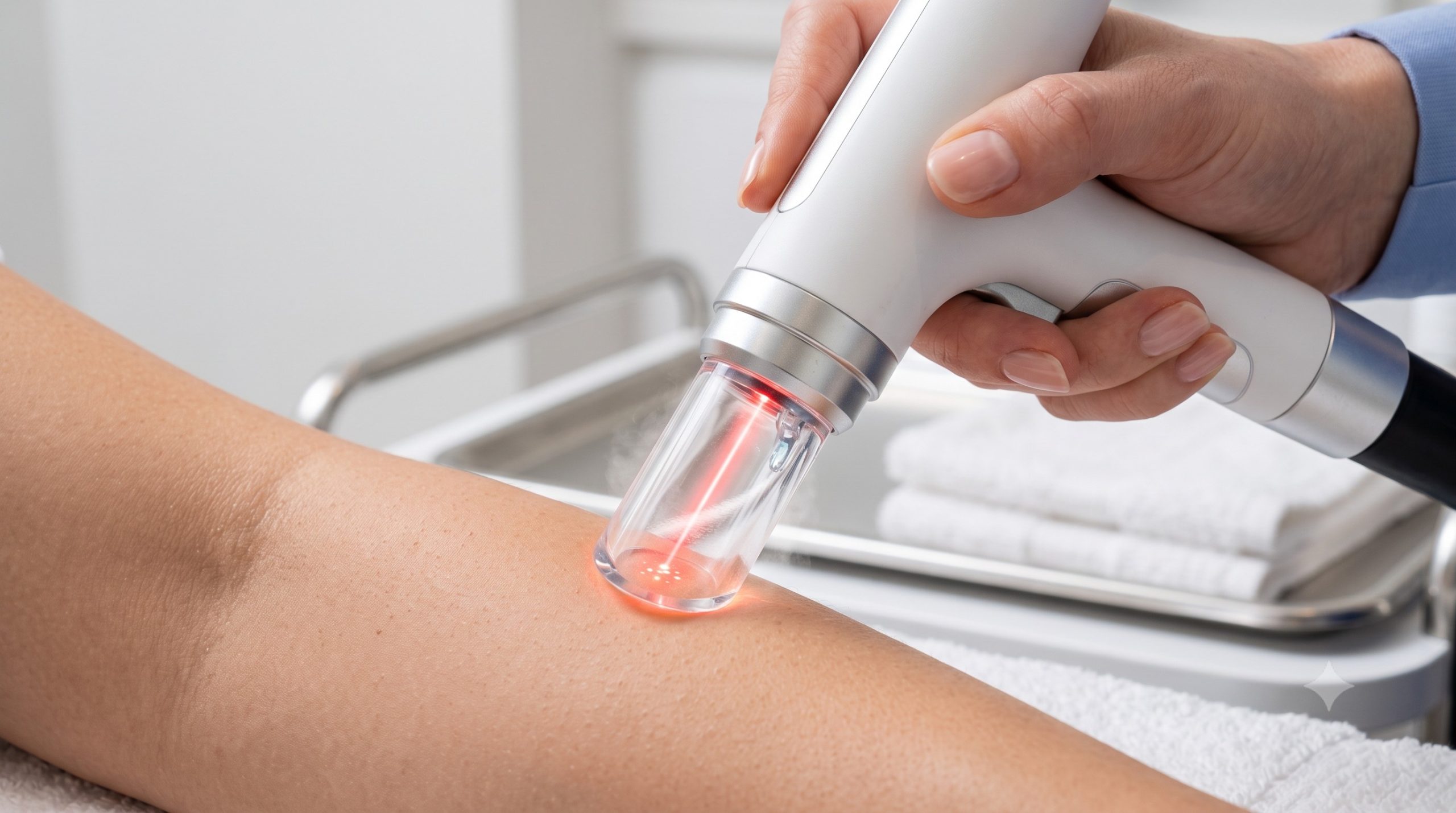
- Sapphire Contact Cooling: A sapphire window chilled to near-freezing temperatures that compresses the skin, displacing blood and pulling heat from the epidermis. This allows for high fluence treatments with reduced pain .
- TEC (Thermoelectric Cooling): Often integrated into the handpiece, TEC systems ensure consistent cooling temperatures.
- Cryogen Spray Cooling (CSC): A dynamic cooling method that sprays a chilling agent onto the skin milliseconds before the laser pulse.
Complication Management
Training is incomplete without a rigorous focus on safety and the management of potential adverse events. A comprehensive course will cover the identification and treatment of vascular emergencies, burns, and hyper/hypopigmentation . Clinicians must be trained to conduct proper Fitzpatrick skin type assessments and perform test spots to gauge tissue response.
Clinic ROI: The Business Case for Comprehensive Training
Investing in a high-quality training platform is not an expense; it is a profit center. Proper training reduces consumable waste, minimizes device downtime from improper use, and accelerates treatment speed.
Treatment Throughput and Revenue
A well-trained operator can complete a full-body laser hair removal session (e.g., legs, back, and arms) in significantly less time than an untrained one, reducing chair time and increasing the number of billable hours. Furthermore, superior results lead to higher patient satisfaction, word-of-mouth referrals, and ultimately, patient retention.
Lifetime Cost of Ownership
Understanding the technical aspects of the device, such as the durability of the imported laser bars and handpiece shots, ensures that the clinic maximizes the return on its capital expenditure (CapEx). Training that covers basic troubleshooting and maintenance can prevent costly service calls .
Conclusion: Elevating Standards Through Education
The future of medical aesthetics belongs to clinics that prioritize clinical excellence and technical mastery. As regulatory frameworks tighten and patient expectations rise, the ability to demonstrate proficiency through accredited training programs will be the key competitive advantage. Whether through hands-on workshops, live online sessions, or structured certification programs, the commitment to ongoing education is non-negotiable . By focusing on the scientific principles detailed in this guide, clinics can ensure safe, predictable, and profitable outcomes.