Introduction: The $37.9 Billion Clinic Opportunity
The global medical aesthetic device market is experiencing unprecedented growth, projected to reach $37.9 billion by 2029, with a CAGR of 11.3% . For clinic owners and medical spa operators, this represents a pivotal moment to invest in technology that delivers superior clinical outcomes while maximizing profitability. However, the sheer variety of energy-based devices—from diode lasers and intense pulsed light (IPL) to focused ultrasound and microcurrent systems—can make equipment selection daunting. This comprehensive guide analyzes key clinical parameters, regulatory standards, and business metrics to help you make an evidence-based decision for your practice.
Understanding the intricate interplay of wavelength, fluence, pulse width, and cooling technology is essential. As one prospective clinical study on lower face contouring found, combining energy-based procedures with other modalities achieves significant aesthetic improvement, with a mean Global Aesthetic Improvement Scale (GAIS) score of 1.6 at six months post-treatment . This highlights the importance of selecting devices capable of multi-modality workflows.
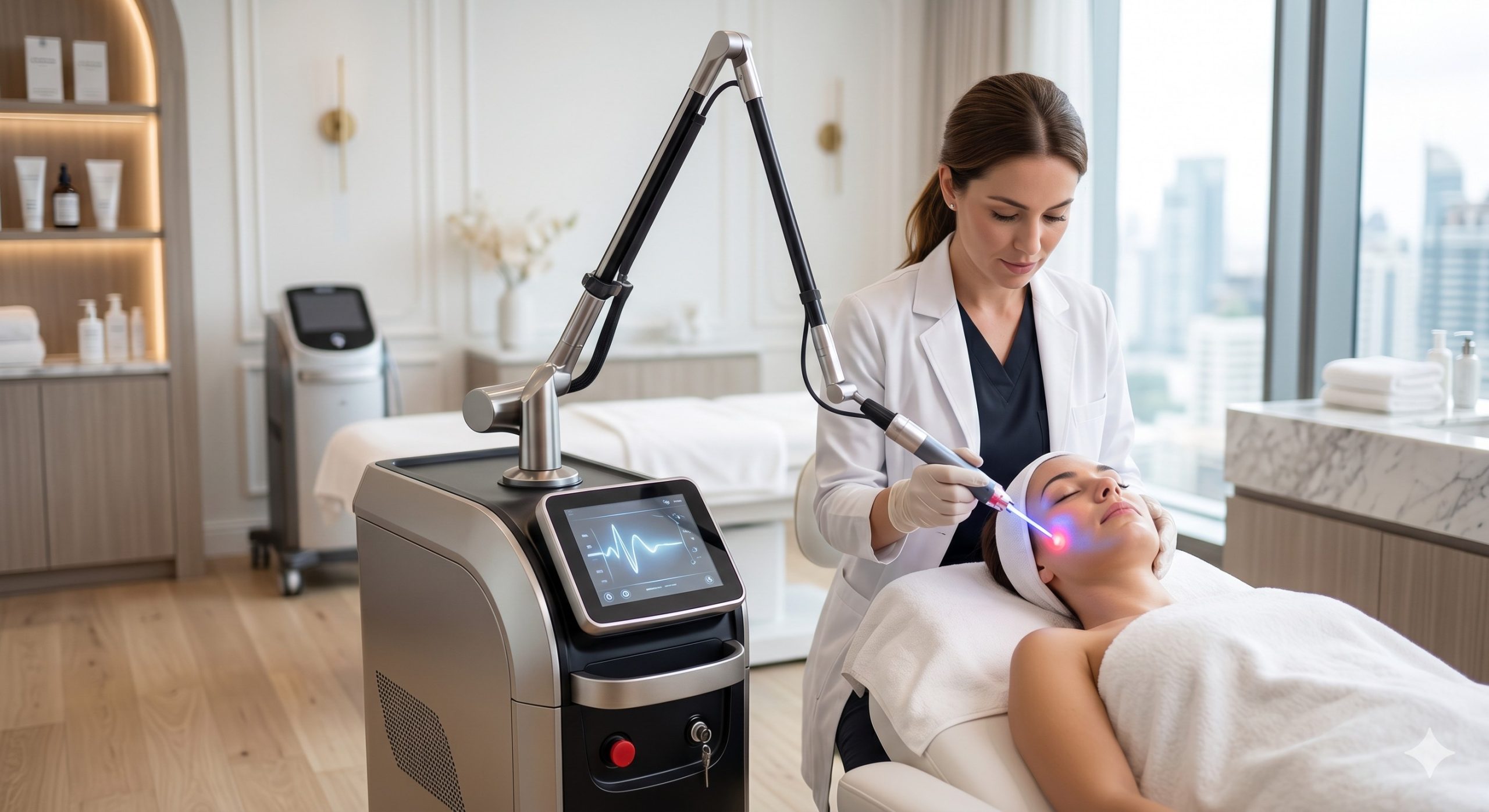
Physical Mechanism: Selective Photothermolysis & Tissue Interaction
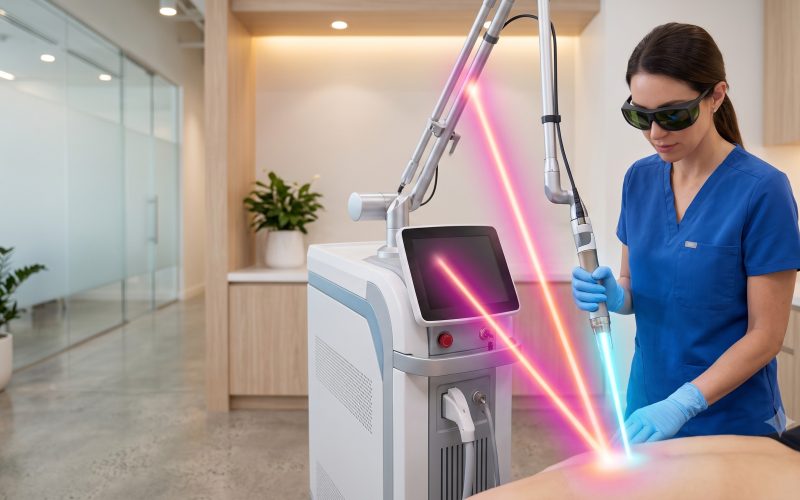
The foundational principle governing most high-performance aesthetic lasers is selective photothermolysis. This dictates that a specific wavelength of light is preferentially absorbed by a target chromophore (melanin for hair removal or pigmented lesions, oxyhemoglobin for vascular lesions) while sparing surrounding tissue. The clinical challenge lies in optimizing parameters to achieve effective photothermolysis without inducing collateral thermal damage.
Critical Technical Metrics
Device efficacy is defined by its ability to deliver precise energy. Key metrics include:
- Wavelength (nm): Determines penetration depth and target specificity. Common wavelengths include 755 nm (Alexandrite), 808 nm (Diode), and 1064 nm (Nd:YAG).
- Fluence (Energy Density J/cm²): The amount of energy delivered per unit area. Higher fluences are required for deeper or more resistant targets.
- Pulse Width (ms): The duration of energy delivery. Shorter pulse widths (milliseconds) are ideal for small, high-contrast targets, while longer pulse widths are safer for darker skin types .
- Spot Size (mm): Larger spot sizes penetrate deeper due to reduced scattering, accelerating treatment speed.
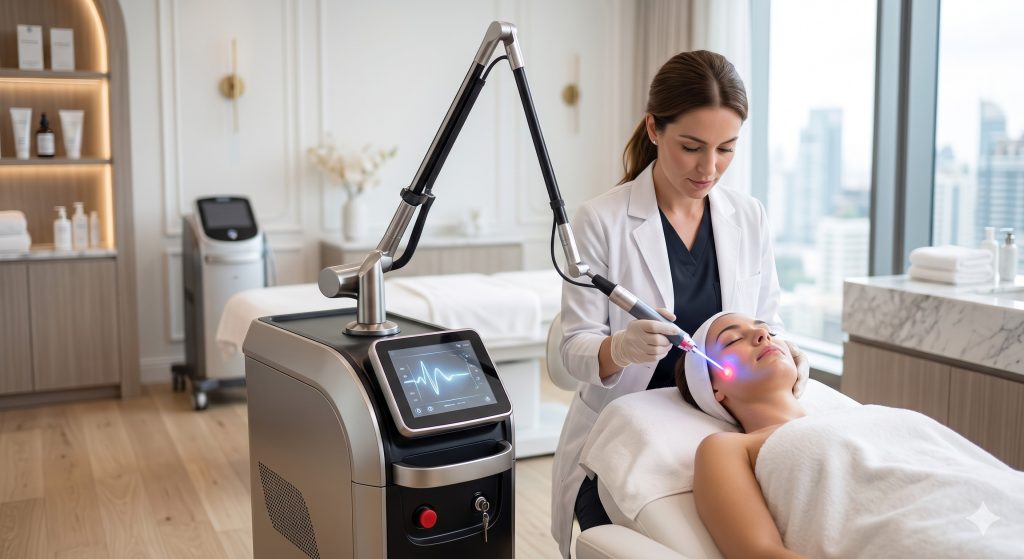
For example, micro-focused ultrasound devices like the Ulthera System utilize focused ultrasound energy to induce thermal coagulation in dermal and subdermal tissue, resulting in tissue contraction and lifting. The system features an imaging transducer for ultrasonic visualization of depths up to 8 mm, ensuring proper coupling and avoiding bone . This precision exemplifies the advanced engineering present in modern medical aesthetic devices.
Technical Specifications Matrix
The following table outlines the critical technical specifications that clinic owners should evaluate when comparing medical aesthetic devices. These parameters directly impact treatment efficacy, safety profile, and operational throughput.
| Key Parameter | Technical Specification |
|---|---|
| Wavelength / Laser Type | 808nm Diode (Gold Standard) / 755nm Alexandrite / 1064nm Nd:YAG |
| Cooling System | Advanced Sapphire Contact Cooling (Epidermal Protection) |
| Pulse Width | Adjustable (e.g., 5ms – 400ms) |
| Spot Size | Large Spot Sizes (e.g., 12mm x 12mm to 22mm) |
| Fluence (Energy Density) | Up to 120 J/cm² |
| Regulatory Compliance | Medical CE, FDA 510(k) Cleared, ISO 13485 |
| Safety Features | Skin Sensor, Built-in Impedance Check |
Epidermal Protection & Patient Comfort: Sapphire Cooling
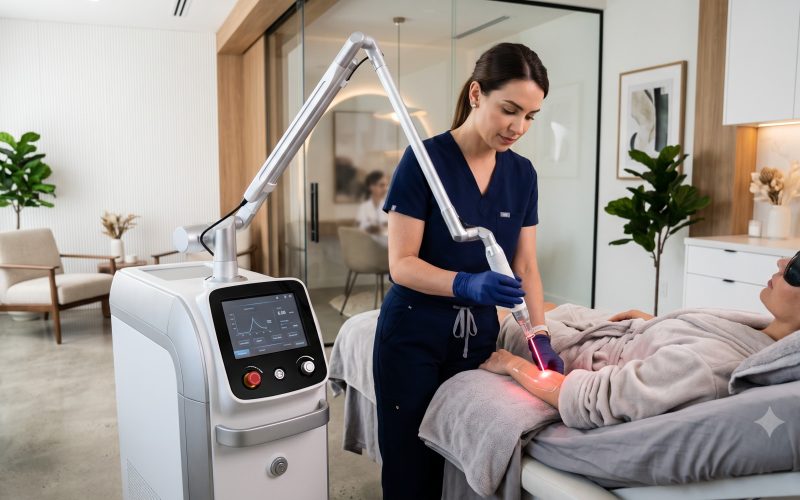
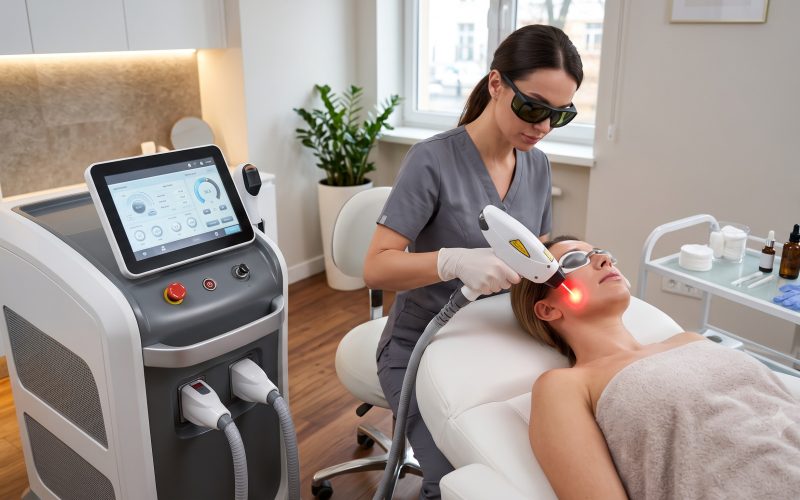
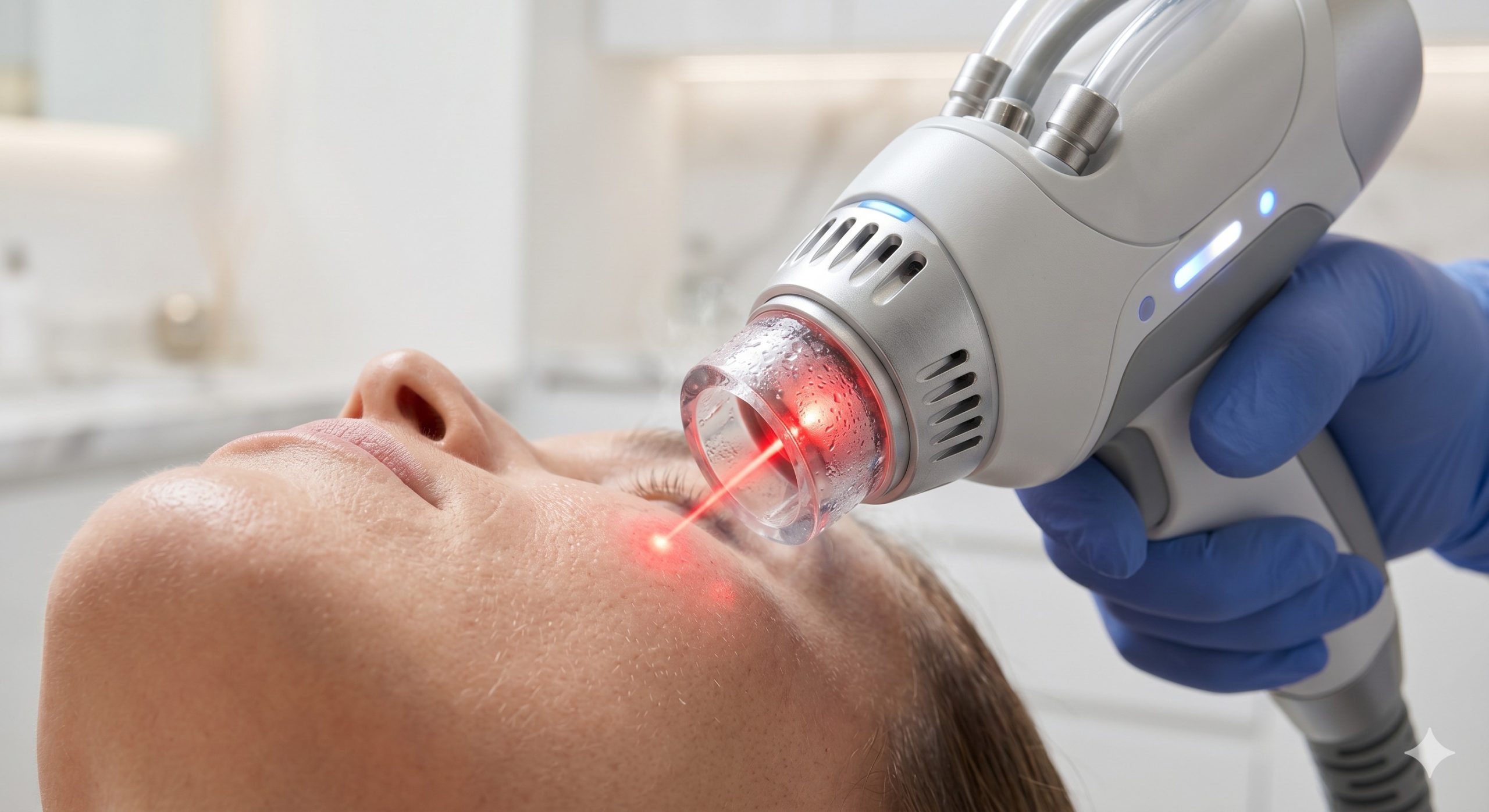
To maximize safety and patient comfort, particularly when using high fluences, advanced cooling systems are non-negotiable. The standard of care involves contact cooling, often utilizing a sapphire window that cools the epidermis before, during, and after the laser pulse. This technology ensures that while the target chromophore reaches therapeutic temperatures, the epidermis remains protected from thermal injury.
This is crucial for treating patients across a broad spectrum of Fitzpatrick skin types. As documented by the FDA, certain devices may not have been studied in subjects with darker skin types, highlighting a significant risk of hyperpigmentation or hypopigmentation . Therefore, a device with a dynamic cooling mechanism and adjustable pulse widths is essential for safe and effective treatment of higher Fitzpatrick skin types (IV-VI).
FDA Clearance & Medical CE Compliance: Your Safety Benchmark
Regulatory compliance is the bedrock of clinic safety and audit protection. In the United States, the FDA clears or approves aesthetic devices based on demonstrated safety and efficacy. For example, the NeurotriS (SX2500) and BTL-785BNF-E devices are FDA-cleared under product code NFO for facial tissue stimulation, having undergone rigorous biocompatibility testing per ISO 10993-1:2018 and electrical safety testing per IEC 60601-1 .
For international clinics, look for Medical CE marking (which requires compliance with the Medical Device Regulation MDR) and ISO 13485 certification for manufacturing quality. These certifications ensure the device has been evaluated for safety, performance, and reliability.
Clinic ROI & Integration Strategy
Investing in a medical aesthetic device is a significant capital expenditure (CapEx). To maximize return on investment (ROI), analyze:
- Treatment Throughput: Larger spot sizes and high pulse frequencies reduce session duration, allowing for more patients per day.
- Consumables & TCO: Evaluate the cost and lifespan of handpieces and laser bars. A durable handpiece with a high shot count reduces long-term operational costs.
- Service Diversification: Versatile devices that offer multiple wavelengths or modalities (e.g., combined hair removal and skin rejuvenation) allow clinics to capture a wider patient demographic.
Market trends show that minimally invasive devices are gaining share due to lower risk and reduced recovery time compared to surgical alternatives . By integrating a high-performance energy-based device with non-surgical techniques like thread lifts and injectables, clinics can offer comprehensive treatment packages that meet patient demand for noticeable results with minimal downtime .
Conclusion: The Future of Aesthetic Medicine
The evolution of medical aesthetic devices towards greater precision, safety, and comfort is accelerating. From the selective photothermolysis of diode lasers to the tissue-coagulating effects of focused ultrasound and the flexibility of microLED patches , technology is enabling clinics to deliver transformative results. By prioritizing devices with robust cooling systems, proven FDA/CE clearance, and verifiable technical specifications, you are not just purchasing equipment—you are investing in patient safety, clinical excellence, and the long-term profitability of your practice.