Introduction: The Strategic Imperative of Private Label Aesthetic Technology
In the rapidly evolving landscape of medical aesthetics, clinic owners and med spa operators are increasingly recognizing that equipment selection is not merely a clinical decision but a cornerstone of business strategy. The shift towards OEM ODM aesthetic equipment manufacturing represents a paradigm change, allowing practices to access cutting-edge technology with brand customization that fosters patient loyalty and market differentiation. This comprehensive guide delves into the technical specifications, clinical applications, and financial implications of sourcing OEM ODM aesthetic devices, providing a roadmap for clinics aiming to achieve superior treatment outcomes and robust profitability.
For the discerning practitioner, the choice between branded and private label aesthetic devices often hinges on a balance of cost, performance, and control. Original Equipment Manufacturing (OEM) and Original Design Manufacturing (ODM) partnerships offer a direct pipeline to advanced laser and energy-based technologies, often incorporating the same core components—such as imported laser bars and sapphire cooling systems—found in premium brands, but at a fraction of the cost. This guide will navigate the complexities of this market, emphasizing the importance of clinical-grade specifications, regulatory compliance, and the long-term value proposition of OEM ODM aesthetic equipment.
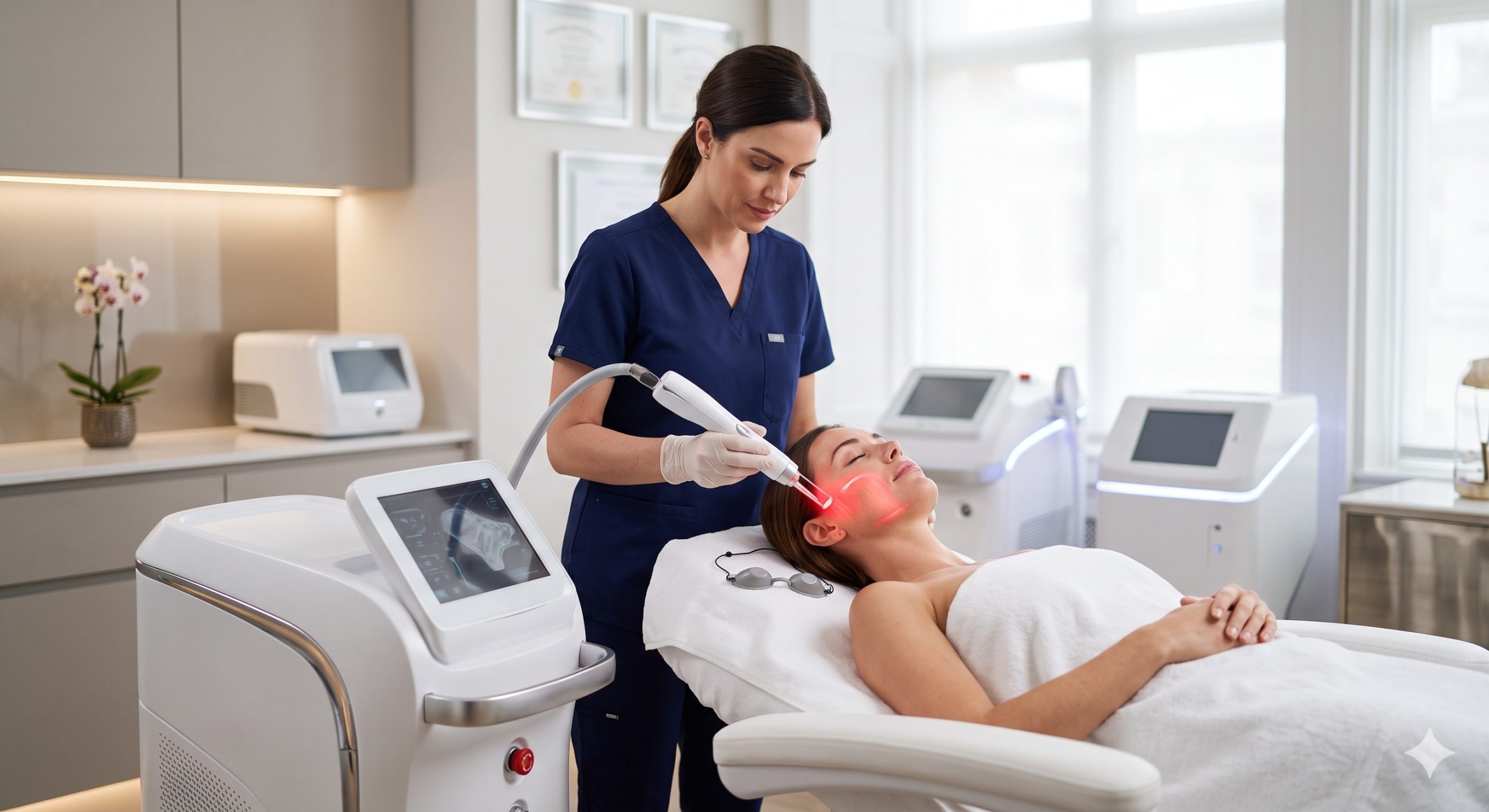
Physical Mechanism Deep Dive: Selective Photothermolysis & Tissue Interaction
The efficacy of any aesthetic device hinges on the principle of selective photothermolysis. This foundational concept dictates that specific wavelengths of light are preferentially absorbed by target chromophores—such as melanin in hair follicles or hemoglobin in vascular lesions—while sparing the surrounding tissue. When evaluating OEM ODM aesthetic equipment, understanding how manufacturers optimize these parameters is critical. High-quality systems are engineered to deliver precise energy densities (Fluence) measured in J/cm², with adjustable pulse widths (measured in milliseconds) to accommodate varying skin types and hair textures.
Key Wavelength Synergies
Modern OEM ODM aesthetic devices often feature multi-wavelength platforms to address a diverse range of indications. The synergy of 755nm (Alexandrite), 808nm (Diode), and 1064nm (Nd:YAG) wavelengths is a hallmark of advanced systems, allowing practitioners to treat everything from fine, light hair to coarse, deep-rooted hair across all Fitzpatrick skin types. The 755nm wavelength is highly absorbed by melanin, making it ideal for lighter skin types, while the 1064nm wavelength penetrates deeper with less melanin absorption, offering a safer profile for darker skin types. The 808nm wavelength serves as a versatile middle ground, offering deep penetration with strong melanin absorption, making it the gold standard for most hair removal protocols.
Critical Output Metrics
A deep technical audit of OEM ODM aesthetic equipment should prioritize the following metrics: Peak Power, Spot Size, and Repetition Rate. A larger spot size (e.g., 12x12mm or up to 15x20mm for some systems) allows for faster treatment and deeper penetration due to reduced light scatter. High repetition rates (e.g., up to 10Hz) enable rapid pulse delivery, significantly reducing treatment times for large areas like the back or legs. The integration of advanced epidermal cooling systems, such as sapphire contact cooling with temperatures reaching -5°C to 5°C, is non-negotiable for ensuring patient comfort and safety, allowing for higher fluences to be delivered without compromising the epidermis.
| Key Parameter | Technical Specification | Clinical Significance |
|---|---|---|
| Wavelength / Laser Type | 755nm, 808nm, 1064nm (Diode / Nd:YAG) | Targets melanin for hair removal; deeper penetration for vascular lesions. |
| Cooling System | Sapphire Contact Cooling (TEC) | -5°C to 5°C | Epidermal protection, enabling higher fluences and painless treatments. |
| Spot Size | Up to 15x20mm | Larger spot size for faster treatment, deeper penetration, and improved speed. |
| Energy Density (Fluence) | Up to 120 J/cm² (Adjustable) | Customizable energy delivery for different skin types and indications. |
| Pulse Width | 5ms – 400ms (Adjustable) | Allows for selective photothermolysis, safe for Fitzpatrick Skin Types I-VI. |
| Repetition Rate | Up to 10Hz | High-speed pulse delivery for rapid treatment, reducing session time. |
Clinical Precision: Parameters, Cooling, and Safety
The clinical success of OEM ODM aesthetic equipment is determined by its ability to deliver consistent, reproducible energy outputs. This reliability is underpinned by rigorous quality control measures and adherence to international standards. Reputable OEM/ODM manufacturers will certify their devices with Medical CE (Conformité Européenne) and FDA (U.S. Food and Drug Administration) clearance, demonstrating compliance with stringent safety and performance criteria. Additionally, manufacturing facilities should be certified to ISO 13485, the international standard for quality management systems in medical devices, ensuring that every unit produced meets exacting specifications.
Sapphire ICE Cooling Systems
One of the most significant advancements in OEM ODM aesthetic equipment is the refinement of contact cooling technology. High-end systems utilize a sapphire crystal window at the handpiece tip, which is thermoelectrically cooled to sub-zero temperatures. This sapphire contact cooling serves multiple functions: it protects the epidermis from thermal injury, reduces pain by numbing the treatment area, and allows for the use of higher fluences, thereby improving clinical outcomes. When evaluating OEM/ODM partners, clinics should inquire about the specific cooling mechanism—whether it utilizes a TEC (Thermoelectric Cooler) or a more advanced water-chilled sapphire system—and verify its performance stability during prolonged treatment sessions.
Safety Protocols and Fitzpatrick Scale Strategy
Treating a diverse patient demographic requires a nuanced approach to parameter selection. A clinically-driven OEM ODM aesthetic device will offer customizable settings to safely treat Fitzpatrick skin types I-VI. For Type I-III skin, higher fluences with shorter pulse widths can be employed to maximize efficacy. Conversely, for Type IV-VI skin, longer pulse widths and lower fluences are recommended to minimize the risk of post-inflammatory hyperpigmentation (PIH). The device’s user interface should facilitate this adjustment, with pre-set protocols that guide the practitioner based on skin type and treatment indication. This adaptability not only enhances safety but also expands the clinic’s serviceable market.
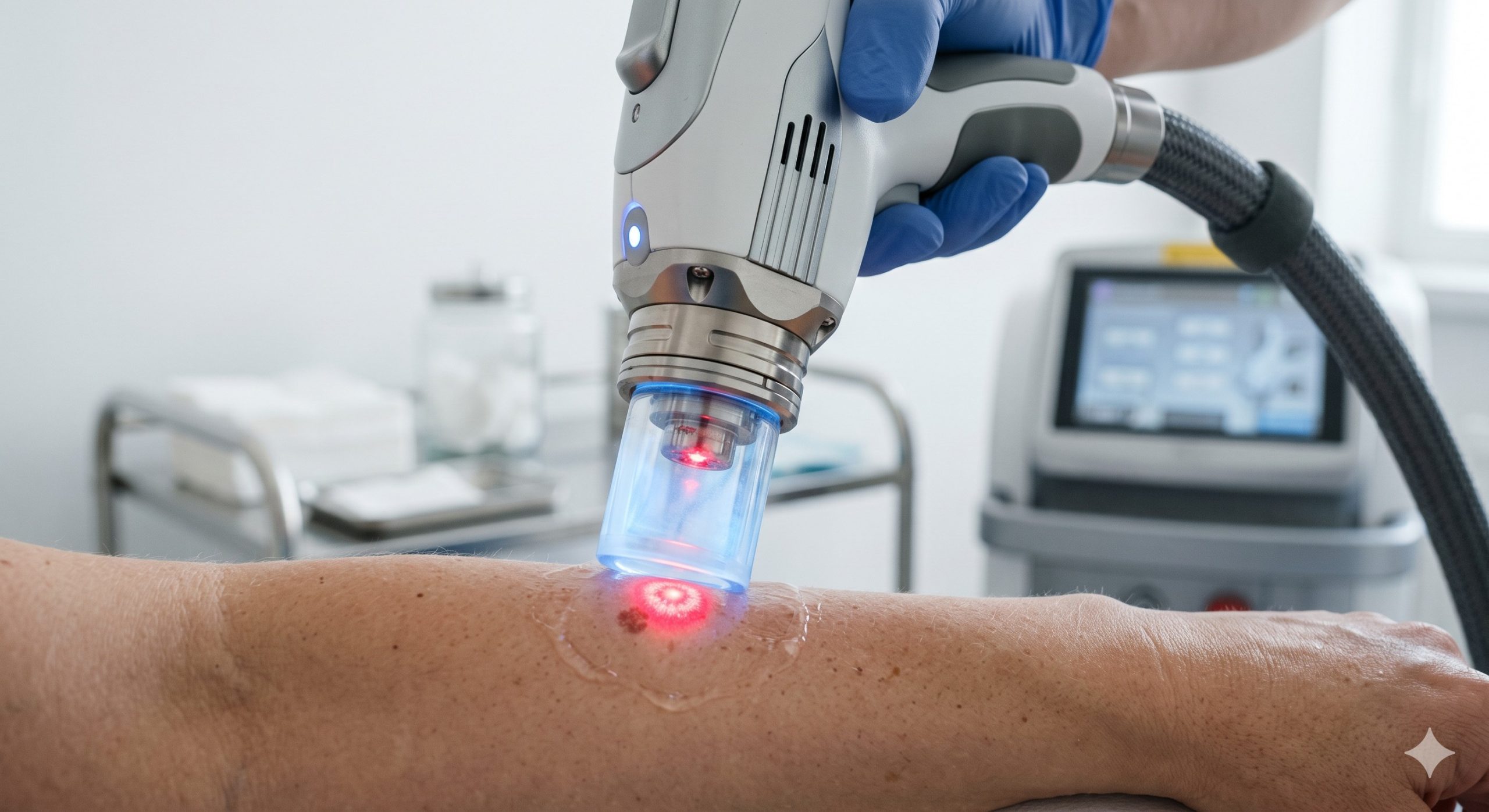
Maximizing Med Spa Profitability: ROI Analysis of OEM ODM Equipment
From a business consultancy perspective, the decision to invest in OEM ODM aesthetic equipment is compelling when analyzed through the lens of Return on Investment (ROI). The initial capital expenditure (CapEx) for private label devices is typically 30-50% lower than that of branded equivalents, without a corresponding sacrifice in clinical performance. This lower entry barrier allows clinics to acquire multiple platforms or upgrade their technology suite more frequently, staying ahead of market trends. Furthermore, the operational expenditure (OpEx) is favorably impacted by the durability of key components, such as the laser diodes, which often boast a lifespan of 10-20 million shots, and the availability of cost-effective consumables like treatment tips and cooling fluids.
Treatment Throughput and Efficiency
Modern OEM ODM aesthetic equipment is engineered for high throughput. Features like large spot sizes and high repetition rates translate directly into shorter treatment sessions, enabling clinics to see more patients per day. For example, a full-leg hair removal session that might take 45 minutes with an older IPL device can be reduced to 20-25 minutes with a high-powered 808nm diode laser utilizing a large spot size. This efficiency not only enhances patient satisfaction but also increases the clinic’s revenue-generating capacity. By calculating the cost per patient and the average revenue per treatment, a clear picture of profitability emerges, making the case for OEM ODM aesthetic equipment even stronger.
Long-Term Value and Consumable Costs
A comprehensive ROI analysis must consider the total cost of ownership (TCO). This includes not only the purchase price but also maintenance, consumables, and potential downtime. Reputable OEM ODM aesthetic equipment manufacturers provide transparent information on handpiece durability and expected service intervals. Some advanced systems feature hot-swappable batteries or modular components that can be replaced on-site, minimizing clinic downtime. Additionally, the cost of consumables such as gel, cooling fluid, and replacement handpieces is often significantly lower than proprietary branded alternatives. This cost efficiency, combined with the ability to offer a wider range of high-demand treatments (e.g., hair removal, skin rejuvenation, vascular lesions), positions OEM ODM aesthetic equipment as a highly strategic investment for growth-oriented clinics.
Conclusion: The Future of Clinical Aesthetics is Customizable
The landscape of medical aesthetics is becoming increasingly competitive, and the ability to offer state-of-the-art treatments with a personalized brand experience is a powerful differentiator. OEM ODM aesthetic equipment manufacturing empowers clinics to harness clinically-proven technology, optimized for safety and efficacy, while building their own brand equity. By focusing on critical technical specifications—such as wavelength diversity, spot size, fluence, and cooling systems—and partnering with manufacturers who uphold the highest standards of quality and compliance (CE, FDA, ISO 13485), clinic owners can deliver exceptional patient outcomes and achieve a formidable competitive advantage. The data-driven evaluation of treatment clearance rates and robust ROI projections further underscore that OEM ODM aesthetic equipment is not just an alternative, but a strategic imperative for the modern, forward-thinking aesthetic practice.