The Clinical & Business Case for Professional Laser Hair Removal
In the rapidly evolving landscape of medical aesthetics, professional laser hair removal remains the cornerstone of sustainable med spa profitability and patient satisfaction. Unlike inferior legacy systems or at-home devices, advanced diode laser technology offers a clinically validated solution for permanent hair reduction. For the discerning clinic owner, moving beyond basic assumptions to a deep understanding of selective photothermolysis, fluence rates, and wavelength-specific absorption is critical. This guide provides a comprehensive analysis of the technology, safety protocols, and business intelligence required to maximize ROI with professional laser hair removal systems.
Selective Photothermolysis: The Physics of Efficacy
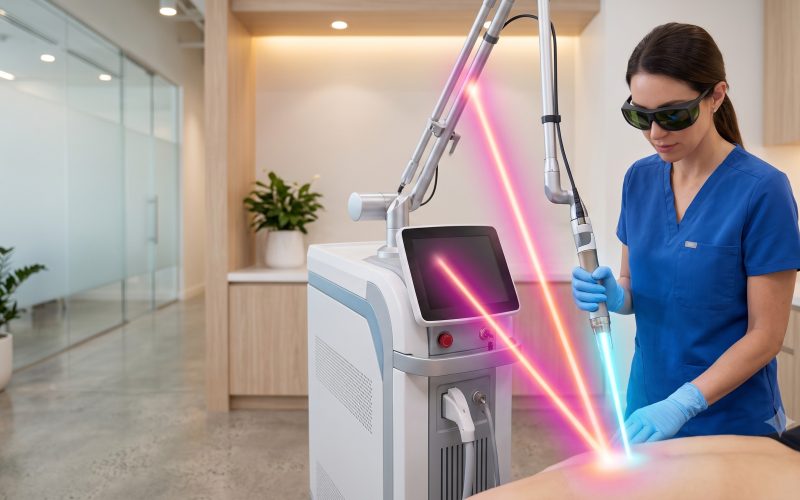
The fundamental principle driving effective professional laser hair removal is selective photothermolysis. This dictates that the laser energy must be specifically absorbed by the chromophore (melanin in the hair follicle) while sparing the surrounding epidermis. The precision of this interaction relies on three critical, interdependent parameters: wavelength, pulse width, and fluence. By meticulously optimizing these variables, a medical-grade device can achieve the targeted destruction of the dermal papilla without causing thermal damage to the skin. For clinics, mastering these parameters translates directly to superior clearance rates and enhanced patient safety, establishing the practice as a leader in the field.
Clinical Hardware: Wavelengths & Advanced Components
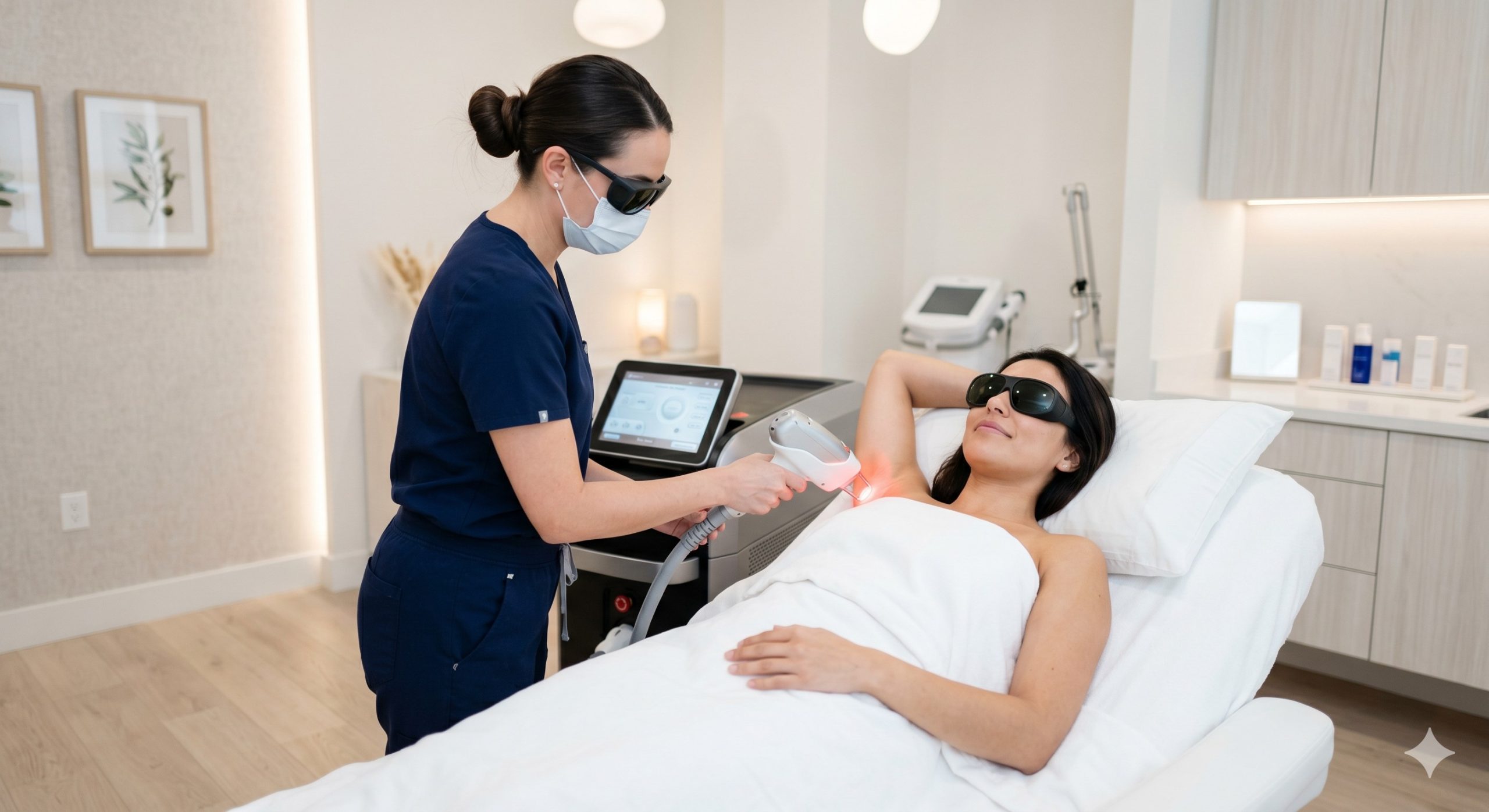
At the heart of modern professional laser hair removal lies the integration of high-performance diode laser bars. The architecture of these systems typically utilizes a combination of wavelengths, such as 755nm, 808nm, and 1064nm, to cater to a diverse patient demographic. The 808nm wavelength is particularly crucial, offering a deep penetration depth of approximately 3-4mm with a high melanin absorption coefficient, making it the gold standard for treating a wide range of skin types. The quality of the laser bars, often imported from specialized OEM manufacturers, determines the device’s output stability and overall lifetime. A system with a high-quality internal power supply ensures consistent energy delivery, which is vital for reproducible clinical outcomes.
Core Output Metrics & Parameter Precision
The clinical versatility of a professional laser hair removal device is defined by its parameter range. Key specifications include the ability to adjust spot sizes, which directly influence treatment speed and penetration; typical high-throughput systems offer spot sizes up to 15mm x 20mm. Energy density, or fluence (measured in J/cm²), must be adjustable to deliver clinically effective doses for different body areas and skin types. For example, treating a delicate area like the upper lip may require a lower fluence of 10-14 J/cm², whereas a coarser area like the back may need 16-20 J/cm². Pulse widths (measured in milliseconds) are equally critical; longer pulse widths allow for safer, more effective treatment of larger follicles, while shorter pulses target finer hair with precision. These metrics are non-negotiable for achieving the high clinical clearance rates that define a successful practice.
Technical Specifications
The following table outlines the critical technical specifications that aesthetic professionals must evaluate when selecting a professional laser hair removal device for their clinic.
| Key Parameter | Technical Specification |
|---|---|
| Wavelength / Laser Type | 755nm / 808nm / 1064nm Diode Laser |
| Cooling System | Sapphire ICE Contact Cooling (-5°C to 5°C) |
| Spot Size | Up to 15mm x 20mm |
| Energy Density (Fluence) | 10 J/cm² – 50 J/cm² |
| Pulse Width | 5ms – 400ms |
| Handpiece Lifespan | 1,000,000+ Shots |
| Regulatory Standards | Medical CE, FDA Clearance, ISO 13485 |
| Cooling Method | TEC + Water Cooling System |
Epidermal Cooling Systems: A Safety Imperative
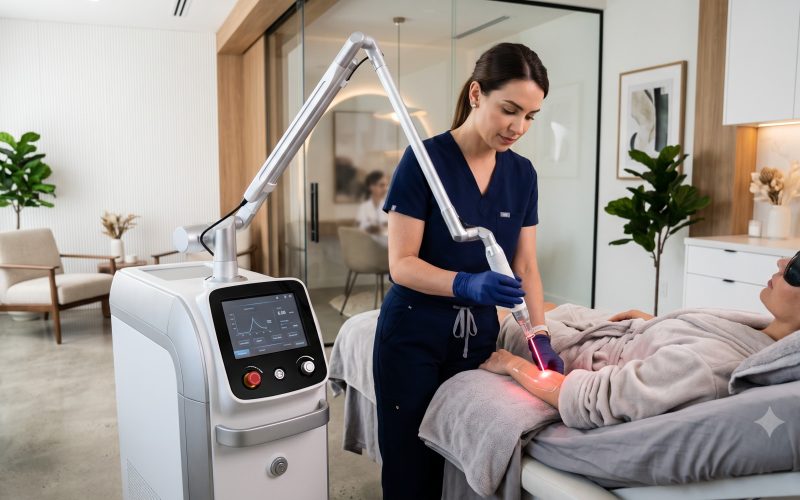
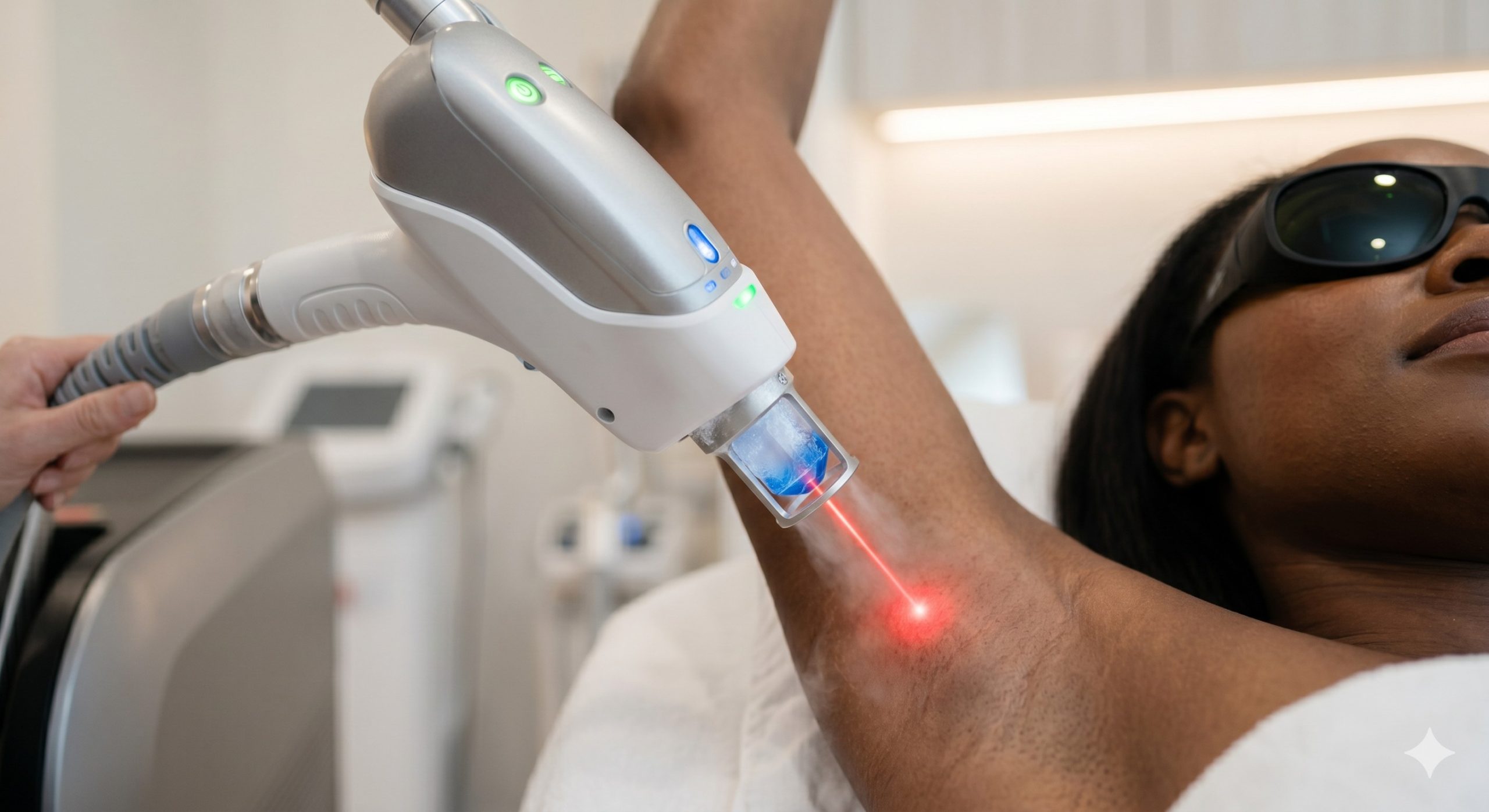
Epidermal protection is paramount in professional laser hair removal, and is achieved through advanced cooling mechanisms. The industry standard for maximizing safety and patient comfort is the integration of a Sapphire ICE contact cooling system. This technology allows the sapphire window to cool the epidermis to temperatures between 5°C and 0°C before, during, and after the laser pulse. This pre-cooling contracts the skin, reducing melanin concentration at the surface, while the post-cooling alleviates discomfort and minimizes the risk of thermal injury, such as burns or hyperpigmentation. A robust cooling circuit, including a high-quality water pump and thermoelectric coolers (TEC), ensures that the system can maintain consistent cooling over extended treatment sessions. This is a key differentiator between high-end medical devices and entry-level equipment.
Fitzpatrick Skin Type Protocols & Safety
A comprehensive approach to professional laser hair removal must account for the varied melanin content present in different skin types. The Fitzpatrick scale provides a framework for stratifying patients and adjusting treatment parameters. For lighter skin types (I-III), a high fluence and longer pulse width can be safely used with the 755nm or 808nm wavelengths to achieve rapid results. However, for darker skin types (IV-VI), the risk of epidermal burns is significantly higher, making the 1064nm wavelength the safest and most effective option. This wavelength has a lower melanin absorption coefficient, allowing energy to bypass the epidermis and target the deeper follicular structures. The most sophisticated professional laser hair removal systems will include a built-in Imported Laser Bar capable of these multi-wavelength emissions, enabling clinics to treat a broad patient demographic safely and effectively.
Treatment Areas & Indications
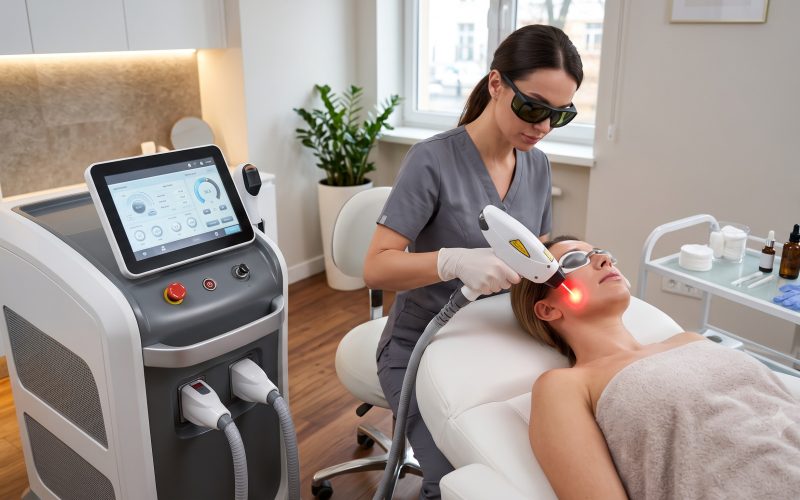
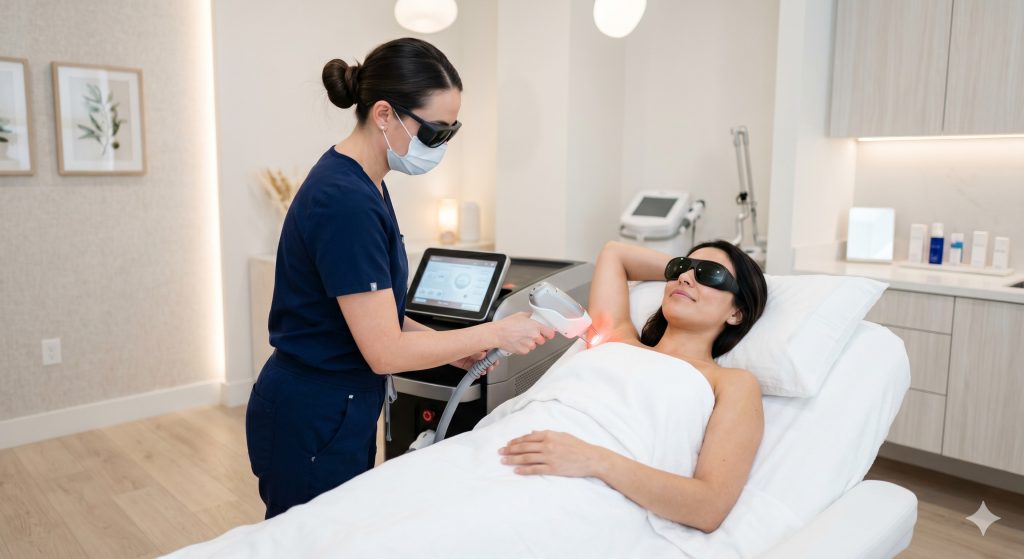
The versatility of a medical-grade professional laser hair removal system extends across multiple body areas and indications. Standard treatment zones include the face (upper lip, chin, sideburns), arms, underarms, legs, bikini line, and back. The efficacy of the treatment is contingent on the operator’s ability to adjust parameters for each specific area. For instance, the thicker, darker hair of the underarm responds well to a standard setting, while the finer vellus hair on the cheeks requires a more nuanced approach to avoid unintended skin reactions. Beyond hair removal, these systems often have secondary benefits, such as the treatment of pseudofolliculitis barbae (ingrown hairs) and vascular lesions, providing clinics with a multi-modal service offering. This expands the clinic’s service menu and enhances patient retention.
Clinic ROI & Business Integration
Investing in a high-quality professional laser hair removal device is a strategic business decision that yields significant returns. The high demand for this service ensures a steady stream of patients. By offering a superior treatment experience with minimal discomfort and maximum efficacy, clinics can command premium pricing. The relatively low consumable cost per patient (primarily the energy used and minimal handpiece wear) ensures high-profit margins. For a medium-sized med spa, a device with a handpiece lifespan of over 1 million shots provides a substantial return on investment before any major maintenance costs are incurred. Furthermore, the integration of a smart user interface reduces the operator learning curve, allowing for seamless integration into the clinic’s workflow.
Conclusion: The Future of Aesthetic Medicine
In conclusion, professional laser hair removal, executed with a clinically advanced diode laser system, is an indispensable asset for any serious aesthetic practice. The convergence of precise engineering, robust safety protocols, and financial viability makes this technology the benchmark for high-ticket aesthetic services. By prioritizing devices with proven technical specifications, Medical CE and FDA clearance, and ISO 13485 manufacturing standards, clinics can ensure they are delivering the highest standard of care. As the industry evolves, the data-driven selection of technology will be the primary driver of clinical success and business longevity.