Introduction: The Unseen Variable in Clinical Success
In the competitive landscape of medical aesthetics, clinics often focus heavily on marketing, patient acquisition, and treatment pricing. However, the single most critical factor determining long-term profitability, patient safety, and clinical outcomes is often overlooked: stringent quality control (QC) in aesthetic device manufacturing. For the discerning clinic owner or medical director, understanding the depth of manufacturing rigor behind devices like diode lasers (755nm, 808nm, 1064nm) is not just a technical curiosity—it is a fundamental business imperative. This guide provides a comprehensive, clinically-driven analysis of QC protocols, their direct impact on treatment efficacy and safety, and the ultimate return on investment (ROI) they deliver.
The Physics of Precision: Understanding Selective Photothermolysis and Key Metrics
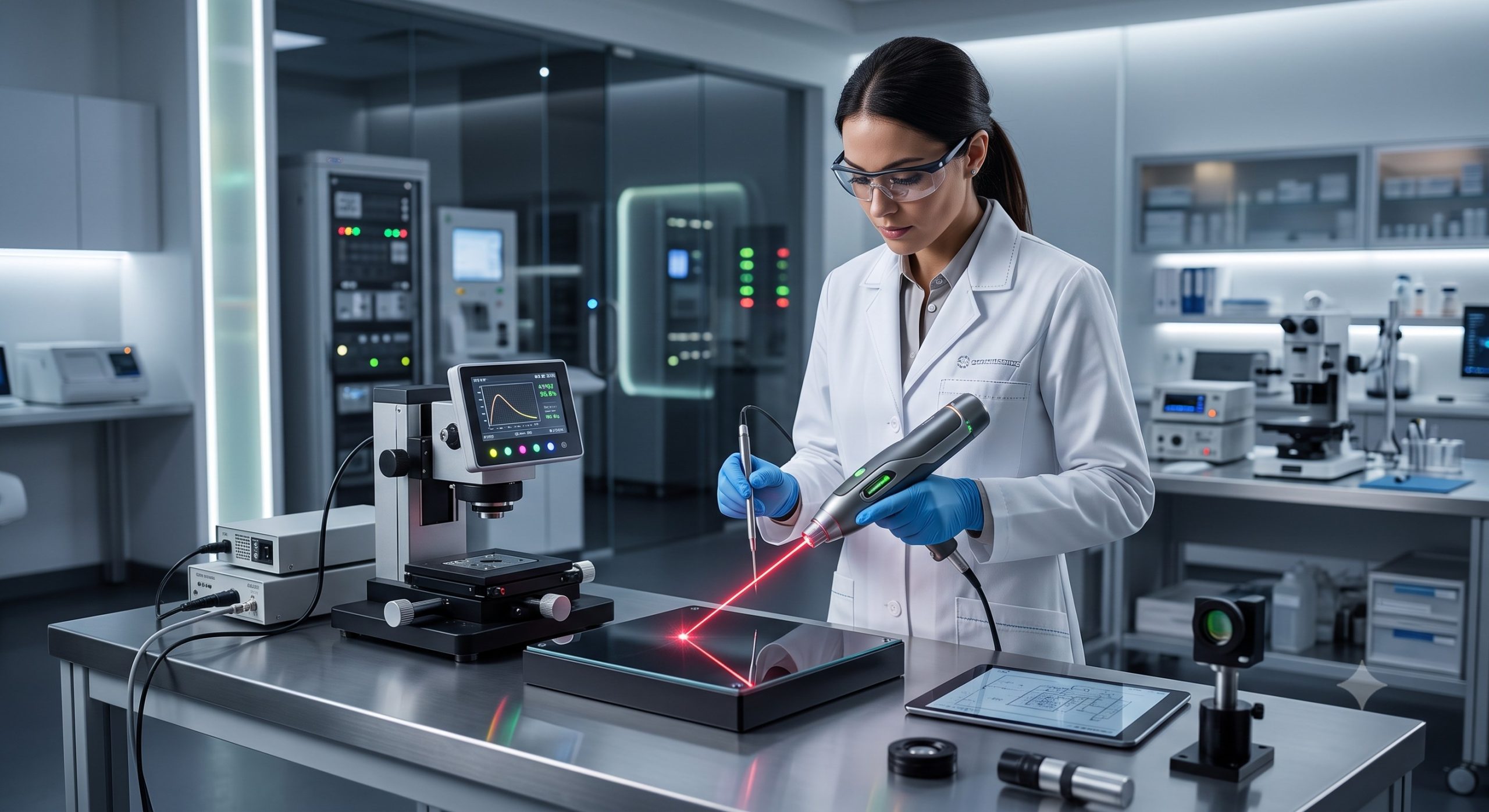
At the heart of every effective aesthetic treatment lies the principle of selective photothermolysis. This concept dictates that a specific wavelength of light must be absorbed preferentially by a target chromophore (melanin for hair removal, hemoglobin for vascular lesions) while sparing surrounding tissue. Achieving this balance requires micron-level precision in manufacturing. High-quality devices must deliver consistent energy density (Fluence), measured in J/cm², and precise pulse widths (measured in milliseconds) to ensure the thermal relaxation time of the target is respected. A variance of even 5% in output fluency due to poor QC can mean the difference between a 90% hair reduction rate and a painful, ineffective session that damages the epidermis. This is where ISO 13485 certified manufacturing processes become non-negotiable, ensuring that every handpiece produces the exact optical power specified, maintaining the integrity of the tissue interaction.
Critical Output Parameters
Professional-grade devices, such as those utilizing advanced diode technology, must undergo rigorous calibration. The combination of 755nm, 808nm, and 1064nm wavelengths allows practitioners to treat a diverse range of skin types (Fitzpatrick I-VI) safely. The 808nm wavelength is considered the ‘gold standard’ for deep penetration and melanin absorption, but it requires flawless manufacturing to maintain peak power. This ensures the laser bar, often imported for its superior crystalline structure, delivers consistent fluence across the entire spot size, from small 10x10mm to large 18x24mm handpieces.
| Key Parameter | Technical Specification & Clinical Importance |
|---|---|
| Wavelength Options | 755nm (Superficial Melanin), 808nm (Deep Follicle, Gold Standard), 1064nm (Deep Vasculature & Darker Skin Types) |
| Cooling System | Active Sapphire Contact Cooling (-5°C to -10°C) with TEC and Liquid Circulation for Epidermal Protection |
| Spot Size | Up to 24x18mm (Large Spot) to increase treatment speed and penetration depth, minimizing overlapping. |
| Energy Density (Fluence) | Up to 50 J/cm² (Adjustable in 0.5 J increments for precise titration per skin type and indication). |
| Pulse Width | Up to 400ms (Adjustable to match the thermal relaxation time of the target chromophore). |
Epidermal Protection: The Engineering of Comfort and Safety
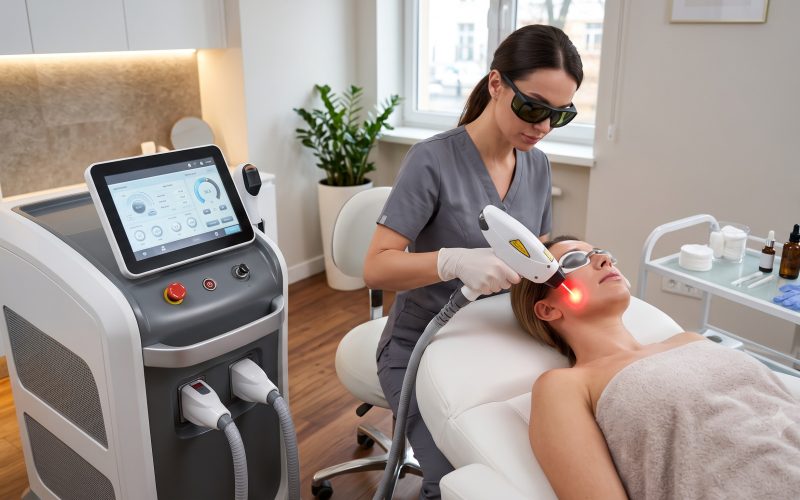
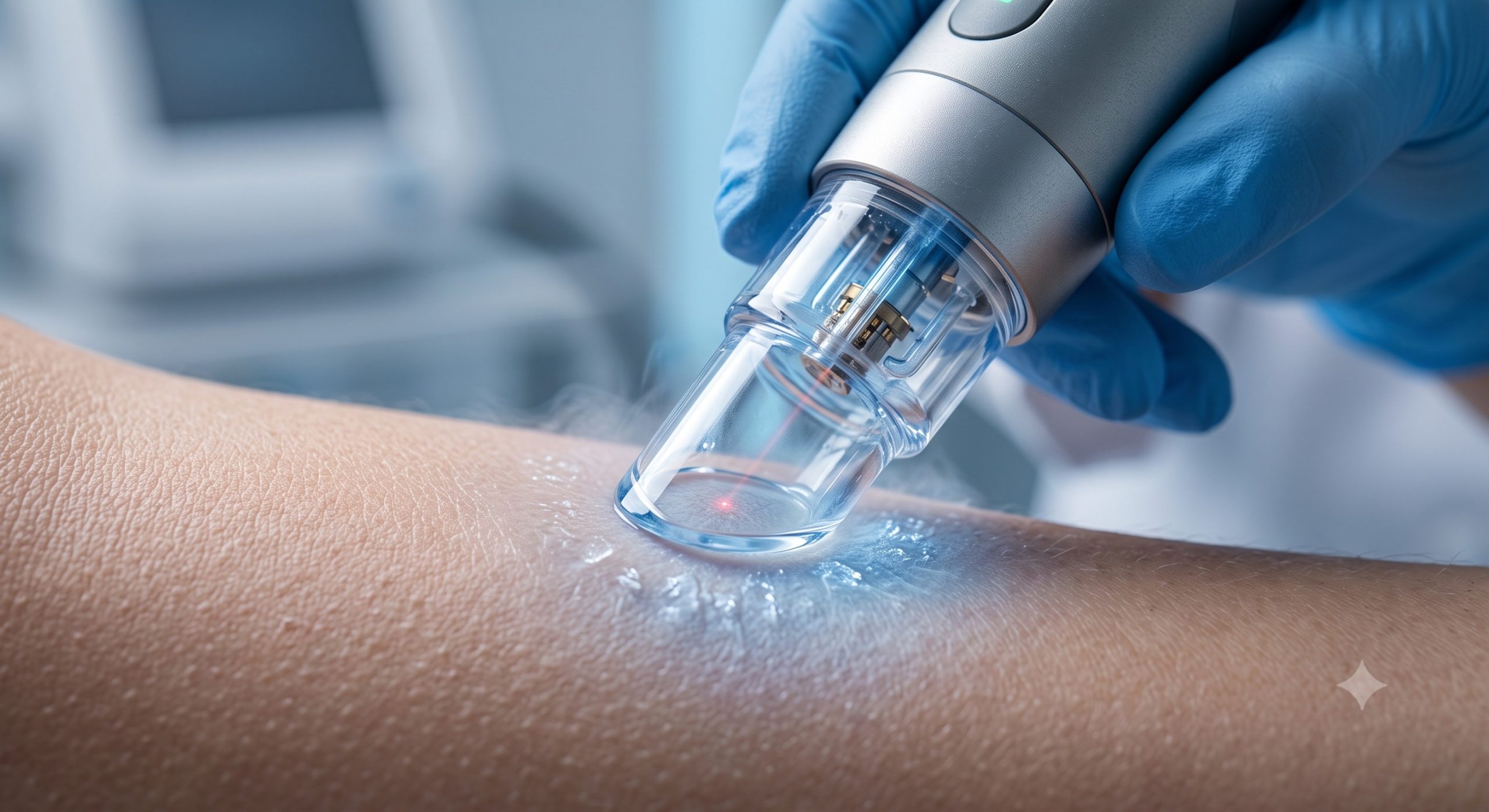
The most sophisticated laser physics is useless without robust epidermal protection. This is where advanced cooling systems are critical. Leading manufacturers implement Sapphire contact cooling, often referred to as ‘ICE’ technology. This isn’t merely a comfort feature; it’s a clinical necessity. The sapphire crystal window, known for its high thermal conductivity and optical clarity, cools the epidermis to temperatures as low as -5°C to -10°C before, during, and after the laser pulse. This creates a protective thermal shield, allowing clinicians to safely use higher fluences for better efficacy without the risk of burns or hyperpigmentation.
The Role of TEC and Liquid Cooling Circuits
The efficacy of the cooling system is dependent on the Thermoelectric Cooler (TEC) and internal liquid circulation pumps. Quality control in this area involves testing the cooling circuit for leaks, ensuring the pump maintains optimal flow rates, and verifying the TEC reaches target temperatures rapidly. A manufacturing defect in the cooling system not only risks patient injury but also significantly reduces the lifespan of the laser handpiece, increasing your clinic’s operational costs. Premium manufacturers subject these components to thousands of hours of stress testing to guarantee durability.
Clinical Efficacy Across Fitzpatrick Skin Types
A true test of manufacturing quality is the device’s ability to perform consistently across all skin types. For darker skin types (Fitzpatrick IV-VI), the risk of epidermal melanin absorption is higher. Therefore, the device must be able to deliver longer pulse widths (e.g., 100-400ms) to allow the epidermis to cool while targeting the deeper follicle. Only a rigorously calibrated device with precise electronic control can achieve this. In contrast, lighter skin types can be treated with shorter pulse widths and higher fluences using the 755nm wavelength. The versatility of a well-manufactured device with medical CE and FDA clearance ensures that your clinic can confidently accept a broader patient demographic, directly impacting your revenue potential.
ROI and Long-Term Value: Beyond the Initial Investment
When evaluating the total cost of ownership (TCO), the manufacturing quality of consumables and handpieces is paramount. High-quality devices often feature imported laser bars with a lifespan exceeding 10 million shots, drastically reducing the need for costly replacements. Conversely, poorly manufactured devices may suffer from performance degradation after just a few hundred thousand shots, leading to inconsistent treatments and patient dissatisfaction. This translates to a direct loss in revenue. Clinics must scrutinize the energy output stability over the device’s lifetime. A superior manufacturing process ensures that a device set to deliver 20 J/cm² will still deliver exactly that after three years of heavy use. This consistency builds your clinic’s reputation for reliable, high-quality results, fostering patient loyalty and word-of-mouth referrals, which are the most cost-effective forms of marketing.
Conclusion: Quality is the Foundation of Trust
The decision to invest in an aesthetic device is a significant financial commitment for any clinic. However, viewing this investment through the lens of manufacturing quality transforms it from a simple CapEx purchase into a strategic asset. Rigorous quality control ensures clinical efficacy, patient safety, and operational efficiency. It protects your clinic from the hidden costs of downtime, warranty claims, and reputational damage. By demanding devices built to the highest standards, you are not just buying a machine; you are investing in the credibility and profitability of your practice. For the elite medical aesthetic provider, quality is never a compromise—it is the baseline for excellence.