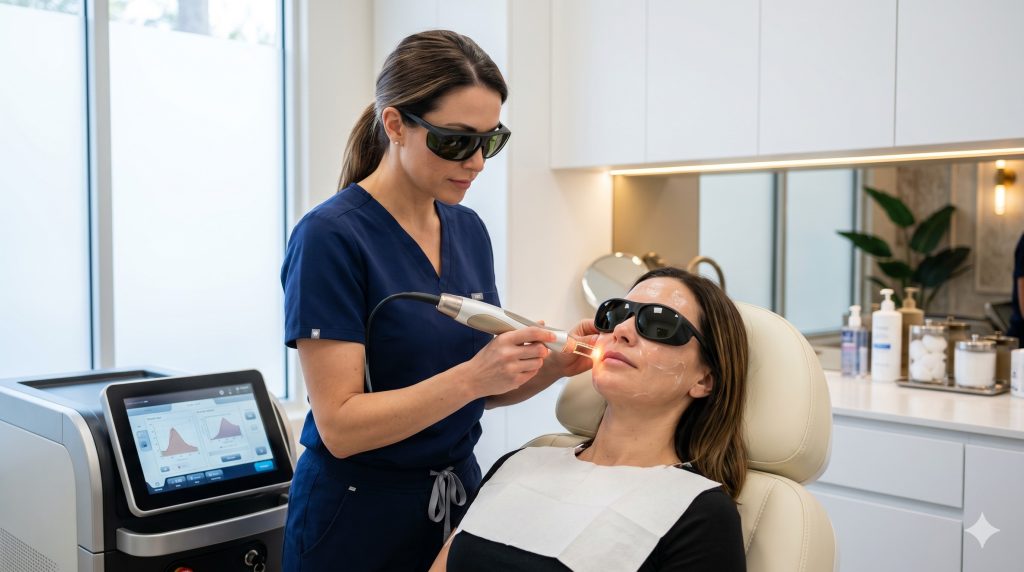
Introduction: The Clinical Challenge of Melasma in Aesthetic Medicine
Melasma remains one of the most stubborn and frustrating pigmentary conditions encountered in aesthetic clinics worldwide. Characterized by symmetric hyperpigmented macules on the face, it disproportionately affects patients with Fitzpatrick Skin Types (FST) III-IV and carries a high recurrence rate that challenges even experienced practitioners . For clinic owners, the search for an effective treatment modality that delivers superior clinical outcomes without exacerbating pigmentation is critical for patient satisfaction and business profitability.
Enter the 1927 nm Thulium fractional laser. This technology has emerged as a highly promising tool for melasma, leveraging a unique wavelength that targets epidermal water rather than melanin, thereby offering a potentially safer and more predictable treatment pathway for diverse skin types . This comprehensive guide provides a deep dive into the clinical efficacy, technical parameters, safety profile, and business ROI of integrating Thulium laser technology into your practice, enabling you to make a data-driven decision based on the latest evidence.
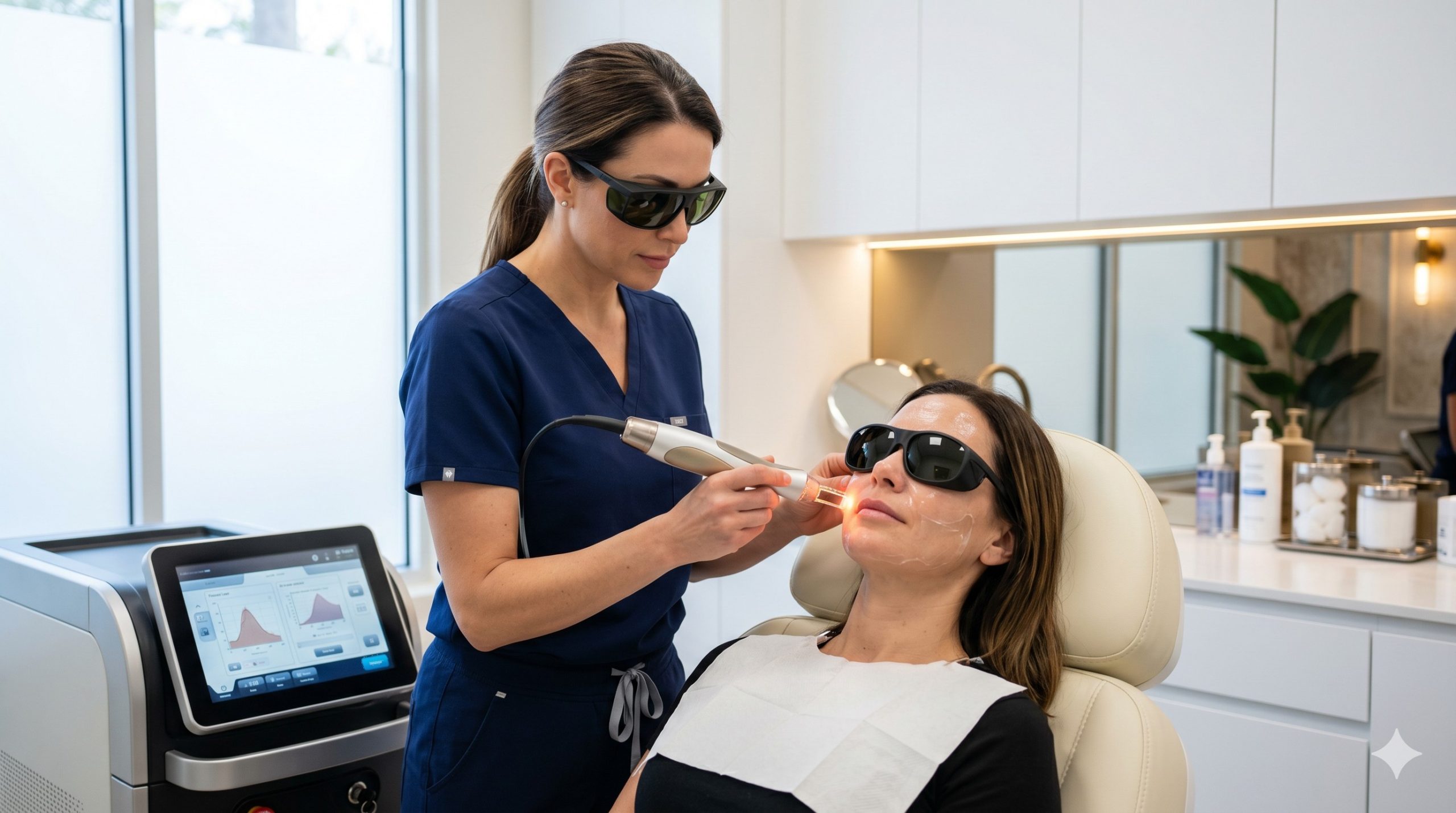
Thulium Laser Mechanism: High-Precision Epidermal Targeting
The Science of Selective Photothermolysis and Water Absorption
The clinical advantage of the Thulium laser lies in its specific wavelength of 1927 nm. Unlike Q-switched lasers that target melanin directly and carry a significant risk of post-inflammatory hyperpigmentation (PIH), the Thulium laser’s primary chromophore is water, which is abundant in the epidermis .
Because the 1927 nm wavelength possesses a higher absorption coefficient for water compared to other non-ablative wavelengths like 1550 nm, it confines its photothermal effect to the epidermis and superficial dermis . This precision is key. By creating microscopic columns of thermal damage (microscopic treatment zones or MTZs) in a fractional pattern, the laser induces a process of “melanin shuttling”—the controlled removal of epidermal pigment through the skin’s natural healing response . This mechanism allows for effective pigment clearance while limiting heat diffusion to deeper dermal structures, thus mitigating the risk of scarring and pigmentation dysregulation.
Fractional Resurfacing: The Dual-Phase Healing Process
The fractional approach is fundamental to its safety profile. By treating only a fraction of the skin (typically 20-40% of the surface area), the surrounding untreated tissue provides a reservoir of epithelial cells for rapid re-epithelialization. This results in a shorter downtime and significantly lowers the risk of adverse effects commonly associated with fully ablative lasers . The 1927 nm Thulium laser effectively bridges the gap between ablative and non-ablative technologies, delivering notable clinical results with a low incidence of complications .
| Key Parameter | Technical Specification |
|---|---|
| Wavelength | 1927 nm (Thulium Fiber Laser) |
| Laser Type | Non-Ablative Fractional Resurfacing |
| Primary Chromophore | Water (Higher absorption coefficient than 1550 nm) |
| Pulse Energy (Fluence) | Typically 5-20 mJ (Conservative: 5-10 mJ for melasma) |
| Treatment Density | 252-784 MTZs/cm² (Conservative: Lower densities for FST III-VI) |
| Spot Size (Microbeam) | Approx. 100 μm in diameter |
| Cooling System | Sapphire Contact Cooling / TEC (Thermoelectric Cooling) |
| Treatment Protocol | 3-5 sessions at 4-week intervals |
| Common Indications | Melasma, photoaging, pigmented lesions, skin rejuvenation |
| Key Benefits | Minimal downtime, low PIH risk, effective in skin of color (with proper parameters) |
Technical Specifications and Parameter Optimization
To harness the full potential of the Thulium laser for melasma, parameter optimization is non-negotiable. Clinical studies highlight the variability in treatment protocols, underscoring the need for a conservative approach to minimize risks while maximizing efficacy .
Core Output Metrics and Clinical Implications
The table above outlines the key parameters that define the Thulium laser’s interaction with tissue. The pulse energy (fluence) and treatment density are the primary determinants of treatment depth and intensity .
- Conservative Energy Settings for Melasma: For melasma, particularly in patients with FST III-IV, a conservative approach is strongly advised. Lower pulse energies (e.g., 5-10 mJ) and lower total densities (e.g., 252-392 MTZs/cm²) are recommended to target epidermal pigment effectively while minimizing the risk of PIH . High energy settings and increased surface area coverage should be avoided .
- The Role of Laser-Assisted Drug Delivery (LADD): One of the most exciting developments is the use of the 1927 nm laser for Laser-Assisted Drug Delivery (LADD). The microscopic channels created by the laser can significantly enhance the topical absorption of depigmenting agents like Tranexamic Acid (TXA). Clinical trials have demonstrated that combining Thulium laser treatments with topical TXA leads to statistically significant and sustained reductions in Melasma Area and Severity Index (MASI) scores .
Clinical Efficacy: Data from Clinical Trials and Systematic Reviews
The clinical evidence base for Thulium laser in melasma is robust and growing, consistently demonstrating significant efficacy with an acceptable safety profile.
Evidence-Based Results: MASI Score Reduction and Patient Satisfaction
Systematic reviews and meta-analyses have confirmed the efficacy of the 1927 nm laser for various dermatological conditions, including melasma . A pioneering pilot study demonstrated a statistically significant 51% reduction in MASI scores after 3-4 treatments, with no observed cases of PIH or hypopigmentation . Further retrospective analyses of larger patient cohorts have reinforced these findings, reporting significant improvements in melasma with low rates of recurrence and PIH .
A 2025 split-face, randomized controlled trial combined four sessions of 1927 nm fractional Thulium laser with topical famotidine (an H2 receptor antagonist). The famotidine-treated side showed significantly greater reductions in mMASI and Melasma Quality of Life (MELASQoL) scores compared to the control, with benefits persisting in long-term follow-up . This highlights the laser’s versatility, not only as a monotherapy but also as a powerful enhancer for combination protocols.
Considerations for Fitzpatrick Skin Types III-VI
The 1927 nm Thulium laser is particularly valuable for treating patients with skin of color, who are disproportionately affected by melasma. A 2026 review of dual 1550/1927-nm laser systems concluded that the technology is safe and effective for patients with FST III-VI, provided that parameter adjustments are made . Specifically, lower pulse energy and density settings are crucial to mitigating the risk of adverse effects like PIH in this patient demographic .
Safety, Limitations, and Risk Management
While the 1927 nm Thulium laser is generally safe, a thorough understanding of its risk profile is essential for delivering optimal patient care.
Adverse Events: PIH, Flaring, and Recurrence
Adverse events are typically mild and transient, including erythema, edema, and crusting that resolves within a week . However, a critical finding from recent research highlights the risk of melasma flaring and unmasking in susceptible individuals, particularly those with FST III-IV . A 2026 case series reported that 11% of patients treated with a 1927 nm NAFL for photorejuvenation developed delayed melasma exacerbations, with onset occurring up to 17 months post-treatment .
This underscores the importance of strict patient selection, pre-treatment counseling on the potential for long-term recurrence, and rigorous post-treatment photoprotection. It is also a potent reminder that lasers generating dermal heat may precipitate pigmentation issues in genetically predisposed individuals, emphasizing the need for a conservative and well-monitored clinical protocol .
Clinic ROI and Business Strategy
Integrating Thulium laser technology is not just a clinical decision; it’s a strategic business investment. The high demand for effective melasma solutions, combined with the technology’s favorable safety profile, makes it a powerful revenue driver for medical spas and aesthetic clinics.
Profitability and Treatment Throughput
The treatment protocol typically involves 3-5 sessions at monthly intervals, generating a predictable and recurring revenue stream . The low downtime (≈1 week) allows for high patient throughput, as patients can quickly return to their daily activities . The ability to safely treat a broad range of Fitzpatrick skin types expands your total addressable market, attracting a more diverse patient base. Additionally, the laser’s efficacy in combination therapies (e.g., with TXA) allows clinics to offer premium, high-value treatment packages, boosting the average transaction value and patient lifetime value.
Conclusion: A Powerful, Evidence-Based Tool for Modern Aesthetic Practice
The 1927 nm Thulium fractional laser represents a significant advancement in the clinical management of melasma. By leveraging the principle of selective photothermolysis with a water-targeted wavelength, it offers a compelling combination of efficacy, safety, and versatility. It is a gold-standard technology for clinicians committed to delivering evidence-based, patient-centered care .
However, success with this modality requires a deep understanding of its technical parameters and limitations. As clinical data evolves, it is crucial to adopt a conservative, risk-aware approach, particularly when treating patients with skin of color or those with a history of melasma. When integrated thoughtfully into a comprehensive treatment workflow, the Thulium laser will undoubtedly elevate your clinic’s clinical reputation and profitability in the competitive field of aesthetic medicine .