Introduction: The Paradigm Shift in Non-Invasive Body Contouring
The global demand for non-invasive fat reduction and skin tightening has driven a significant technological evolution within the medical aesthetics industry. For clinic owners and procurement managers, the decision to invest in a Wholesale HIFU body contouring machine represents a strategic balance of clinical efficacy, patient safety, and financial return on investment (ROI). High-Intensity Focused Ultrasound (HIFU) has emerged as a cornerstone technology, offering a non-surgical alternative to liposuction for body sculpting and fascial lifting . This comprehensive guide provides a clinical and business-oriented deep dive into the technology, helping you navigate the complexities of device selection, from technical parameters to long-term asset management .
Clinical Mechanism: Understanding HIFU and Tissue Interaction
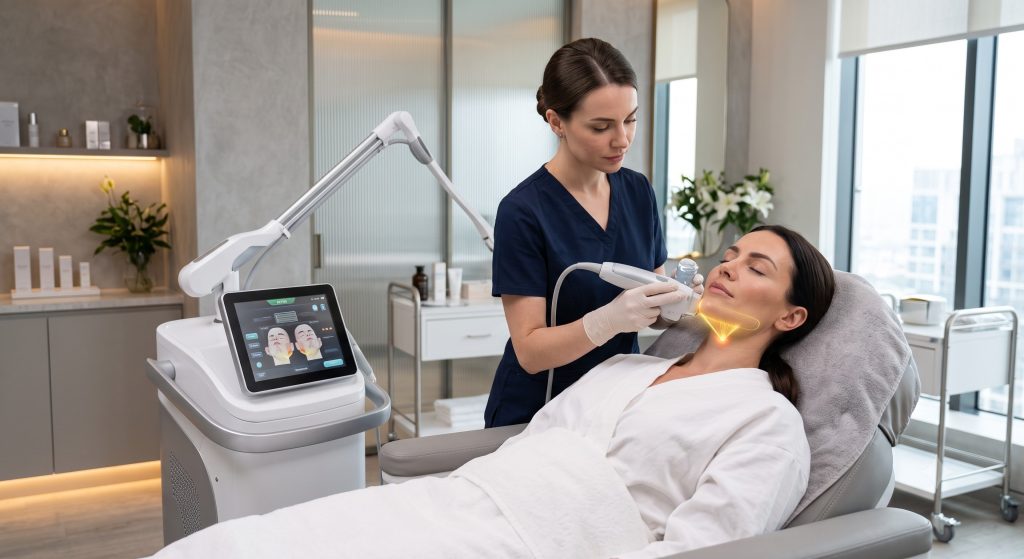
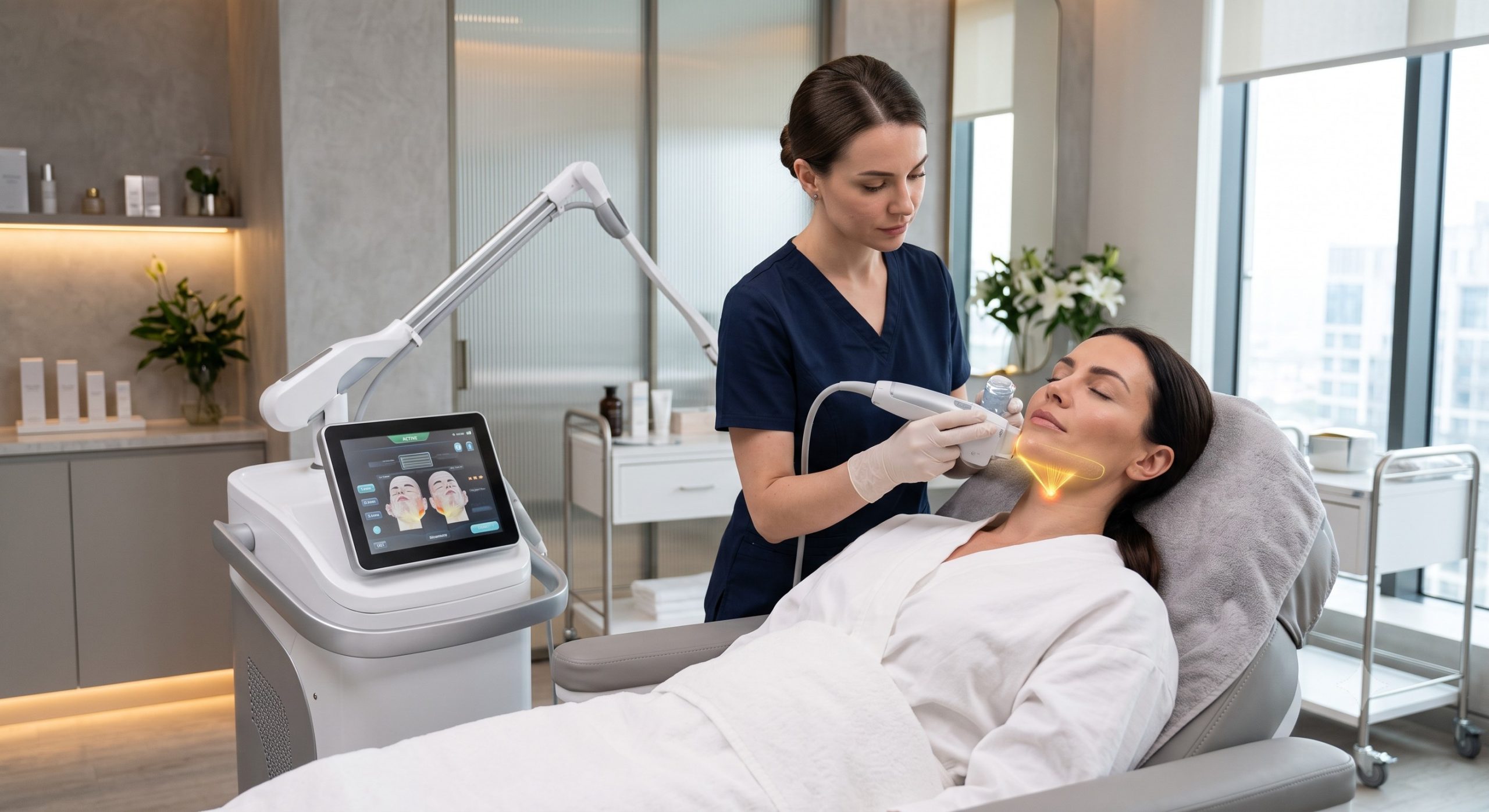
To effectively evaluate wholesale HIFU equipment, one must first understand the physics of selective tissue destruction. Unlike superficial energy-based devices, HIFU bypasses the epidermis to deliver focused ultrasound energy to precise depths within the dermis, Superficial Musculoaponeurotic System (SMAS), and subcutaneous fat layers .
Thermal Coagulation and Neocollagenesis
When the high-intensity focused ultrasound transducer irradiates the skin, it generates thermal coagulation points at temperatures of 65°C to 75°C . This controlled thermal injury initiates a wound healing response, stimulating immediate fascial contraction and long-term collagen synthesis. For body contouring, this technology targets and disrupts fat cells via cavitation and apoptosis, leading to a permanent reduction in fat volume without damaging surrounding neurovascular structures .
Clinical Metrics: Depth, Frequency, and Energy
The versatility of a professional HIFU system is defined by its ability to target multiple tissue layers. These parameters are critical for customizing treatments based on patient anatomy and indications .
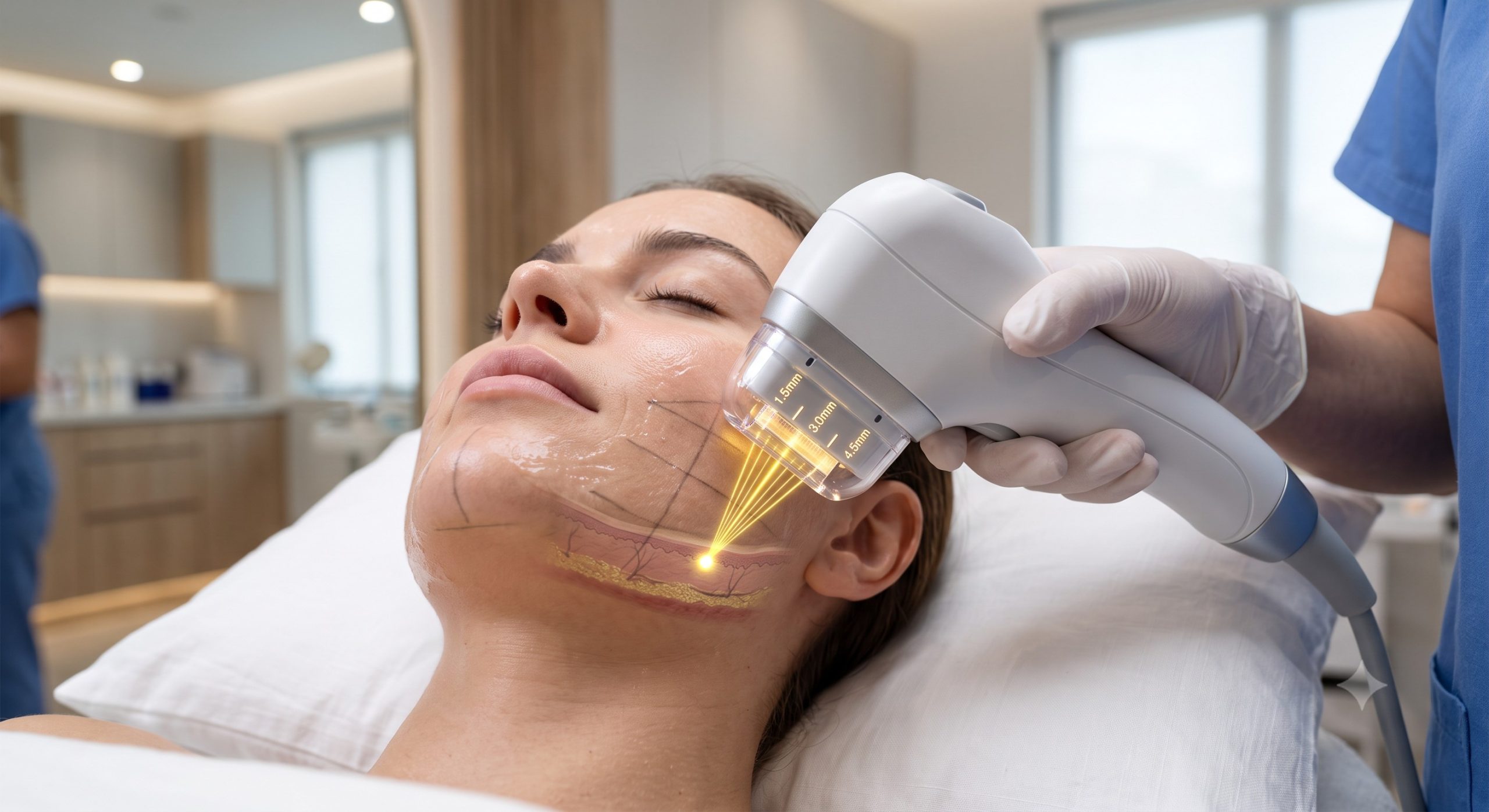
- Facial Depths (1.5mm, 3.0mm, 4.5mm): Targeting the superficial dermis, deep dermis, and SMAS layer for lifting and wrinkle reduction .
- Body Depths (6.0mm, 8.0mm, 10.0mm, 13.0mm, 16.0mm, 18.0mm): Penetrating the subcutaneous fat layer for non-surgical fat destruction and body sculpting of the abdomen, thighs, and flanks .
- Frequency & Power: Facial cartridges typically operate at 4.0MHz, while body cartridges utilize lower frequencies (2.0MHz) to reach greater depths .
| Key Parameter | Technical Specification |
|---|---|
| Laser/Energy Type | High-Intensity Focused Ultrasound (HIFU) with RF Synchronization |
| Handpiece Configuration | Dual Handles (e.g., 13D HIFU + 18D RF) for Face & Body |
| Cartridge Depths | Face: 1.5mm, 3.0mm, 4.5mm; Body: 6.0mm-18.0mm |
| Energy / Fluence | Typically 0.2J to 3.0J per shot; 10-200W output |
| Cooling System | Sapphire Contact Cooling / TEC cooling |
| Display & UI | HD Smart Screen with Smart Pre-set Protocols |
| Durability | Brushless Motors up to 20,000Hz |
Technical Specifications and Procurement Audit
When procuring devices at a wholesale level, due diligence requires a thorough review of technical specifications to ensure performance reliability and regulatory compliance. Industry standards necessitate adherence to Medical CE, FDA clearance, and ISO 13485 quality management systems .
Core Parameter Analysis
The following table outlines critical metrics that differentiate premium wholesale devices from entry-level competitors, focusing on factors that impact treatment efficacy and durability .
| Key Parameter | Industry Standard & Specifications |
|---|---|
| Laser/Energy Type | High-Intensity Focused Ultrasound (HIFU) with RF Synchronization |
| Handpiece Configuration | Dual Handles (e.g., 13D HIFU + 18D RF) for Face & Body |
| Cartridge Depths | Face: 1.5mm, 3.0mm, 4.5mm; Body: 6.0mm, 8.0mm, 10.0mm, 13.0mm, 16.0mm, 18.0mm |
| Energy / Fluence | Typically 0.2J to 3.0J per shot; can reach 10-200W output |
| Cooling System | Sapphire Contact Cooling / TEC cooling (Reduces pain, protects epidermis) |
| Display & UI | HD Smart Screen (9.7″/13.3″) with Smart Pre-set Protocols |
| Durability (Motor) | Brushless Motors up to 20,000Hz for handle longevity |
Business Strategy: ROI and Clinic Integration
Investing in a Wholesale HIFU body contouring machine is a significant capital expenditure (CapEx). However, the ability to offer high-ticket, non-invasive procedures provides a rapid return on investment.
Profitability and Treatment Throughput
Modern HIFU systems feature advanced capabilities designed to maximize clinic profitability . Features such as MP (Multi-Point) Mode and AI Spiral technology allow practitioners to perform line scanning rather than single-point delivery, reducing treatment times by up to 190% . This high-throughput efficiency allows clinics to serve more patients daily, directly impacting the bottom line. For a mid-tier device costing approximately $2,500 to $3,000 wholesale, a clinic can recoup the investment within a few weeks to months of consistent scheduling .
Total Cost of Ownership (TCO) and Supplier Selection
Beyond the initial purchase price, B2B buyers must evaluate the Total Cost of Ownership (TCO) . This includes the lifespan of consumable handpieces (e.g., shot count per cartridge), warranty periods (12 to 24 months), and the reliability of the supplier. A strategic sourcing approach prioritizes suppliers with ISO 13485 certification, a proven track record of on-time delivery (≥94%), and robust after-sales support, as these factors mitigate downtime and spare part costs .
Conclusion: Strategic Acquisition for Clinical Excellence
The acquisition of a wholesale HIFU body contouring machine is a strategic decision that can significantly expand a med spa or aesthetic clinic’s service portfolio. By prioritizing devices with advanced technical specifications—such as dual-technology platforms (HIFU + RF), variable penetration depths, and energy stability—you ensure superior clinical outcomes and patient safety. Furthermore, a rigorous vendor assessment that prioritizes regulatory compliance, TCO transparency, and supply chain reliability is essential for long-term success. As the aesthetic industry evolves, HIFU remains a pivotal technology for clinics seeking to deliver non-invasive, high-efficacy solutions.